
The Joseph Dow trunk archive · Document gallery 77
Research correspondence, history drafts and a coastal survey sketch
16 photographs · 9 document groups
Photographed by Whit from the recovered Joseph Dow collection. Descriptions draw on visible names, dates and subjects; uncertain readings remain provisional. Reading copies are turned upright, and each image links to the unchanged full-resolution original.
JDT-D583 · A Marston-family research reply, 24 May 1880
A letter from Hampton answers Charles Burleigh’s inquiry with Marston family facts, including dates, marriages and a move to Brentwood. The writer identifies Mary Moulton as a sister of his mother, bringing personal family knowledge into the historical response. The leaf illustrates the exchange of evidence underlying local genealogical research; several ancestral identifications remain tentative in the manuscript.
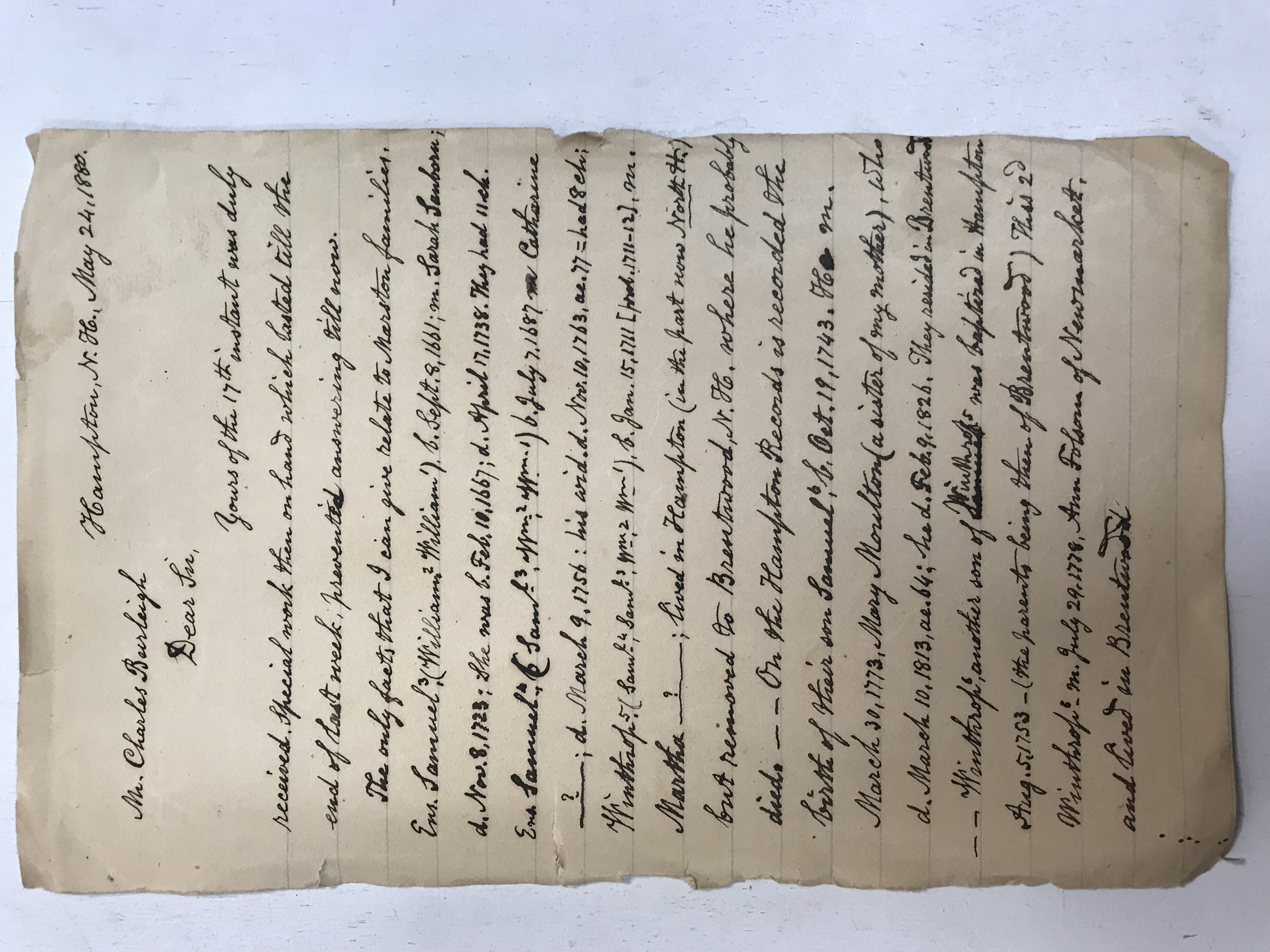
A Marston-family research reply, 24 May 1880 · view 1 of 1
Open full-resolution photograph ↗
JDT-D584 · Town votes and the new-plantation lot list
Copied town-record material is followed by a numbered schedule headed as lots in the new plantation, drawn in March 1669. Names and acreage assignments turn a general land division into a list of individual interests. The many figures should be read from the photograph before being used for a total.
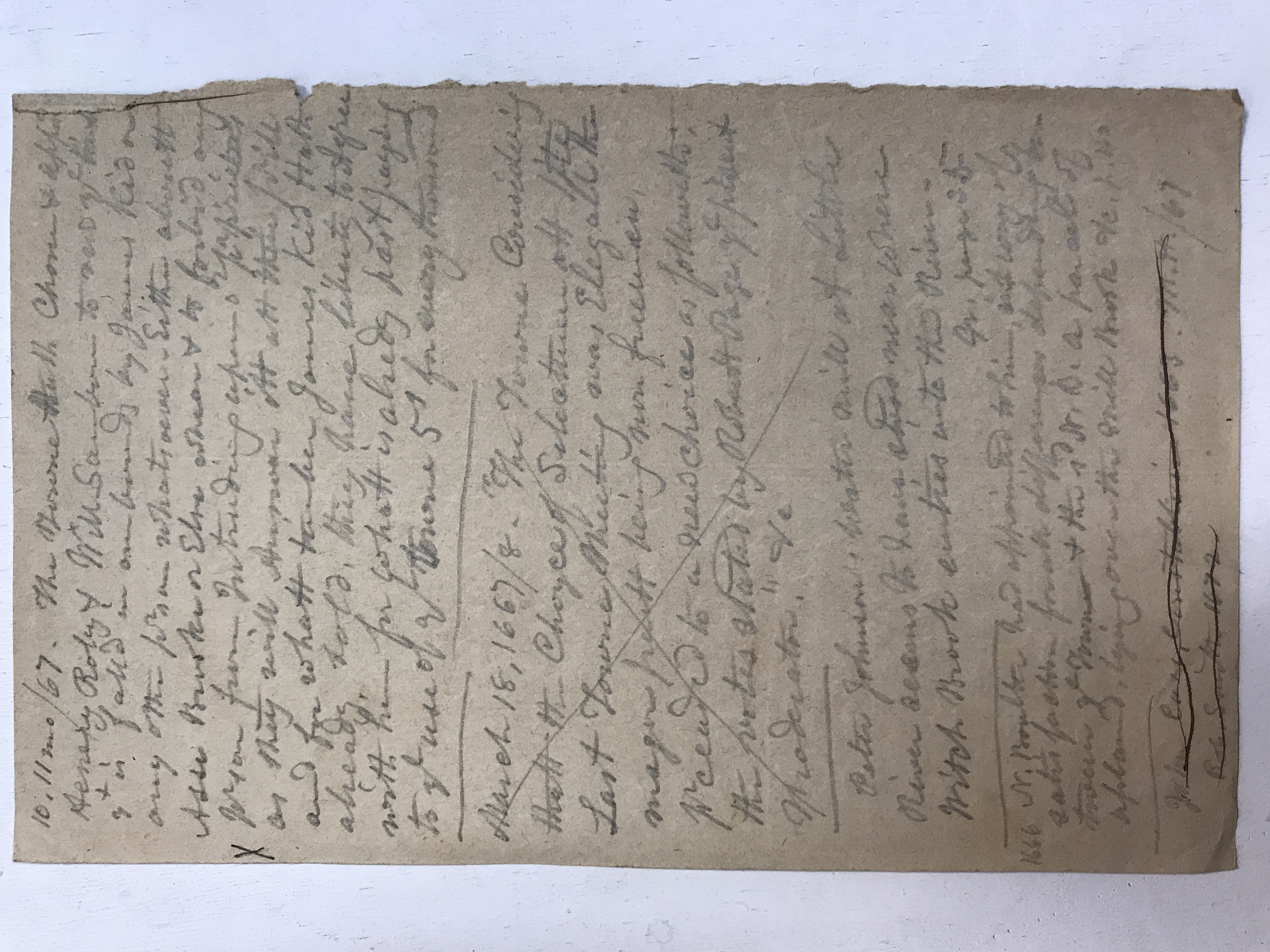
Town votes and the new-plantation lot list · view 1 of 2
Open full-resolution photograph ↗
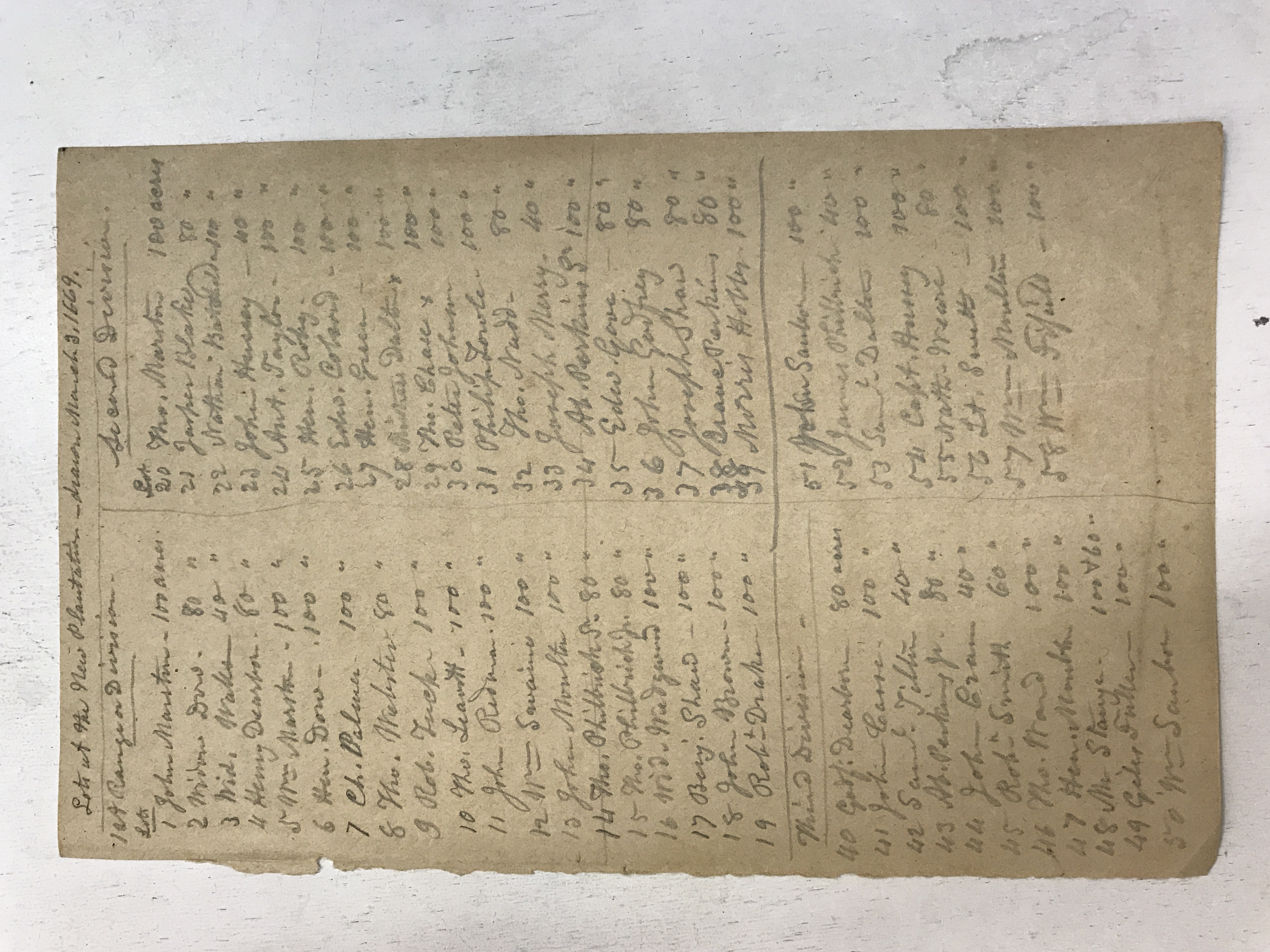
Town votes and the new-plantation lot list · view 2 of 2
Open full-resolution photograph ↗
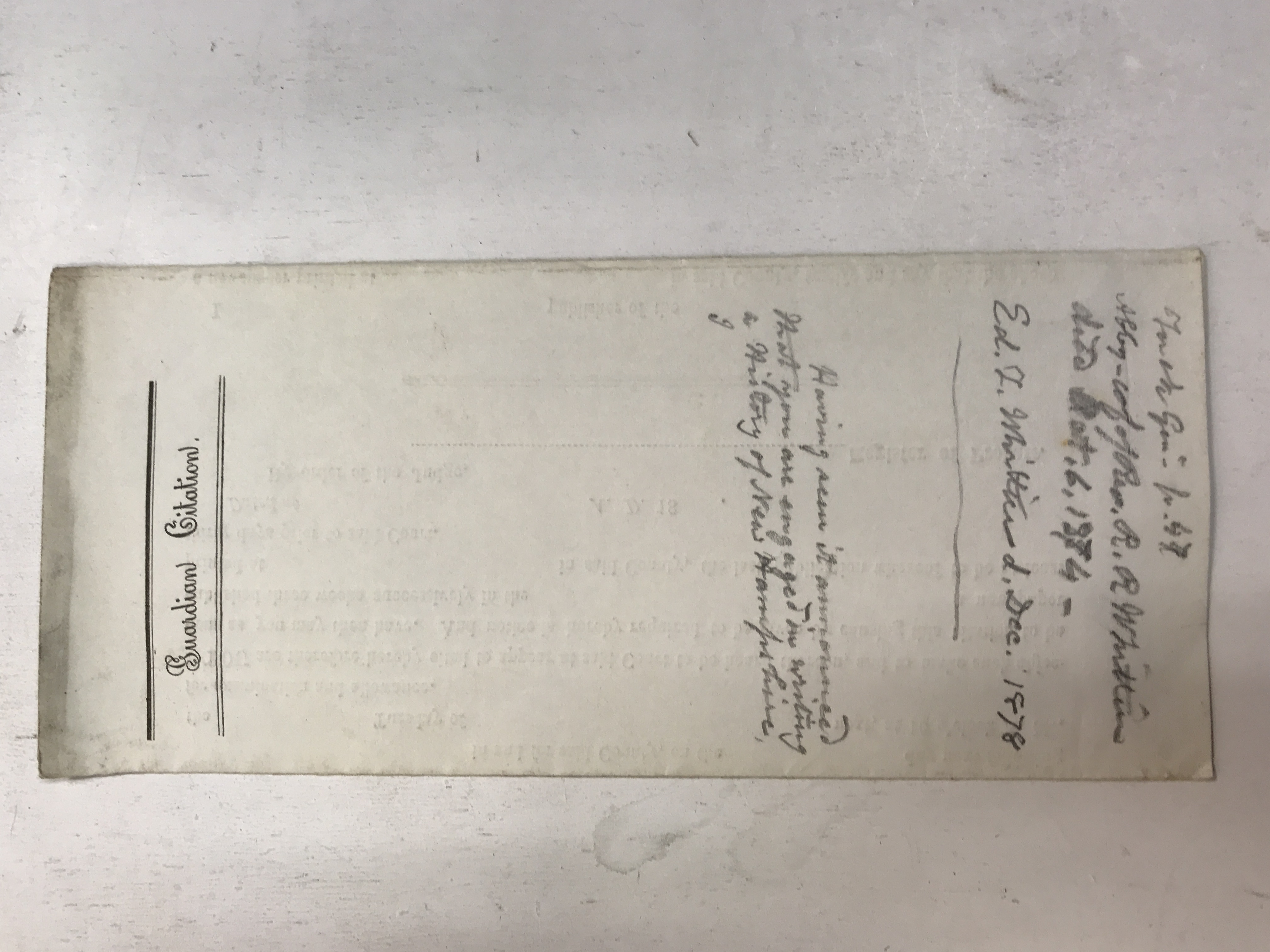
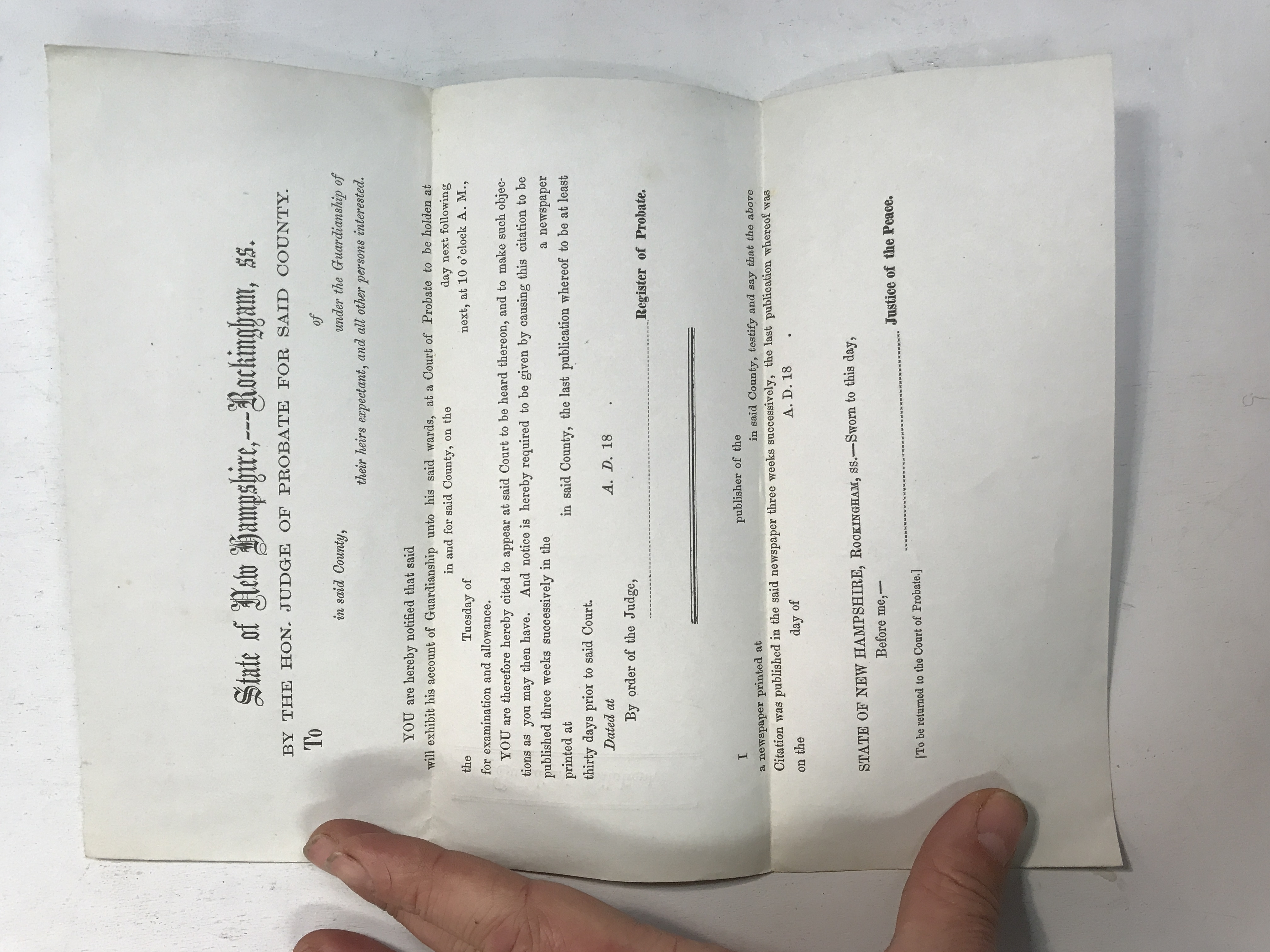
JDT-D585 · Genealogical reminders on a guardian-citation form
Brief family notes and source references share paper with a printed Rockingham County probate form titled Guardian Citation. The form is blank in its principal fields and should not be mistaken for an executed guardianship order. Its reuse shows the practical supply of paper behind the historian’s working notes.
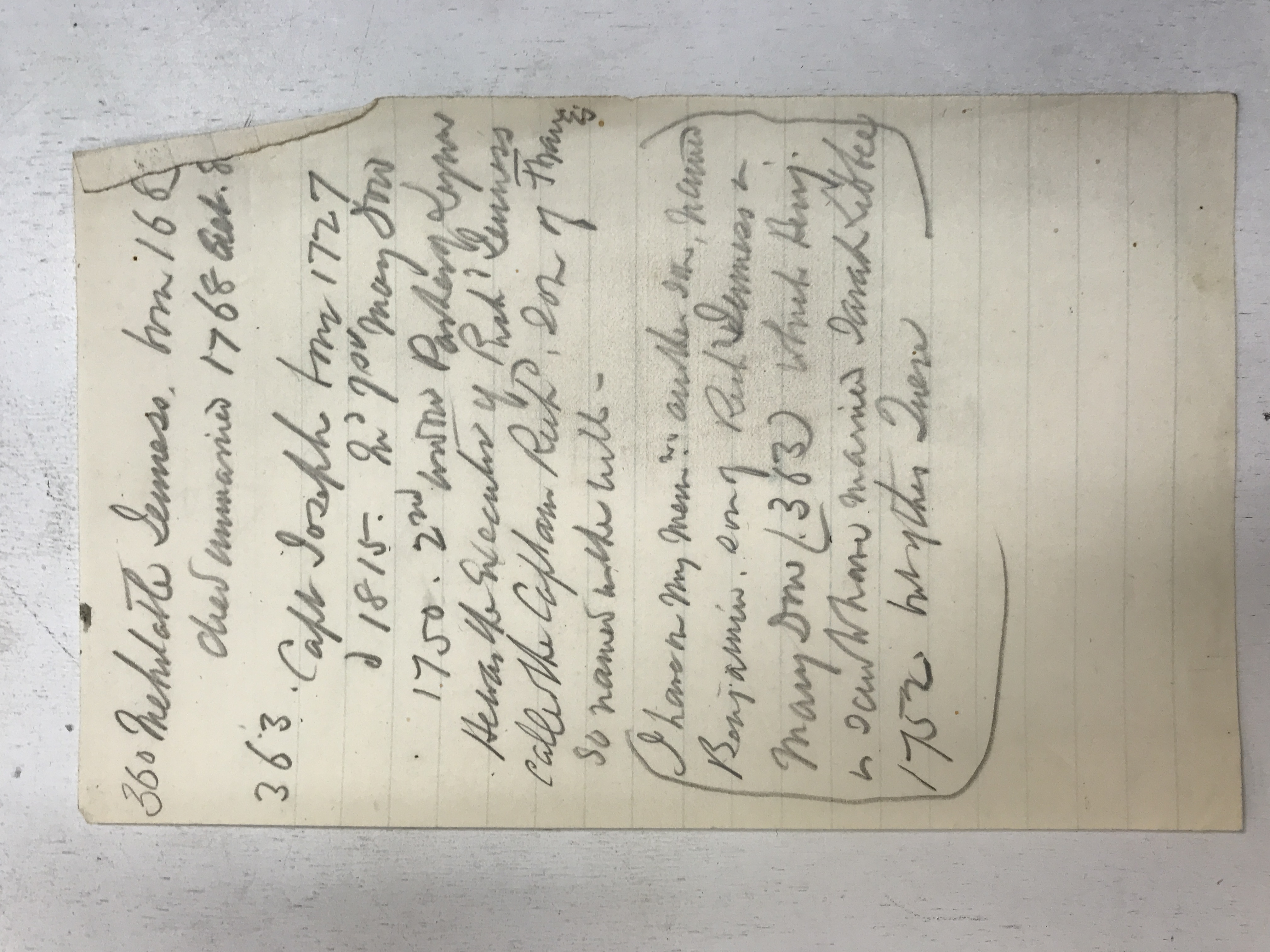
Genealogical reminders on a guardian-citation form · view 1 of 3
Open full-resolution photograph ↗
Genealogical reminders on a guardian-citation form · view 2 of 3
Open full-resolution photograph ↗
Genealogical reminders on a guardian-citation form · view 3 of 3
Open full-resolution photograph ↗
JDT-D586 · Drafting a history of conflict and its local effects
These heavily revised manuscript pages discuss colonial warfare involving English settlers and Indigenous peoples, referring to Casco, Dover or Durham, Exeter and nearby settlements. The author repeatedly narrows his intended scope to events affecting Hampton and its people. The language reflects the manuscript’s colonial perspective; the leaves are evidence of the historian’s framing and revision, not a neutral or complete account of the conflicts.
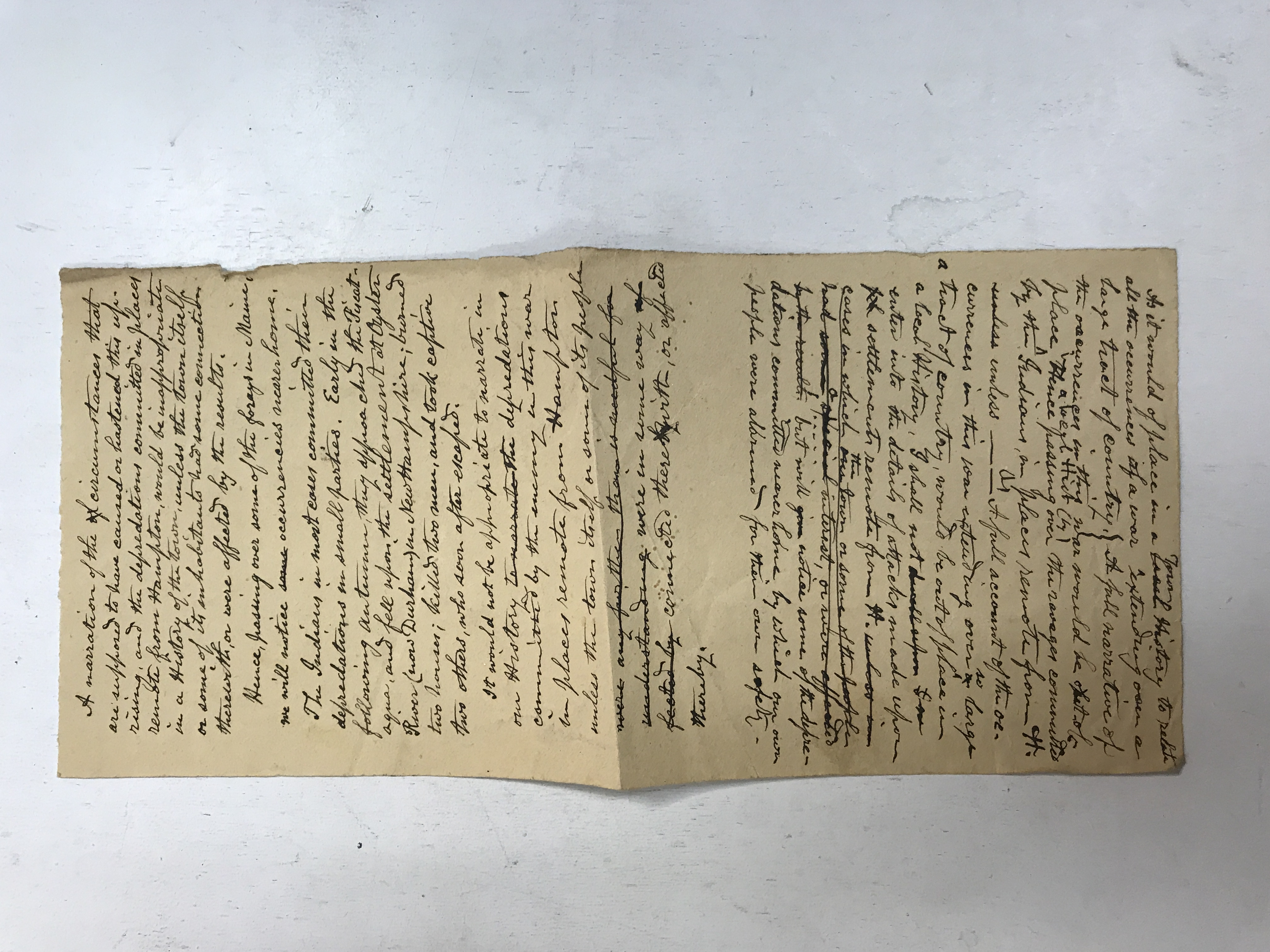
Drafting a history of conflict and its local effects · view 1 of 2
Open full-resolution photograph ↗
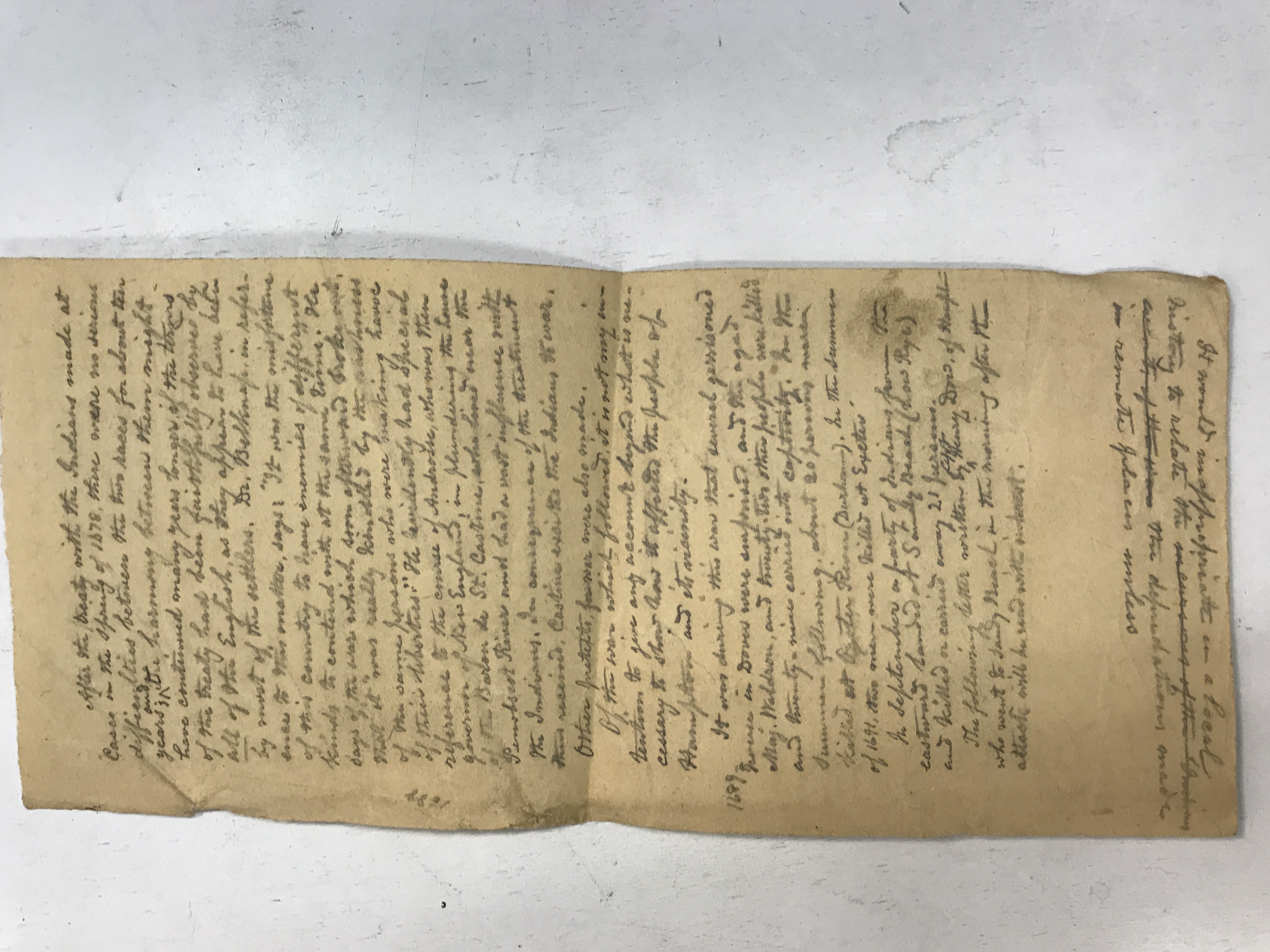
Drafting a history of conflict and its local effects · view 2 of 2
Open full-resolution photograph ↗
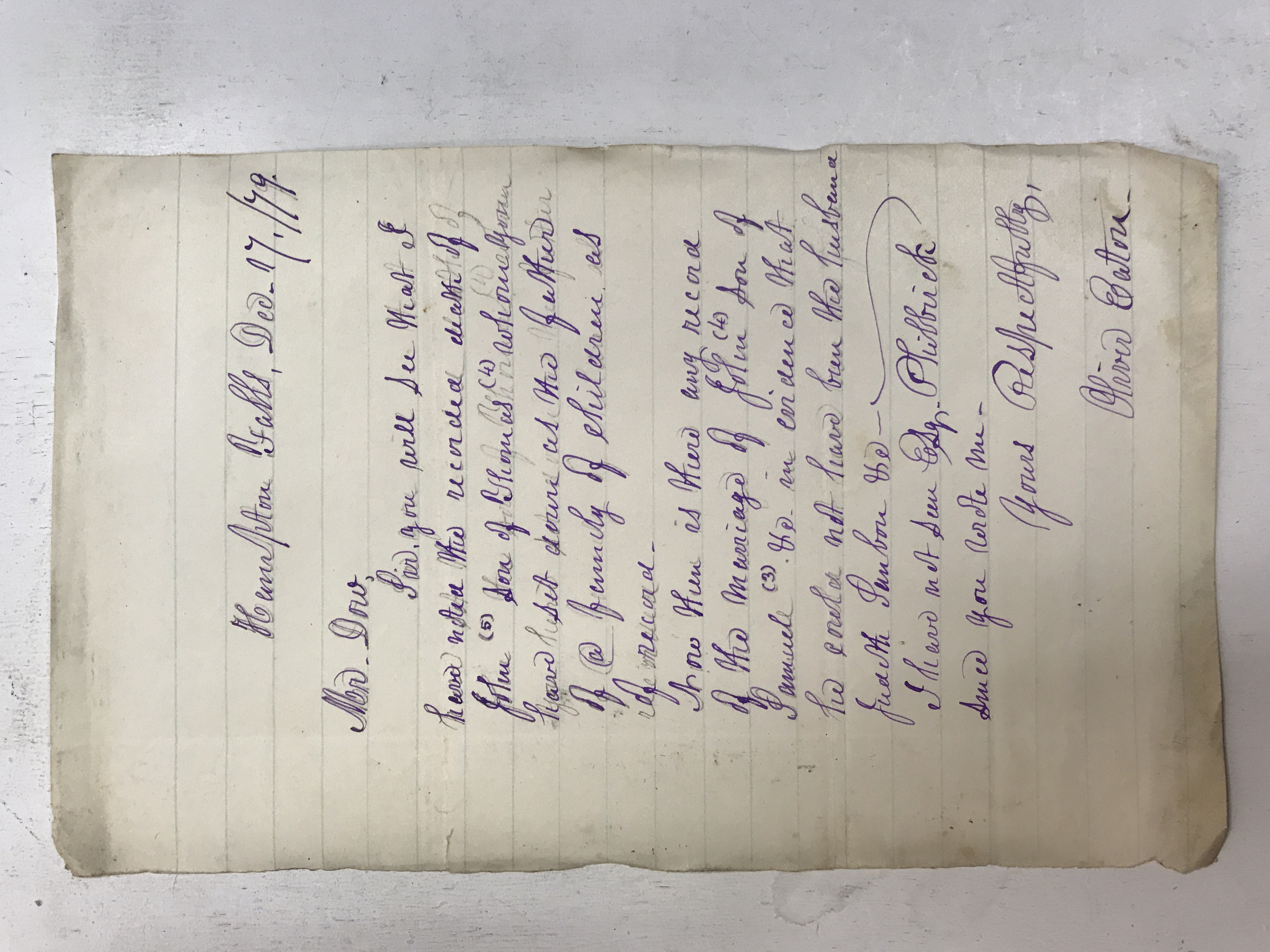
JDT-D587 · Warren Eaton to Dow: a missing marriage record, 17 December 1879
Writing from Hampton Falls on 17 December 1879, Warren Eaton tells Mr. Dow that John, son of Thomas, lacks a recorded death date in the family record and that no marriage record was found for another John, son of Samuel. He argues that the latter could not have been Judith Sanborn’s husband and mentions consulting Dr. Philbrick. The letter carefully distinguishes recorded evidence from inference, preserving a useful example of genealogical disagreement and correction.
Warren Eaton to Dow: a missing marriage record, 17 December 1879 · view 1 of 1
Open full-resolution photograph ↗
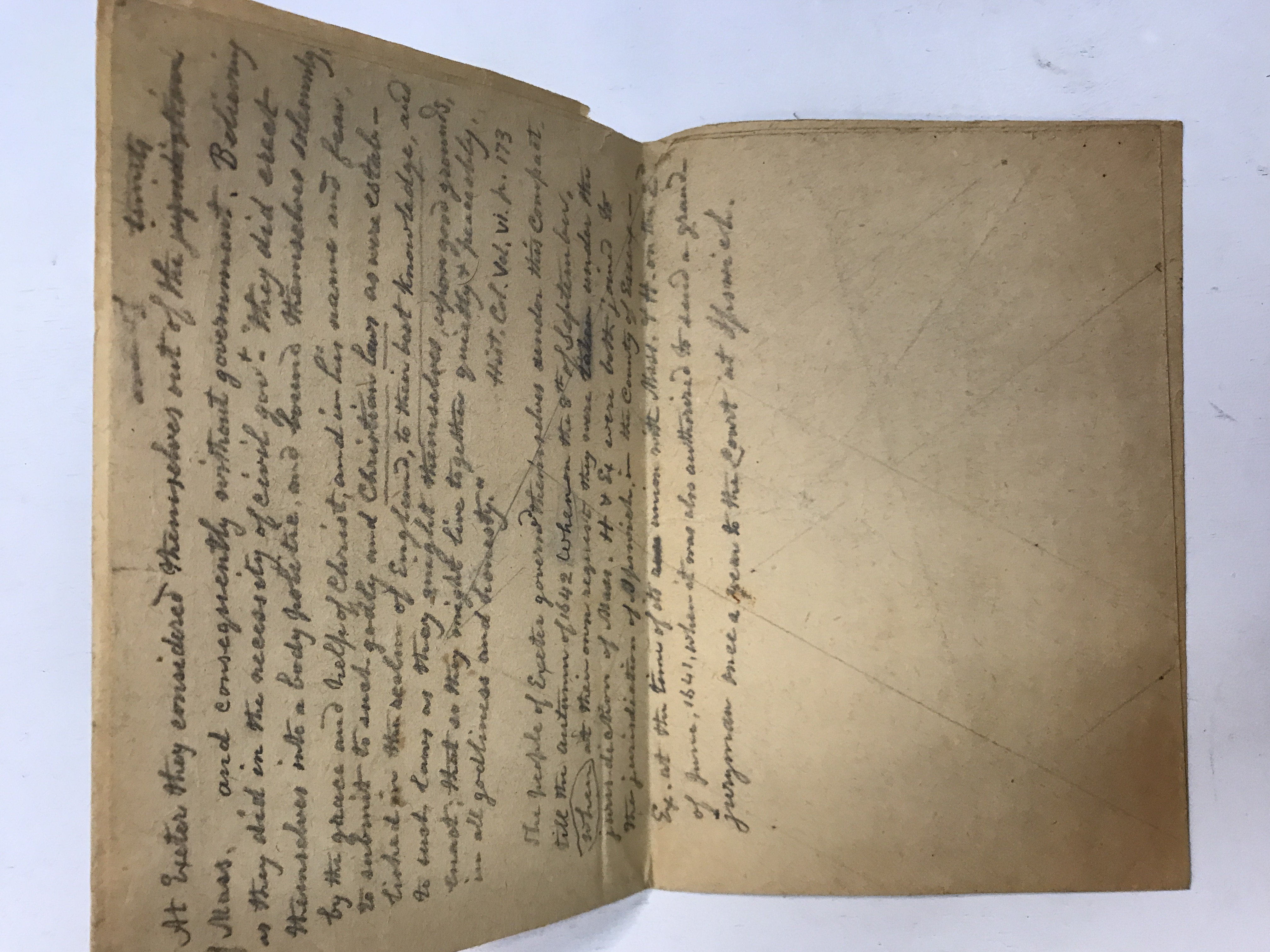
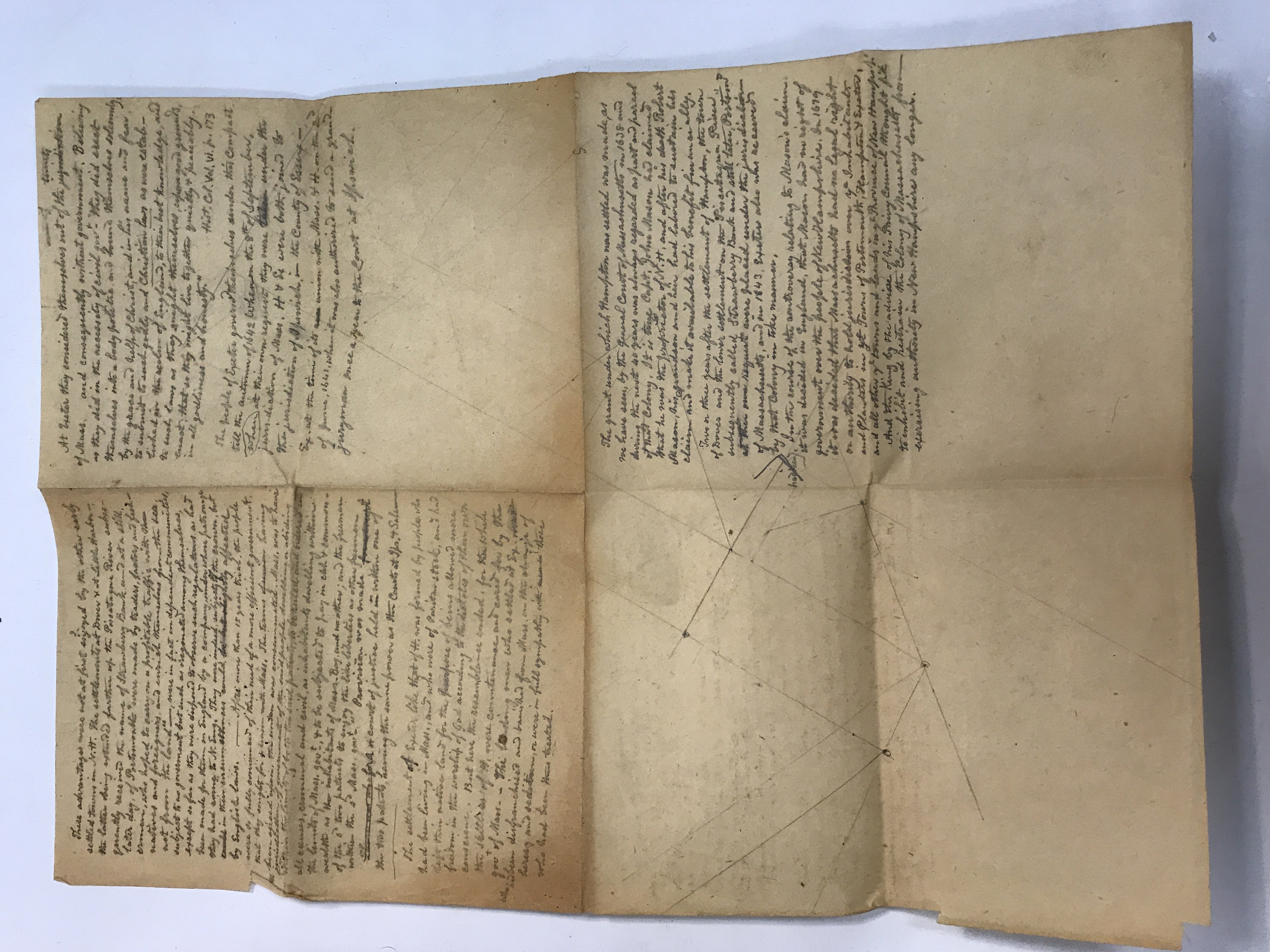
JDT-D588 · Exeter’s civil compact and jurisdiction: draft and spread view
A manuscript passage explains Exeter’s formation of a body politic and its later relationship with Massachusetts. Corrections and a wider view preserve the argument in development alongside nearby material. The two photographs overlap in subject while documenting different portions and arrangements of the surviving draft.
Exeter’s civil compact and jurisdiction: draft and spread view · view 1 of 2
Open full-resolution photograph ↗
Exeter’s civil compact and jurisdiction: draft and spread view · view 2 of 2
Open full-resolution photograph ↗
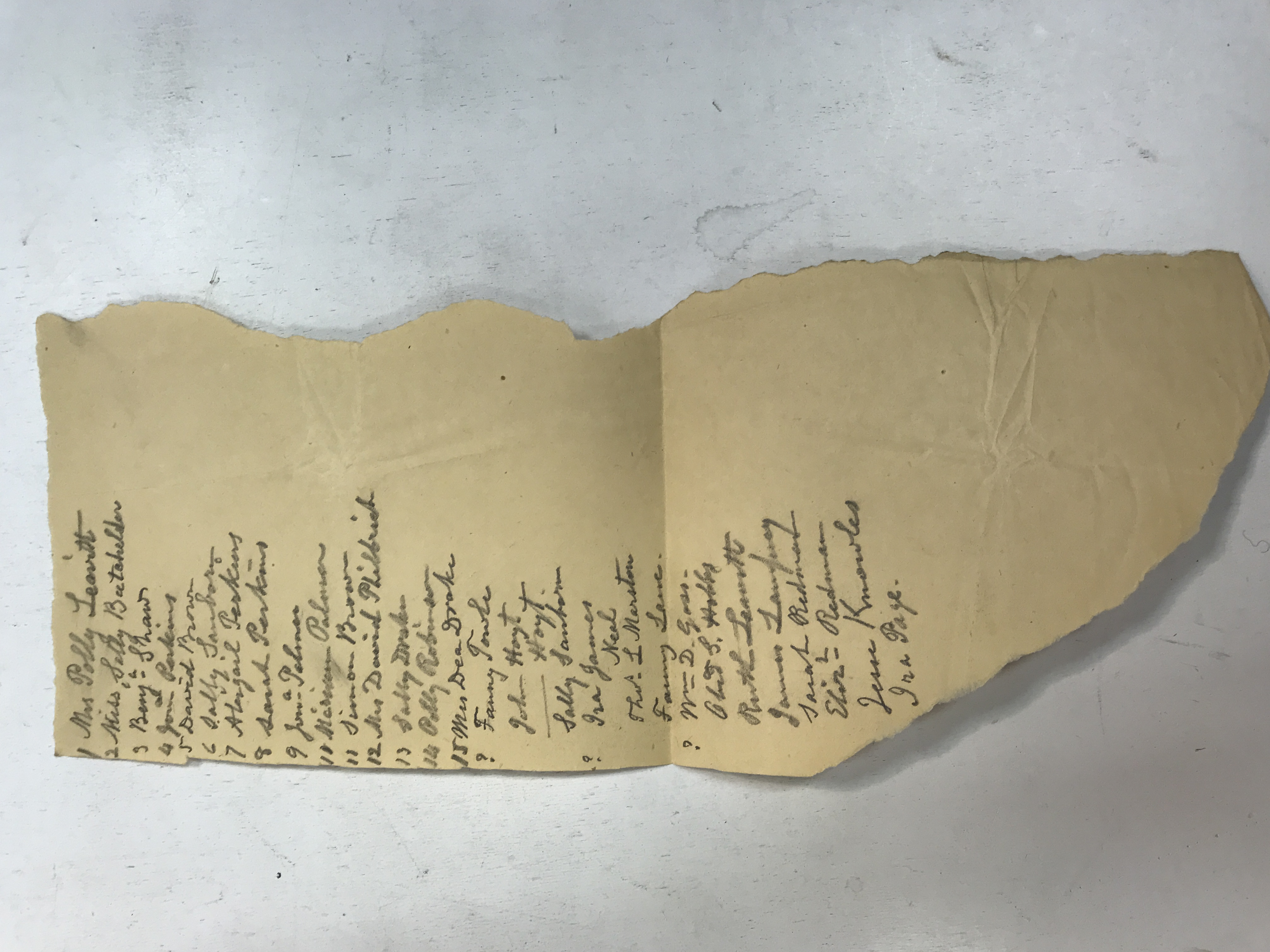
JDT-D589 · A torn list of local names
A narrow irregular fragment lists residents, including Leavitt, Batchelder, Shaw, Perkins, Philbrick and other local surnames. The purpose and date are not securely identified. Preserving the whole torn outline helps future comparison with related lists and guards against treating a fragment as a complete roster.
A torn list of local names · view 1 of 1
Open full-resolution photograph ↗
JDT-D590 · A faint folded letter about early family records
The folded sheet is first shown as a spread, then opened to faint writing. It discusses a record from Salisbury and a proposed family or marriage connection involving people later associated with Hampton. The fragile contrast limits a confident full reading; the finding aid records the subject without supplying a firm pedigree from uncertain text.
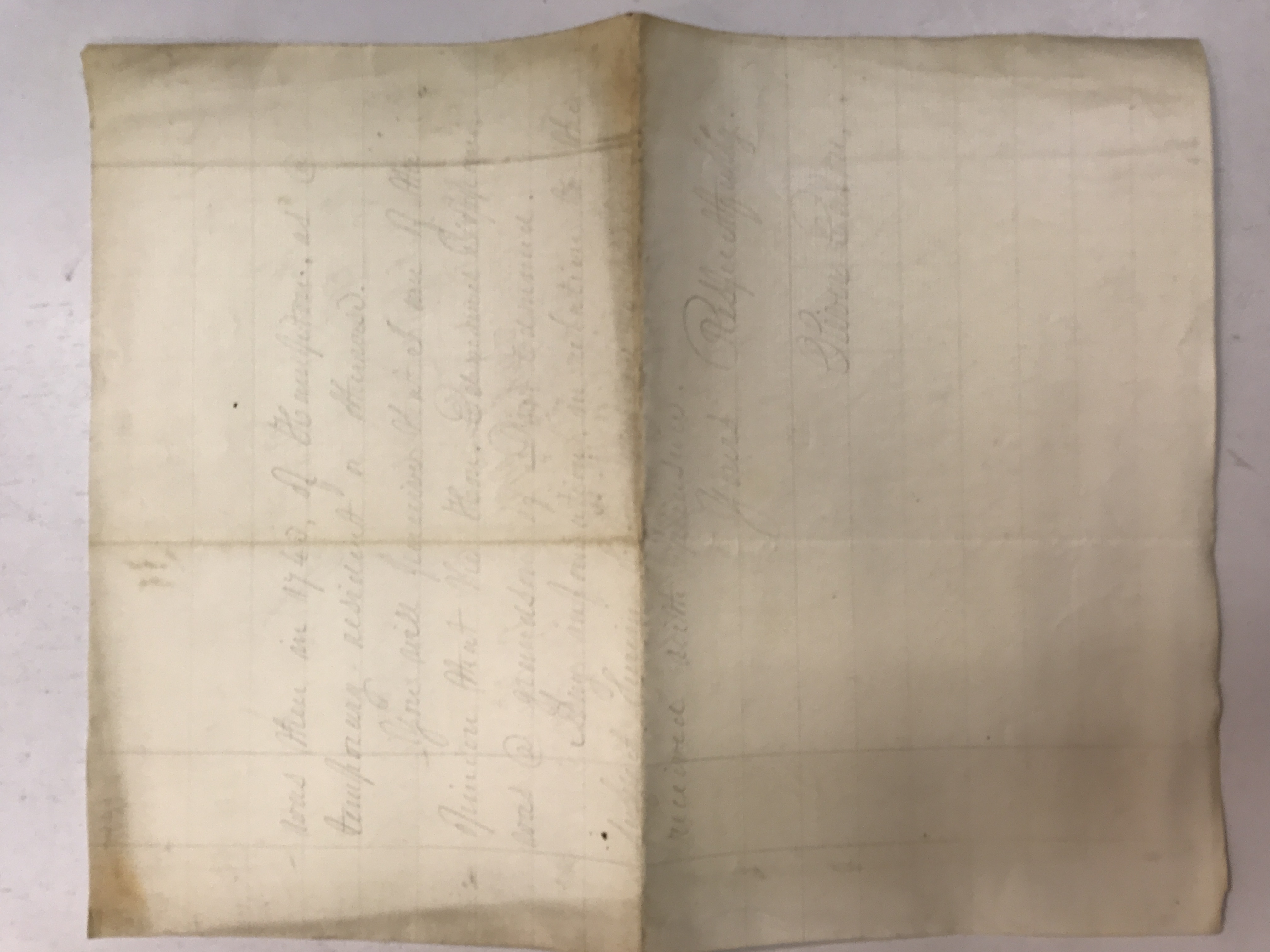
A faint folded letter about early family records · view 1 of 2
Open full-resolution photograph ↗
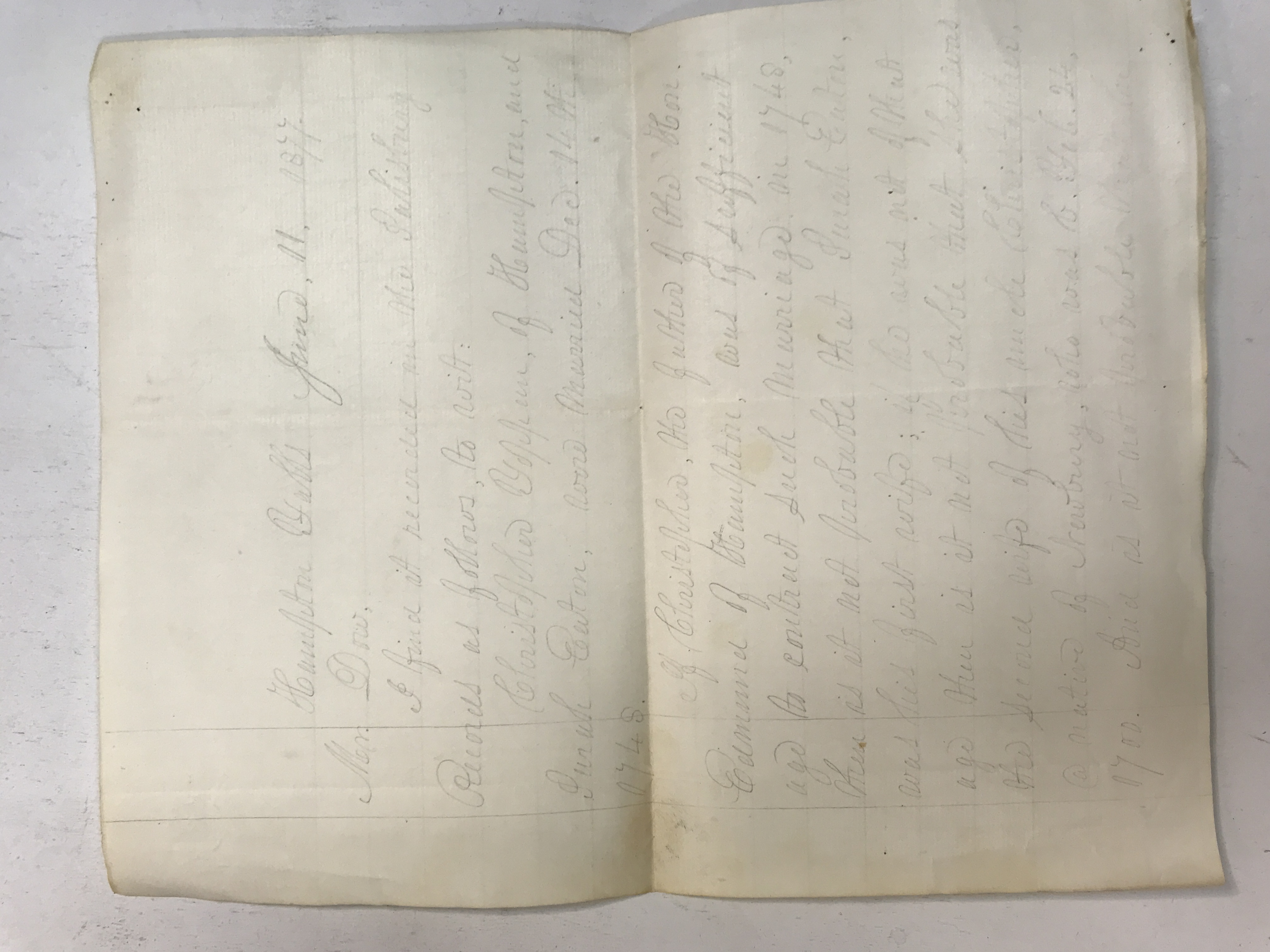
A faint folded letter about early family records · view 2 of 2
Open full-resolution photograph ↗
JDT-D591 · Survey of Star Island for a county map
The outside title identifies a survey of Star Island for a county map. The opened sheet plots landmarks and notes including a beacon, cemetery, coast-survey reference, bluffs and points. This small working sketch closes the batch with a different kind of historical evidence: the spatial relationships used to turn observed features into a map.
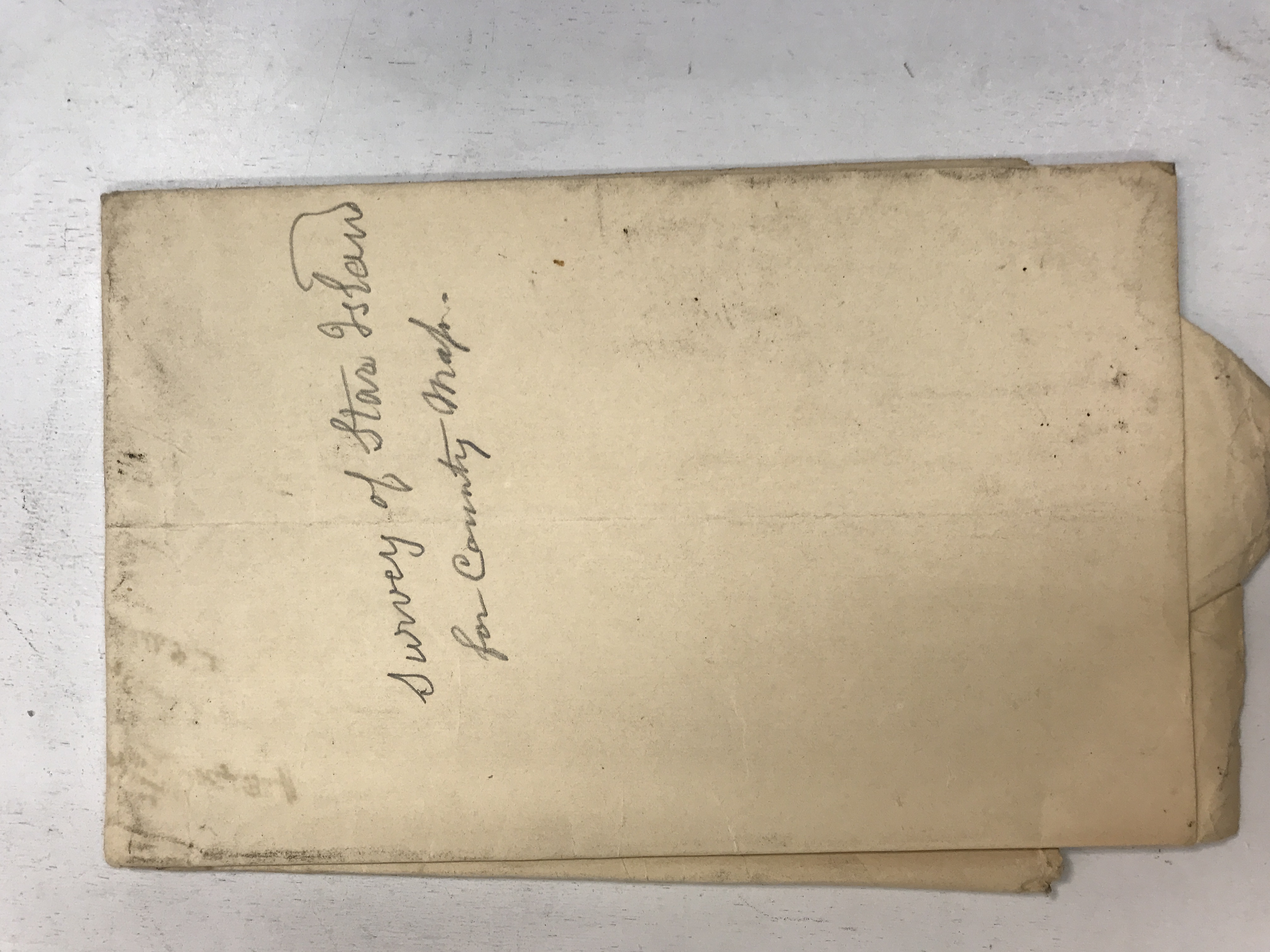
Survey of Star Island for a county map · view 1 of 2
Open full-resolution photograph ↗
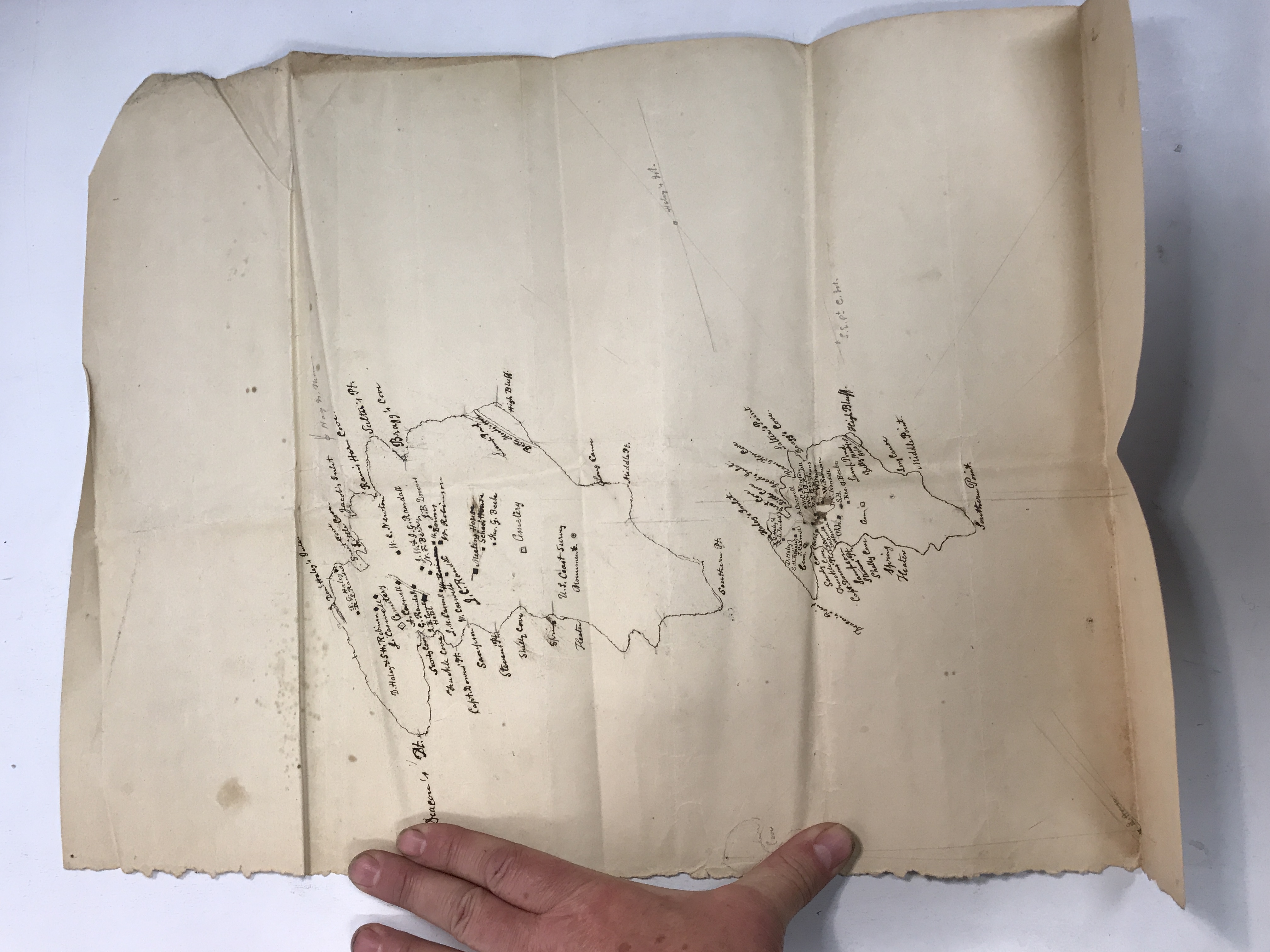
Survey of Star Island for a county map · view 2 of 2
Open full-resolution photograph ↗
Collection photographs supplied by Whit. Descriptions are finding aids, not full transcriptions. Names, dates and associations remain provisional where the handwriting is uncertain.