
The Joseph Dow trunk archive · Document gallery 73
Revolutionary service claims, deeds and legal memoranda
12 photographs · 6 document groups
Photographed by Whit from the recovered Joseph Dow collection. Descriptions draw on visible names, dates and subjects; uncertain readings remain provisional. Reading copies are turned upright, and each image links to the unchanged full-resolution original.
JDT-D553 · Colonel Moulton’s petition for soldiers’ clothing and bounty
An endorsed wrapper and petition concern Hampton’s contributions to Continental service. The text distinguishes men engaged for eight months from those serving twelve and asks about clothing allowances and unpaid bounties. Lists of soldiers turn a town-level claim into evidence about individual military obligations; the exact date and every name remain subject to close transcription.
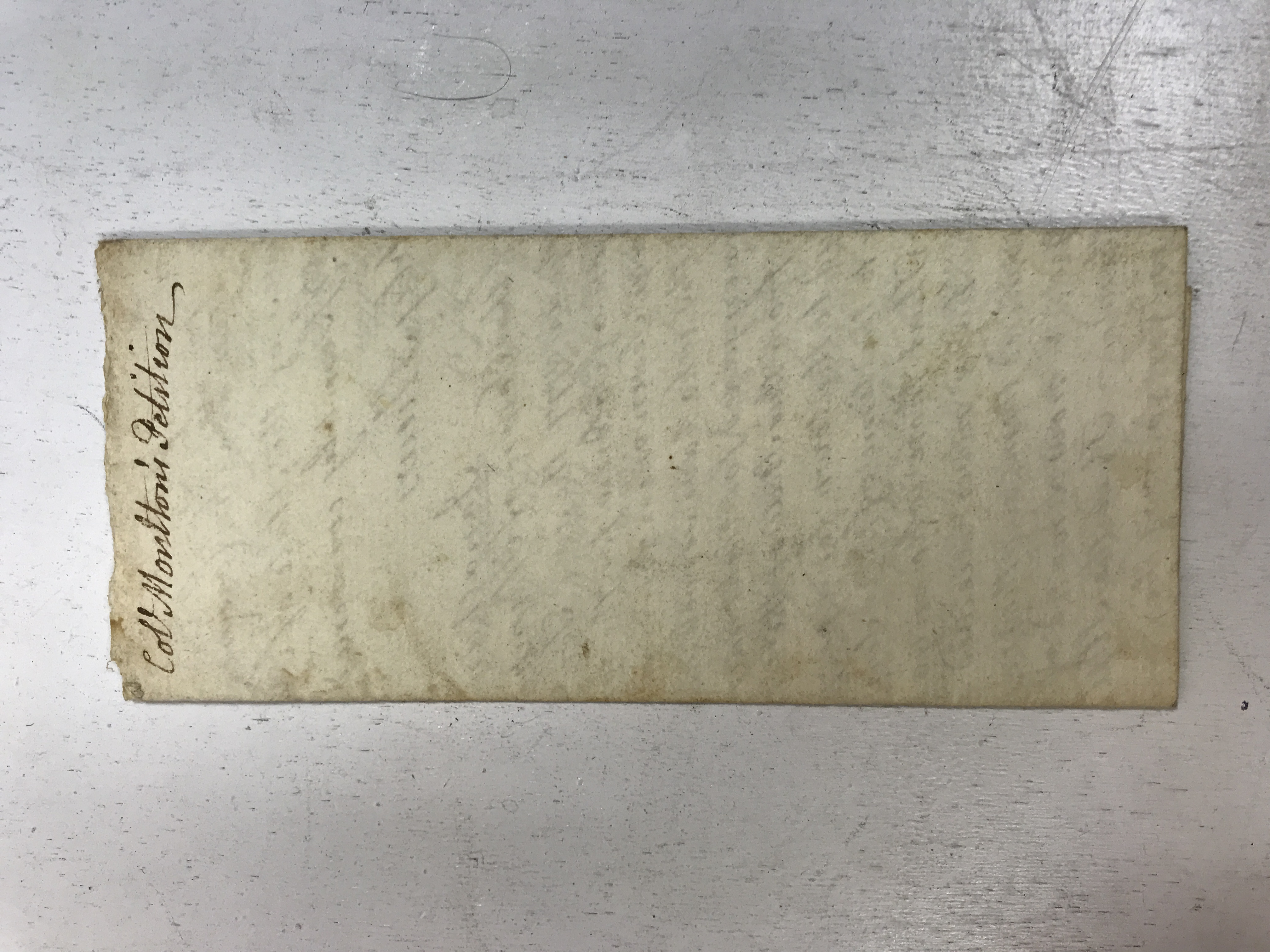
Colonel Moulton’s petition for soldiers’ clothing and bounty · view 1 of 2
Open full-resolution photograph ↗
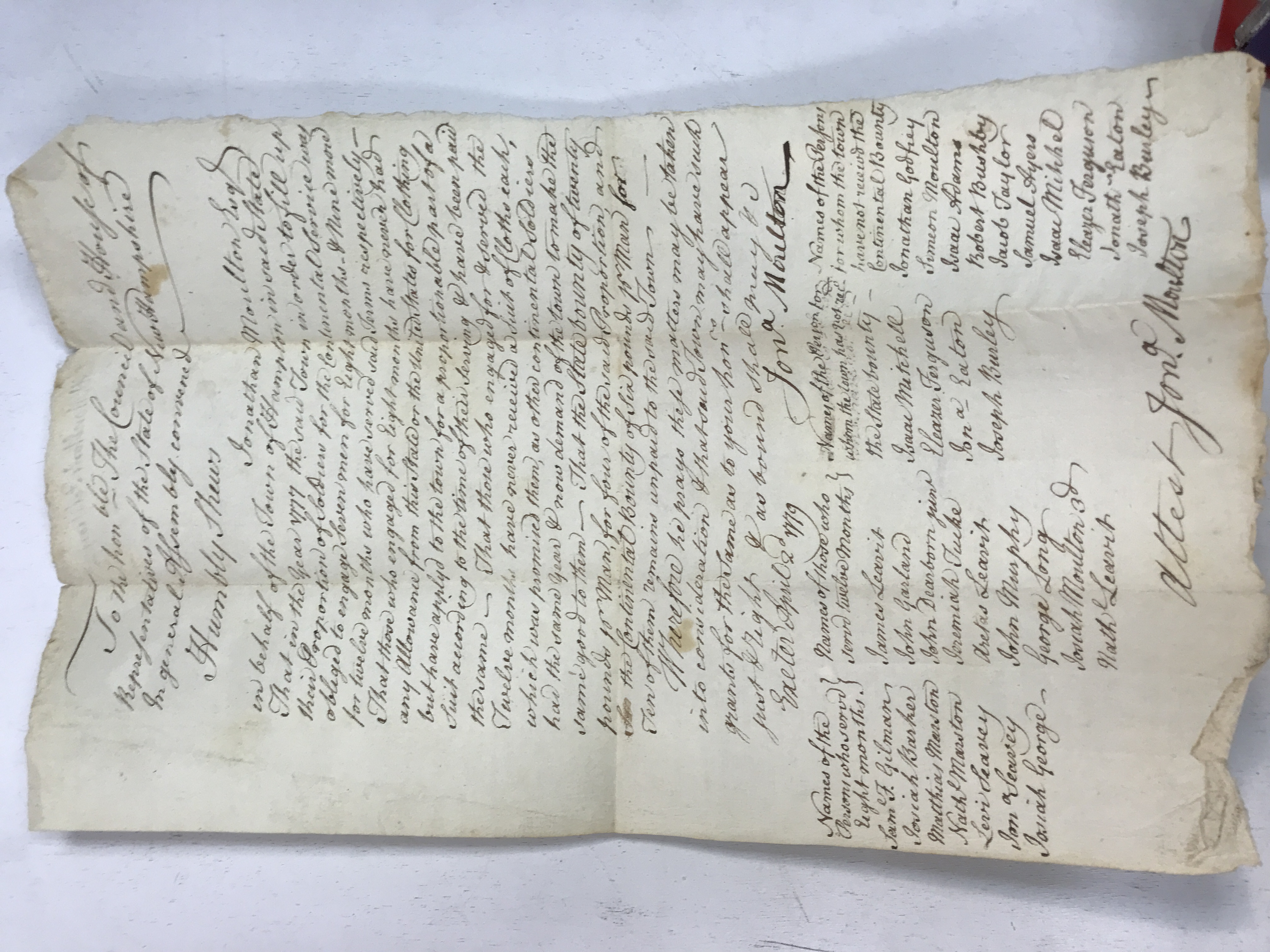
Colonel Moulton’s petition for soldiers’ clothing and bounty · view 2 of 2
Open full-resolution photograph ↗
JDT-D554 · A recorded deed and its registry endorsement
The folded endorsement cites Rockingham records and a January 1793 recording, while the opened printed form carries handwritten property terms and witnesses. Keeping the outside and full deed together connects the archival filing information with the legal instrument itself.
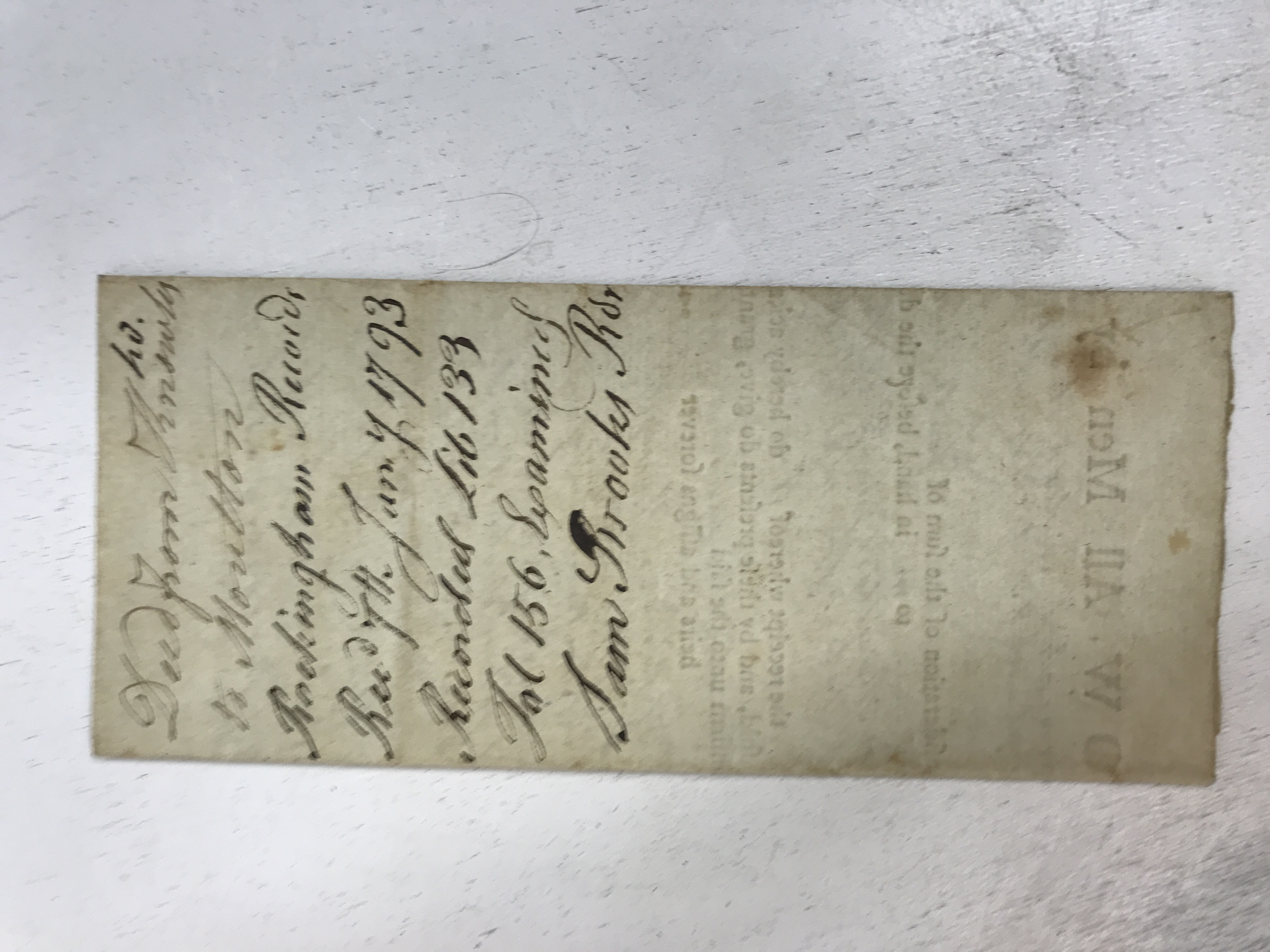
A recorded deed and its registry endorsement · view 1 of 2
Open full-resolution photograph ↗
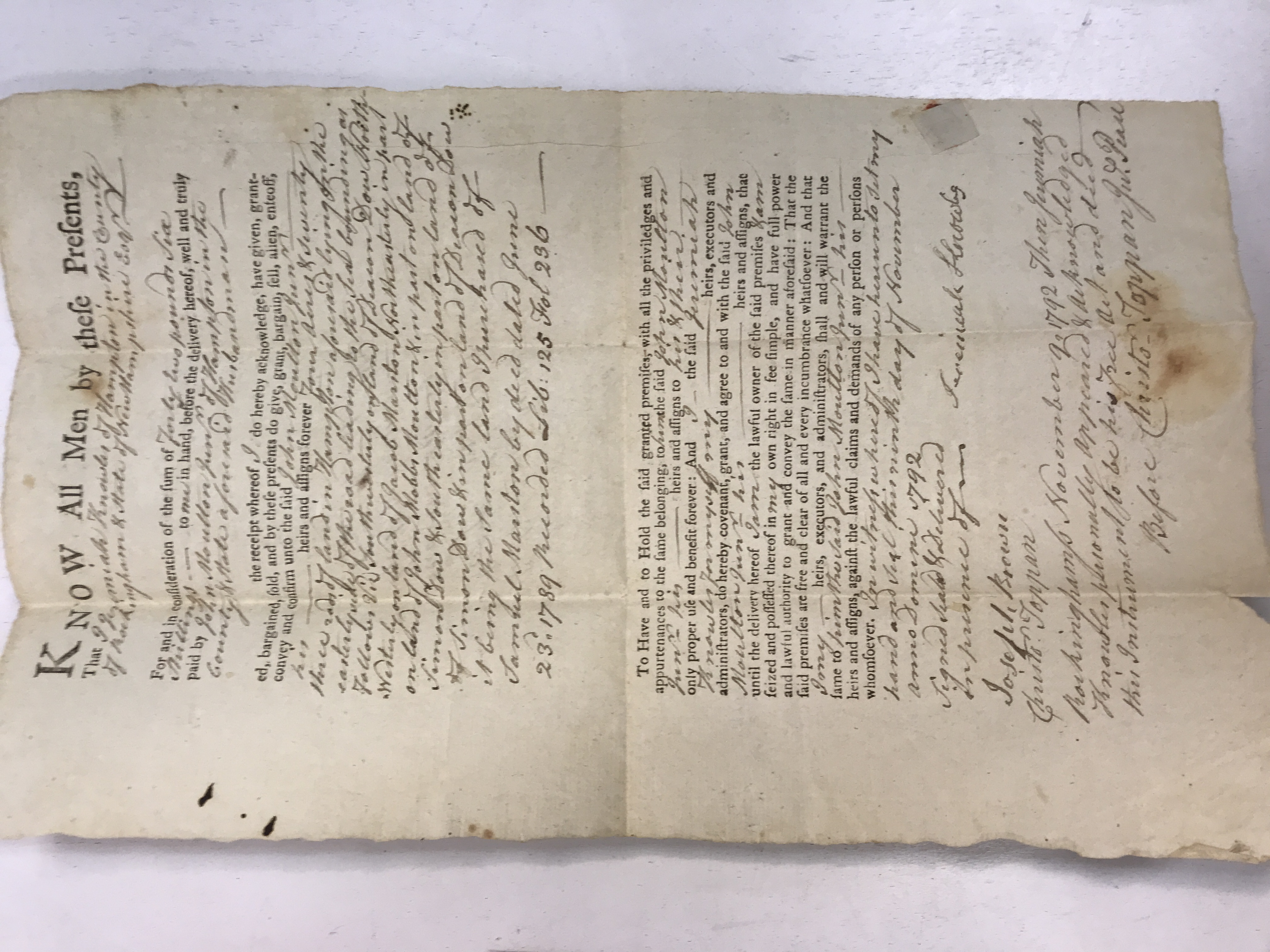
A recorded deed and its registry endorsement · view 2 of 2
Open full-resolution photograph ↗
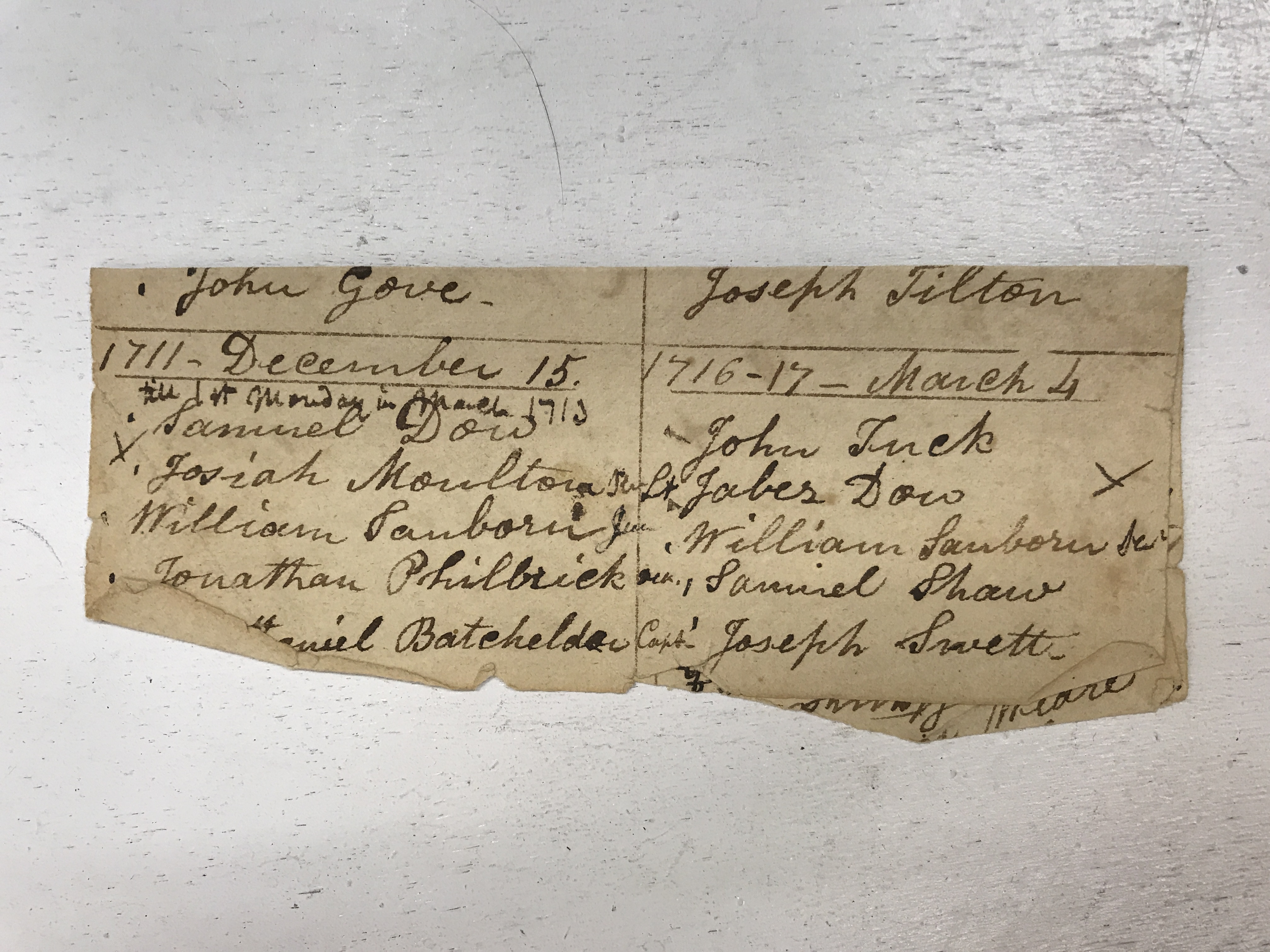
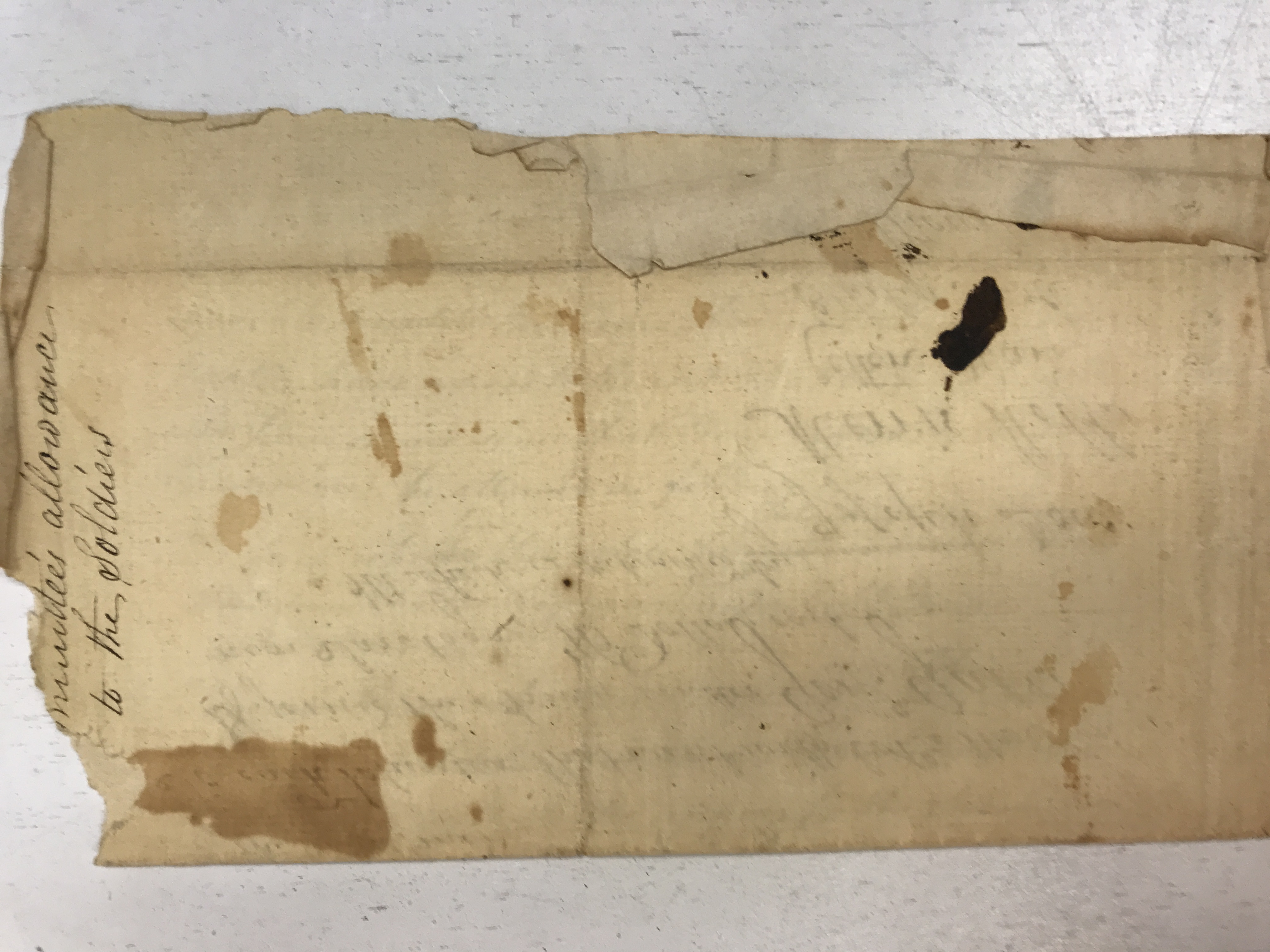
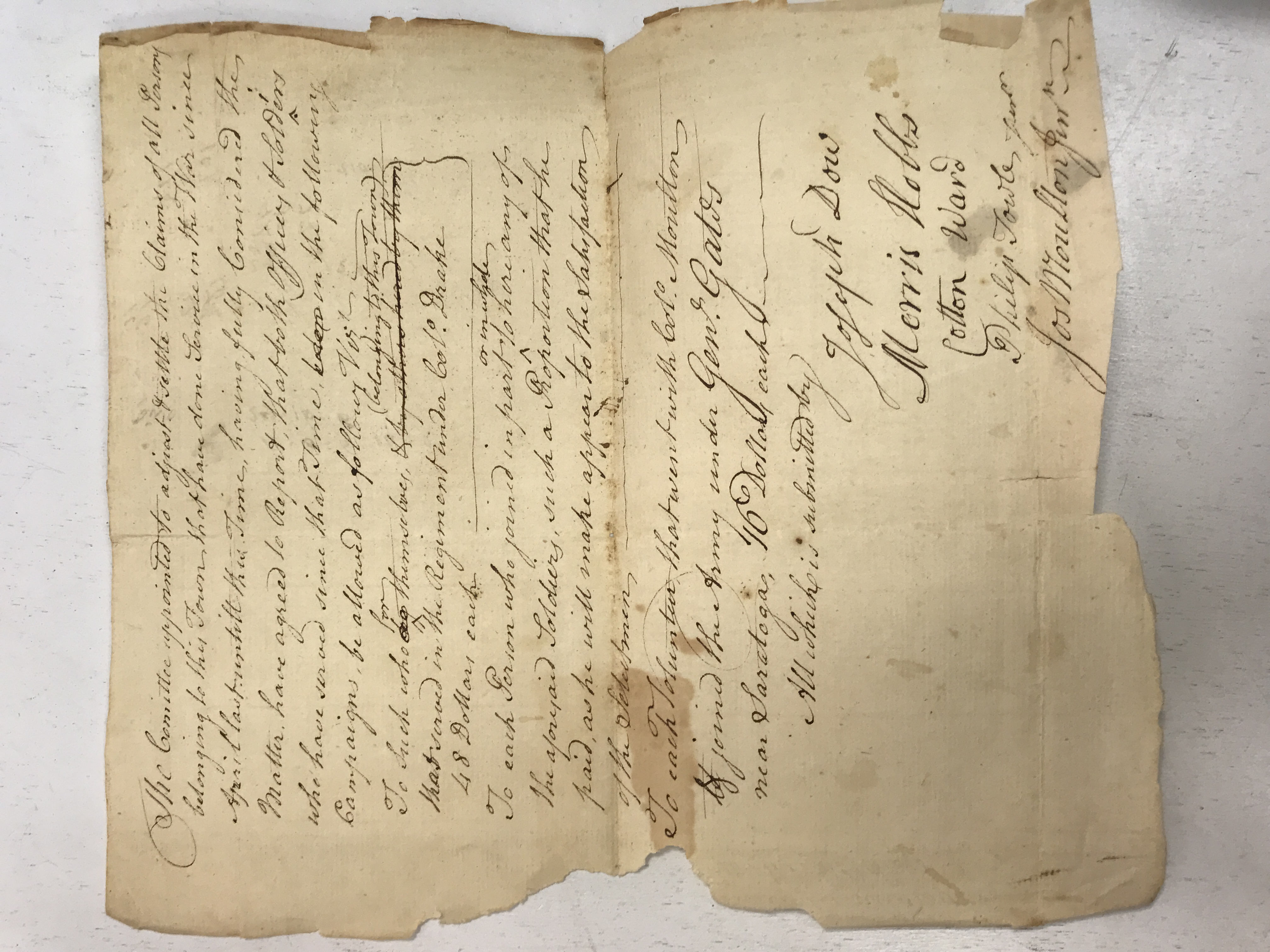
JDT-D555 · Service allowances and a committee report
The endorsement identifies allowances connected with military service. The report proposes payments for specified campaigns, including service with Colonel Drake and volunteers with Colonel Moulton near Saratoga under General Gates. Names at the foot include Joseph Dow and other committee members. The amounts and categories show how wartime service became a matter of local compensation and later settlement.
Service allowances and a committee report · view 1 of 3
Open full-resolution photograph ↗
Service allowances and a committee report · view 2 of 3
Open full-resolution photograph ↗
Service allowances and a committee report · view 3 of 3
Open full-resolution photograph ↗
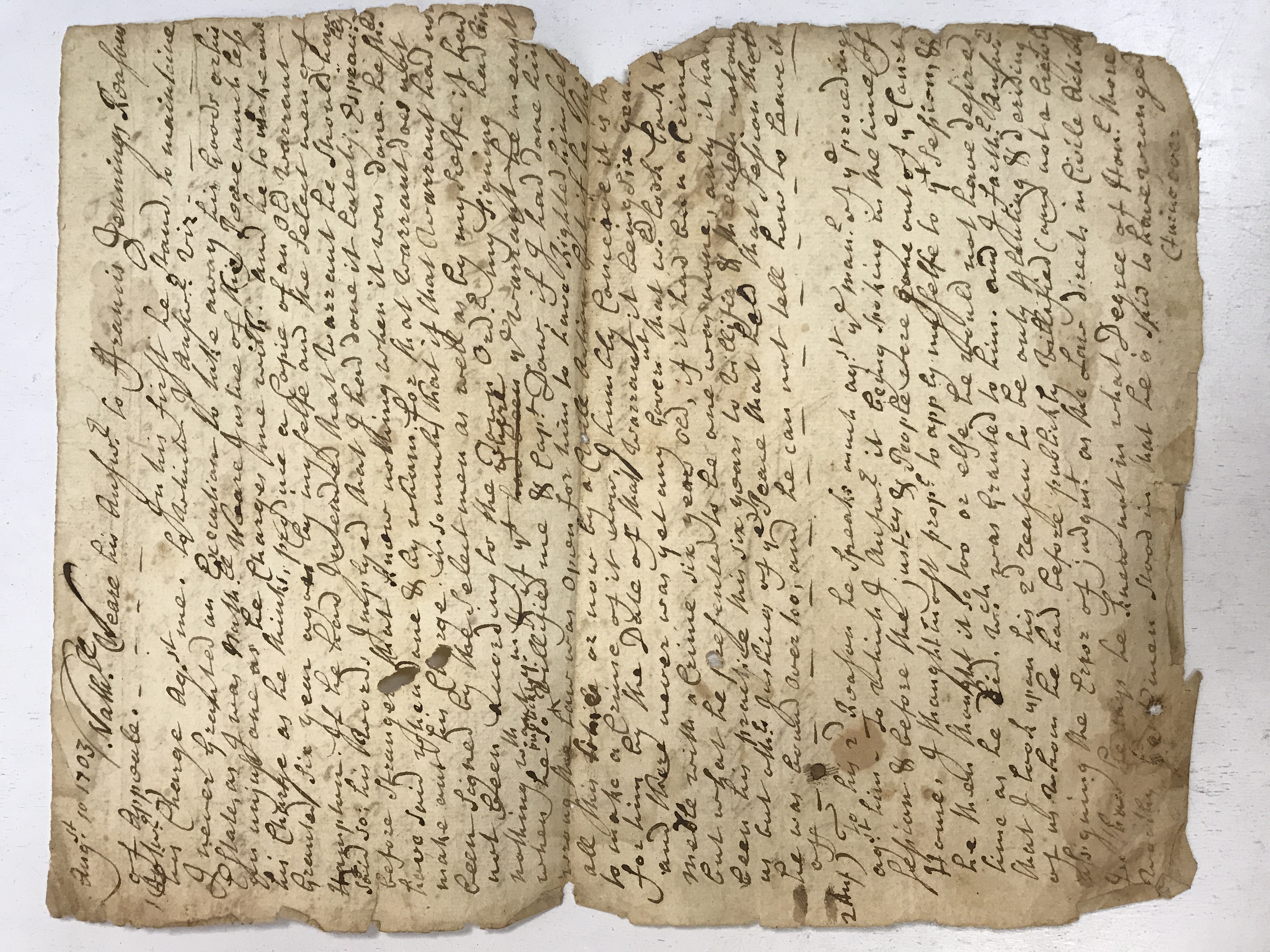
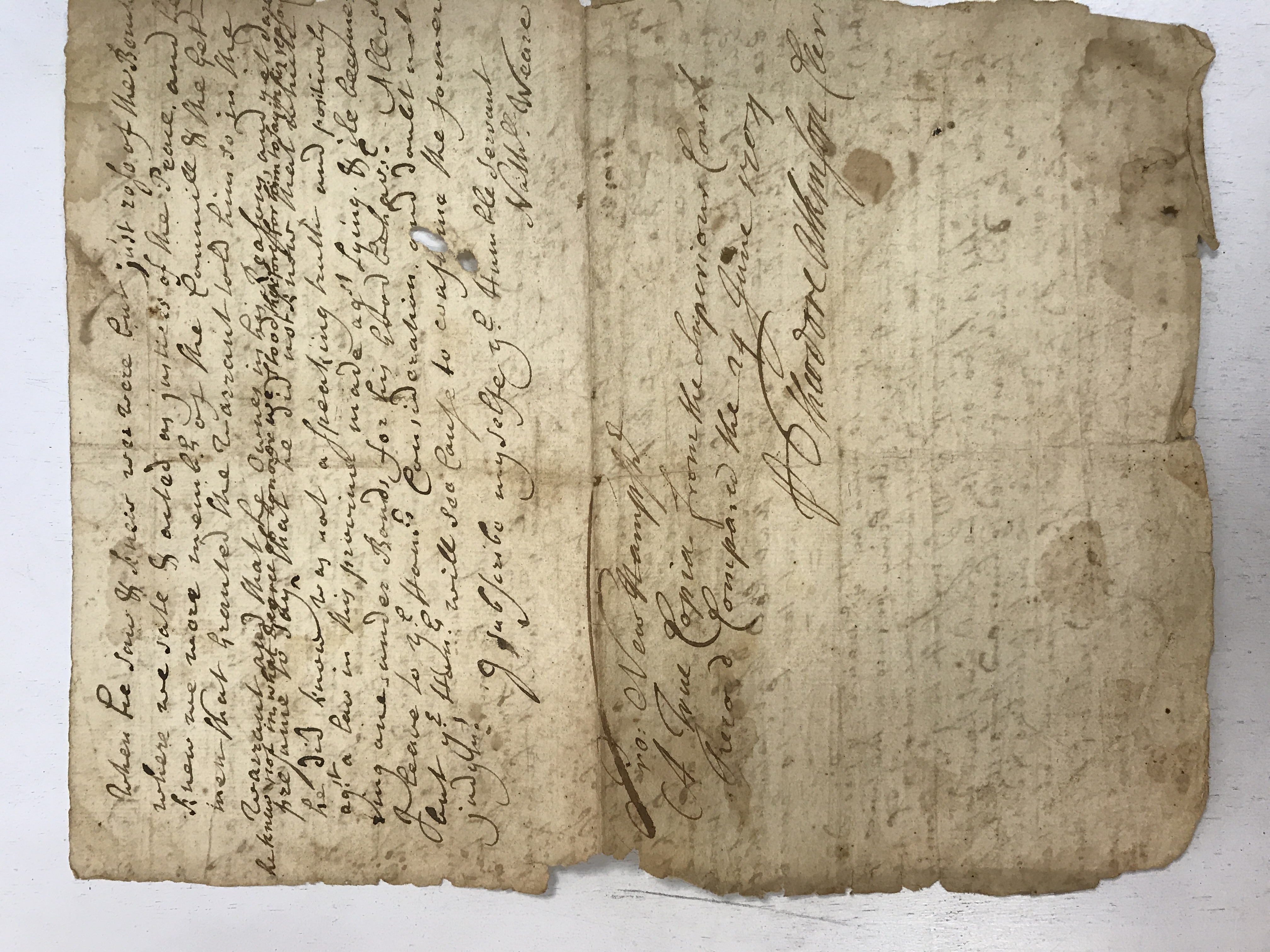
JDT-D556 · A handwritten legal agreement and its continuation
A densely written instrument sets out obligations in formal legal language and continues to a dated signature area. Both sides preserve the conditions and the execution of the agreement. Difficult names and clauses are left open rather than forcing a modern summary beyond what can be read securely.
A handwritten legal agreement and its continuation · view 1 of 2
Open full-resolution photograph ↗
A handwritten legal agreement and its continuation · view 2 of 2
Open full-resolution photograph ↗
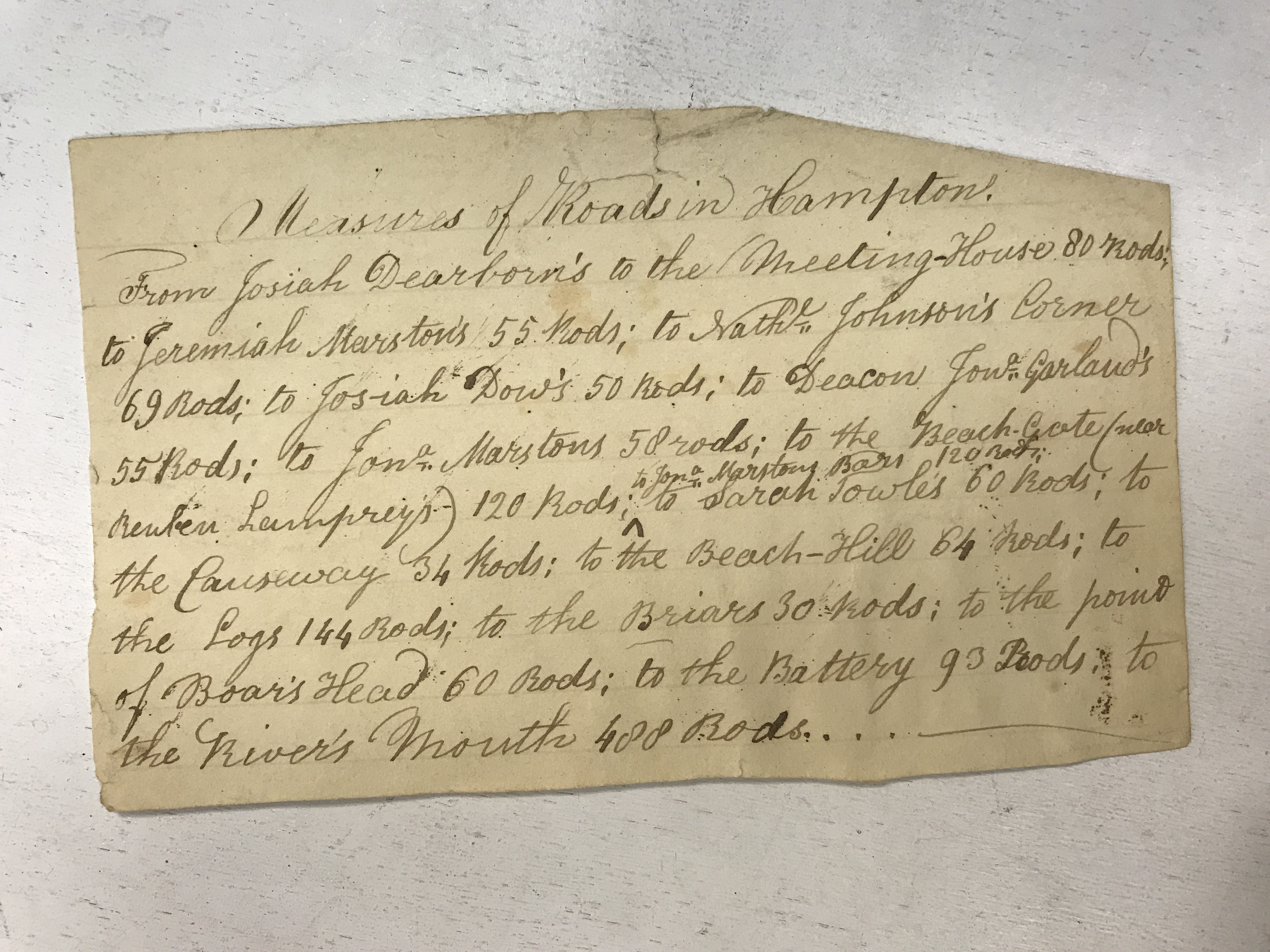
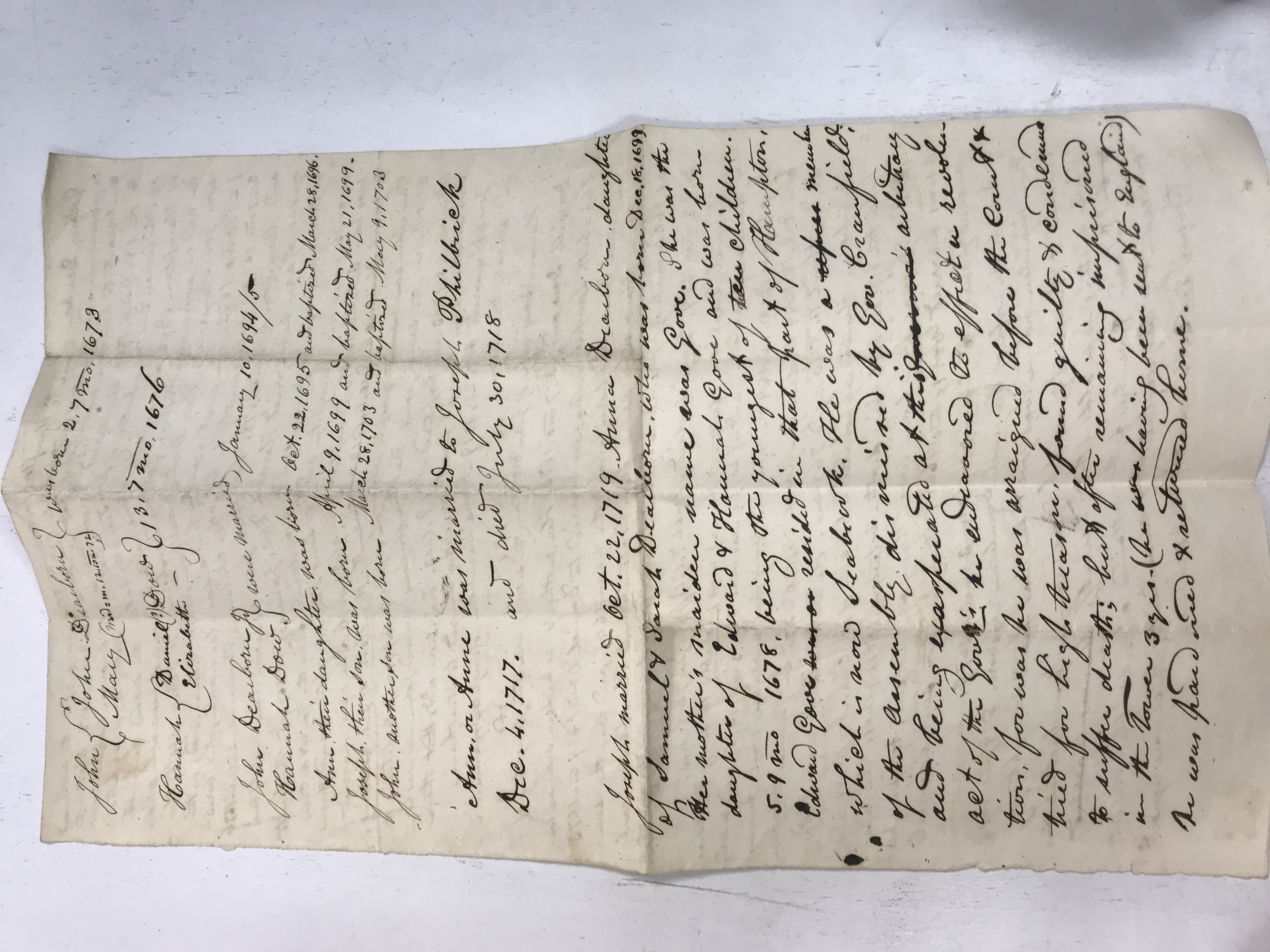
JDT-D557 · Court and family memoranda on reused leaves
Short legal and family notes occupy these leaves, including references to claims, judgments and named local people. The change from continuous prose to compact memoranda suggests extracts or working notes. The items are retained as a small research group without asserting that they all belong to one proceeding.
Court and family memoranda on reused leaves · view 1 of 2
Open full-resolution photograph ↗
Court and family memoranda on reused leaves · view 2 of 2
Open full-resolution photograph ↗
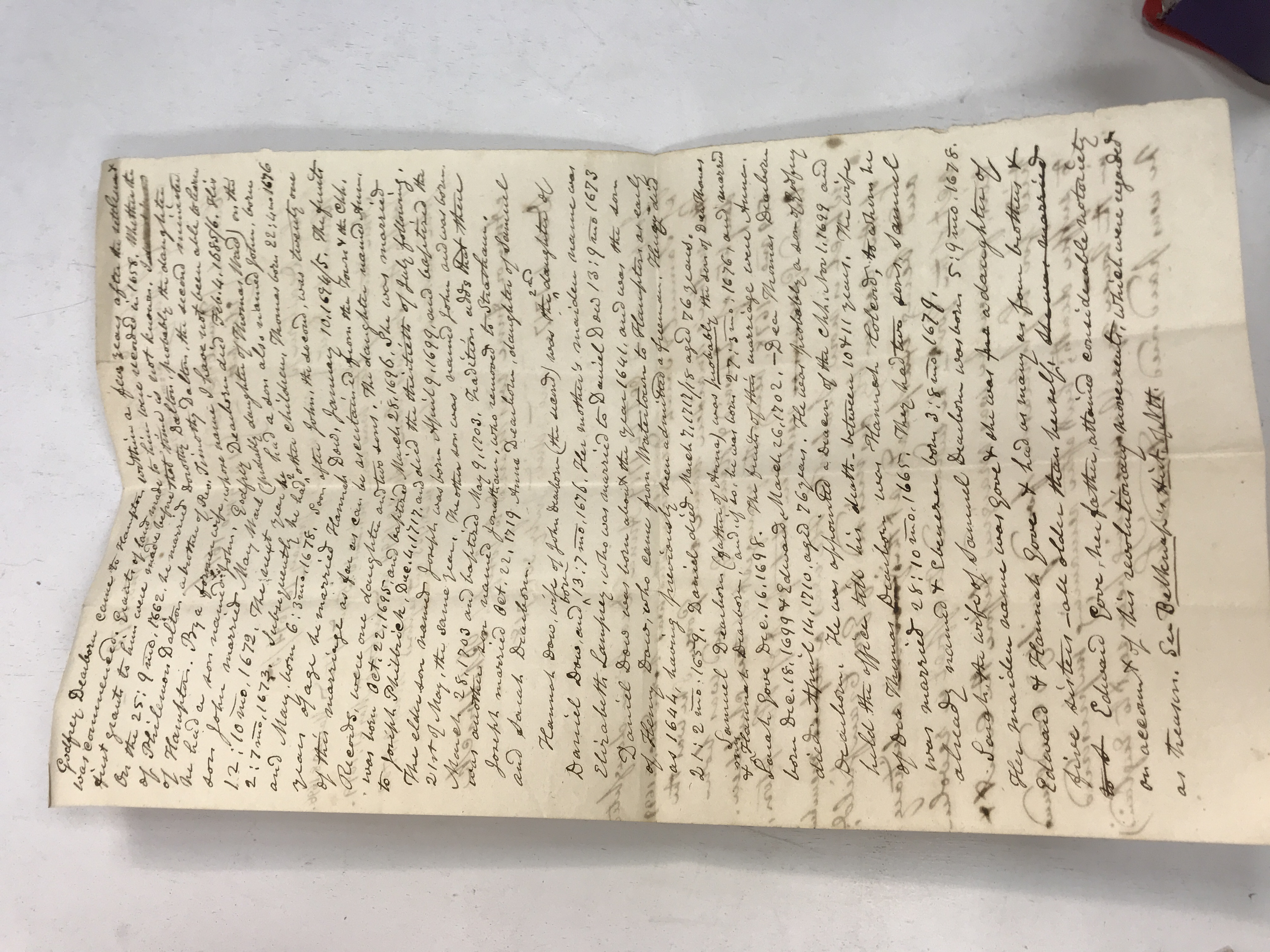
JDT-D558 · An extended legal and genealogical research memorandum
A narrow sheet gathers a long sequence of historical references and deductions. Its dense writing and corrections mark it as research in progress. It provides a bridge from original legal papers into the systematic Hampton family and property notes that follow.
An extended legal and genealogical research memorandum · view 1 of 1
Open full-resolution photograph ↗
Collection photographs supplied by Whit. Descriptions are finding aids, not full transcriptions. Names, dates and associations remain provisional where the handwriting is uncertain.