
The Joseph Dow trunk archive · Document gallery 66
Lot 3C: early account ledger, first sequence
22 photographs · 6 document groups
Photographed by Whit from the recovered Joseph Dow collection. Descriptions draw on visible names, dates and subjects; uncertain readings remain provisional. Reading copies are turned upright, and each image links to the unchanged full-resolution original.
JDT-D503 · The tied bundle and the ledger’s exposed leaves
The Lot 3C parcel is shown tied, then opened to heavily worn narrow ledger leaves. Staining, missing edges and a pronounced horizontal fold record the book’s condition. The opening accounts combine names, quantities and money columns; the physical evidence is as significant as the transactions.
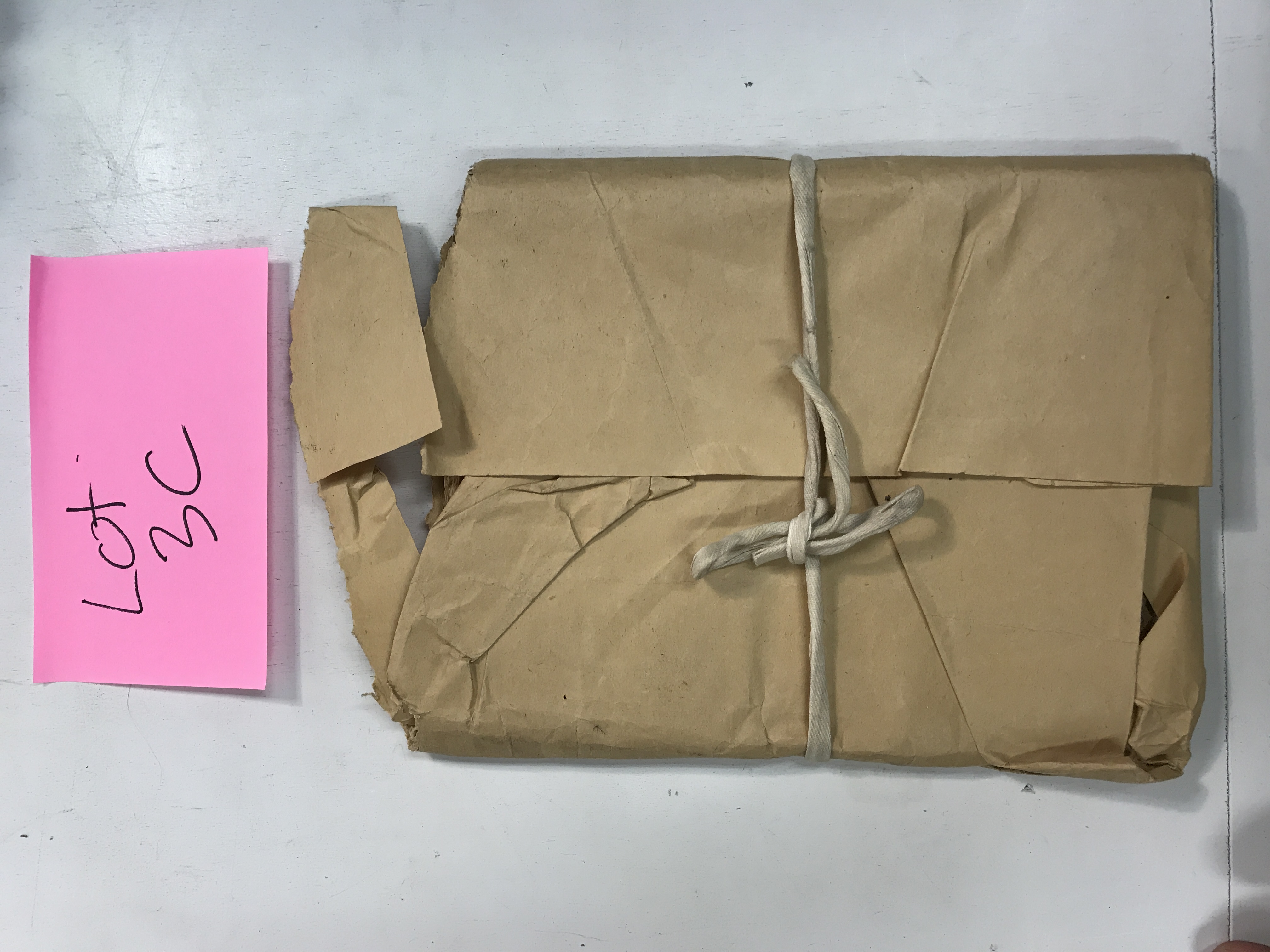
The tied bundle and the ledger’s exposed leaves · view 1 of 3
Open full-resolution photograph ↗
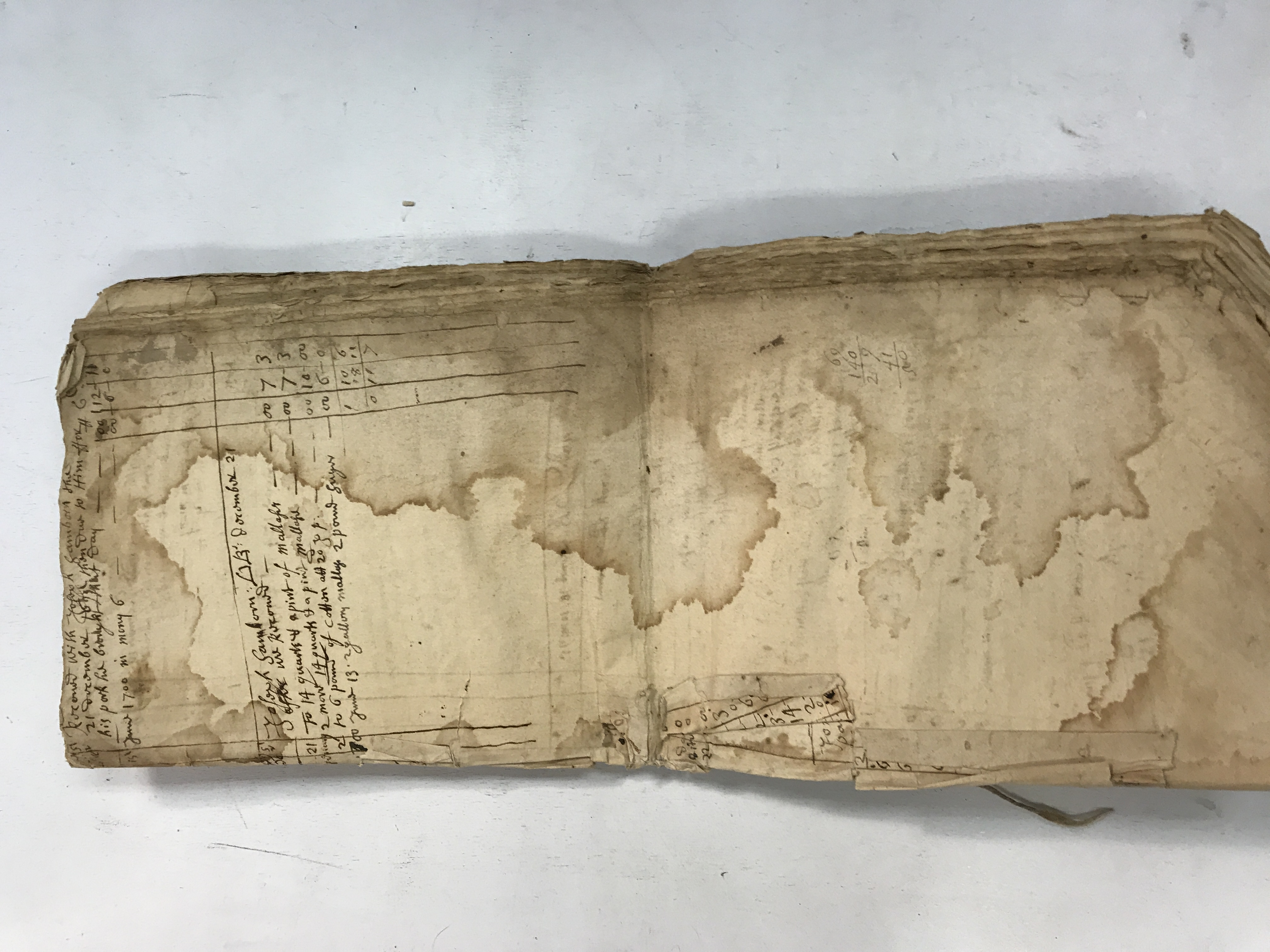
The tied bundle and the ledger’s exposed leaves · view 2 of 3
Open full-resolution photograph ↗
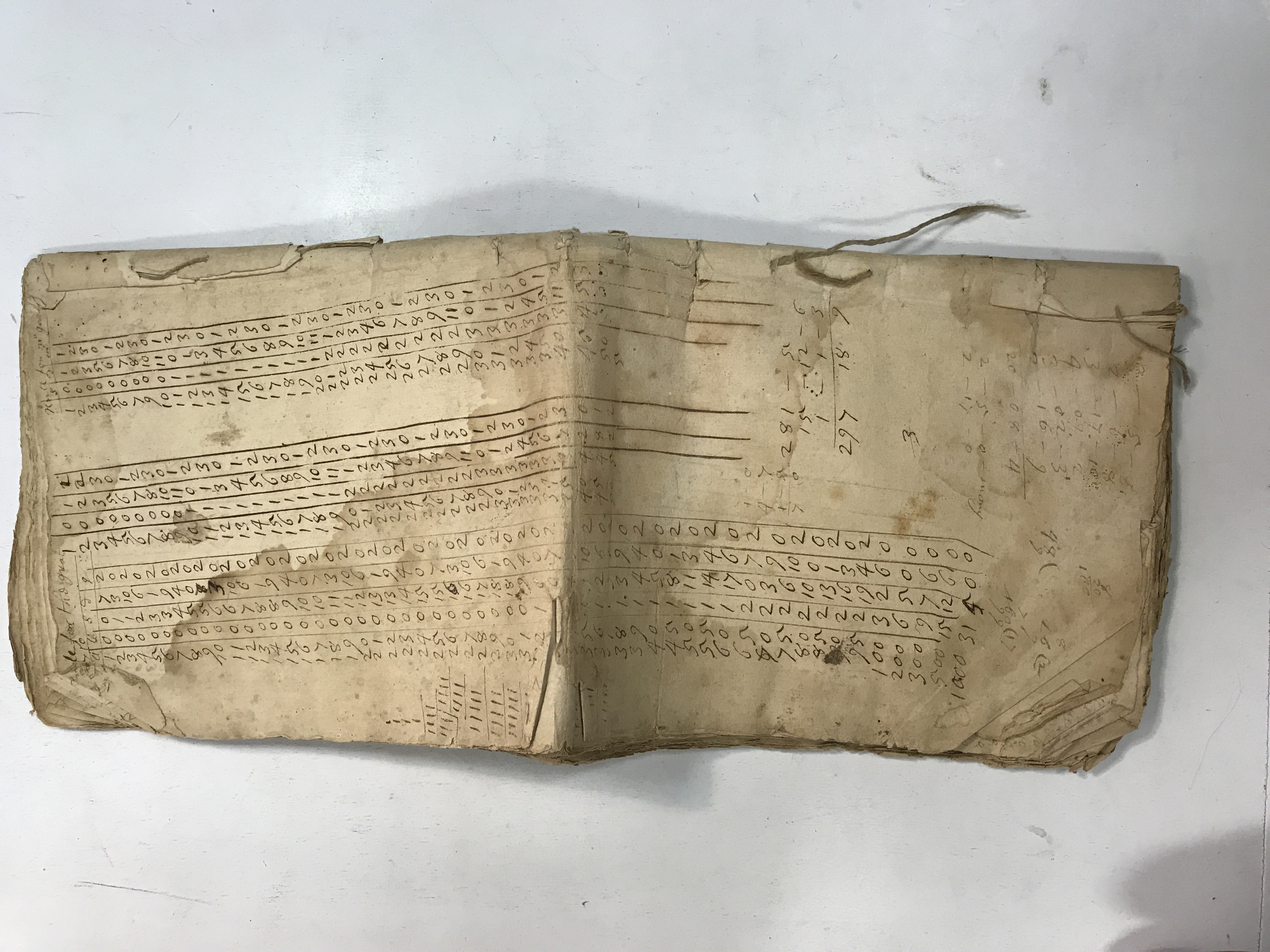
The tied bundle and the ledger’s exposed leaves · view 3 of 3
Open full-resolution photograph ↗
JDT-D504 · Late seventeenth-century trade accounts
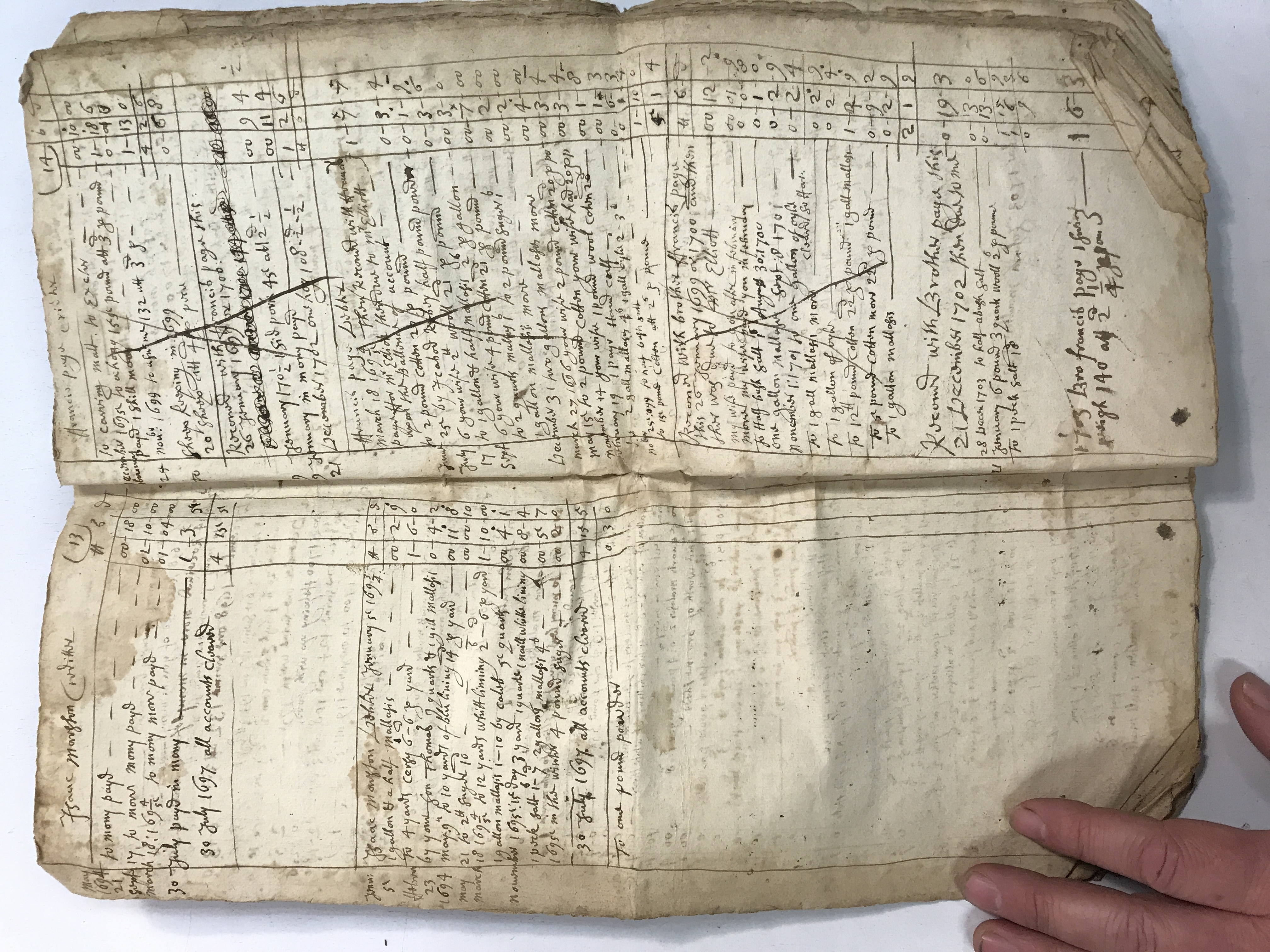
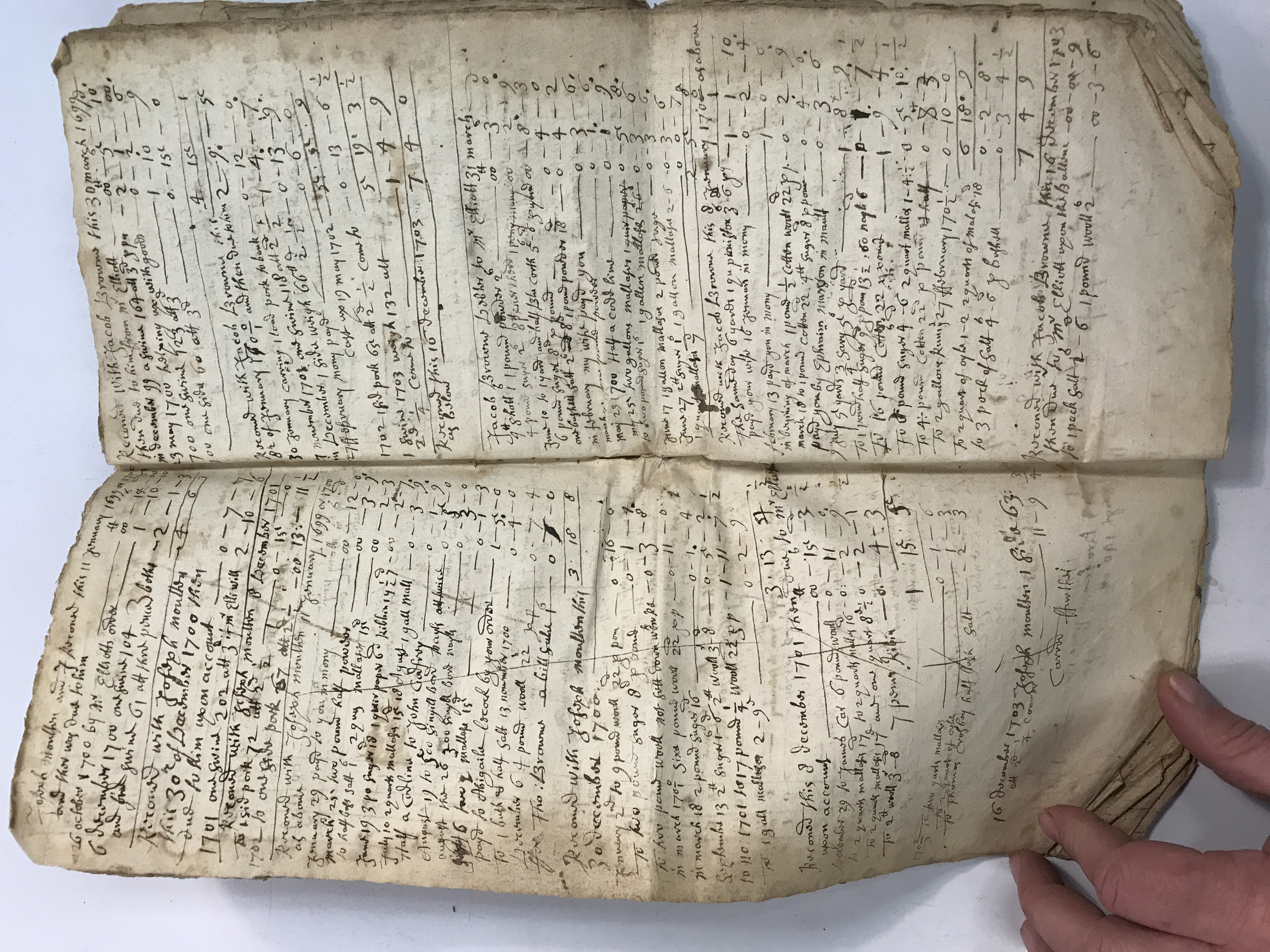
Names including Marston, Brown and other Hampton-area families appear among accounts dated in the later 1690s and around 1700. Purchases include molasses, sugar, rum and salt; livestock and money payments appear as credits. These entries show exchange working through personal accounts rather than immediate cash settlement for every purchase.
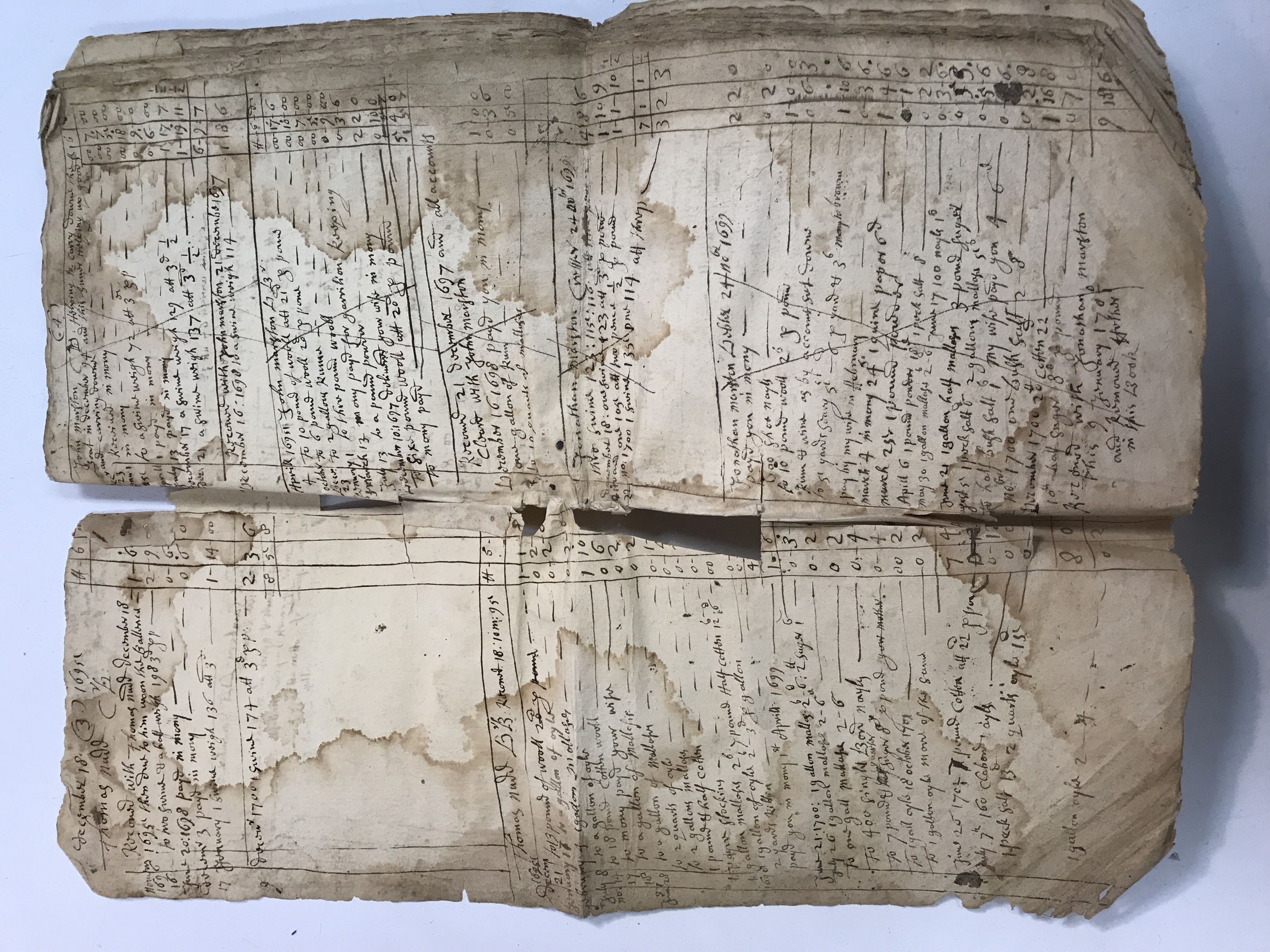
Late seventeenth-century trade accounts · view 1 of 4
Open full-resolution photograph ↗
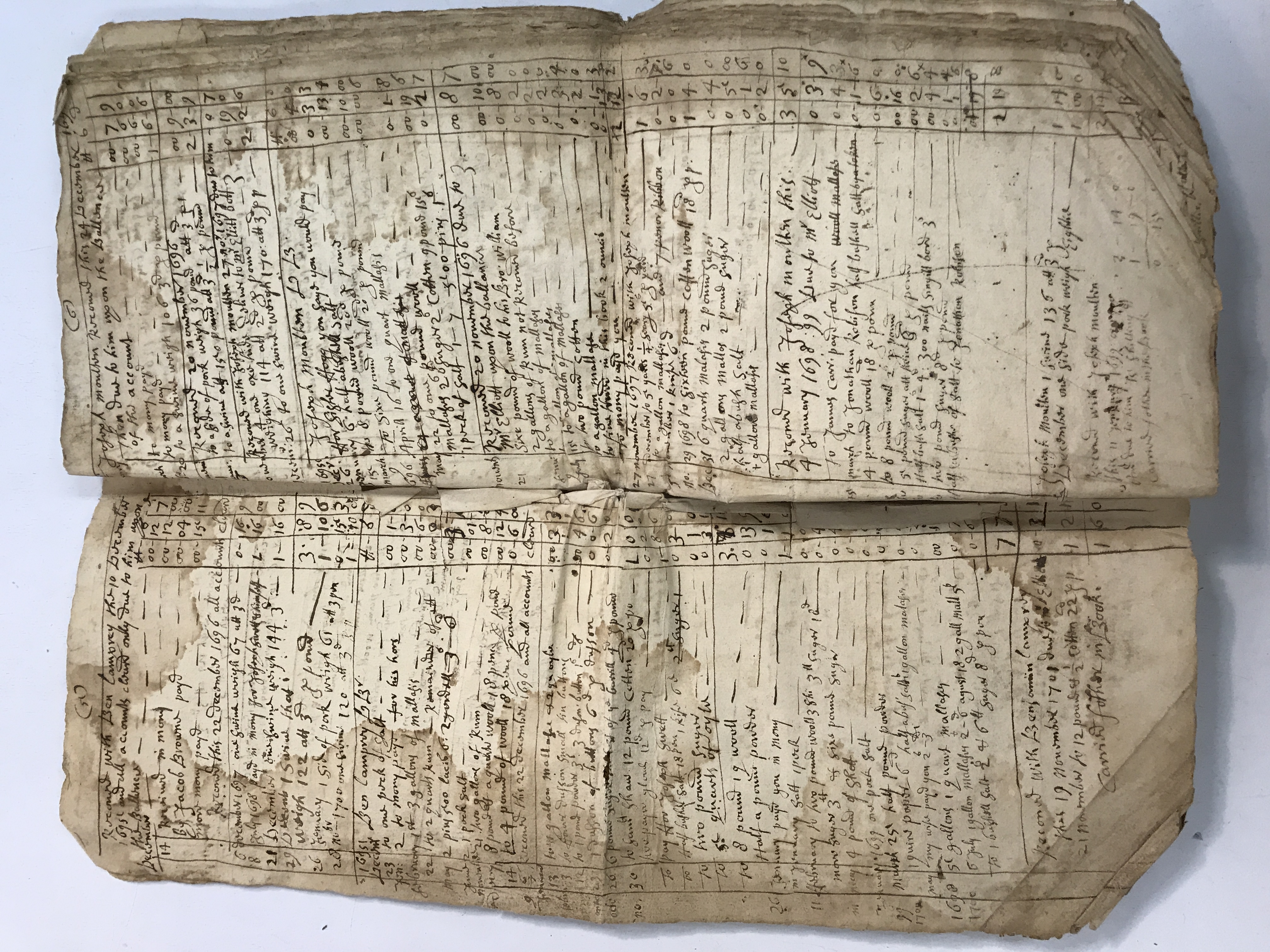
Late seventeenth-century trade accounts · view 2 of 4
Open full-resolution photograph ↗
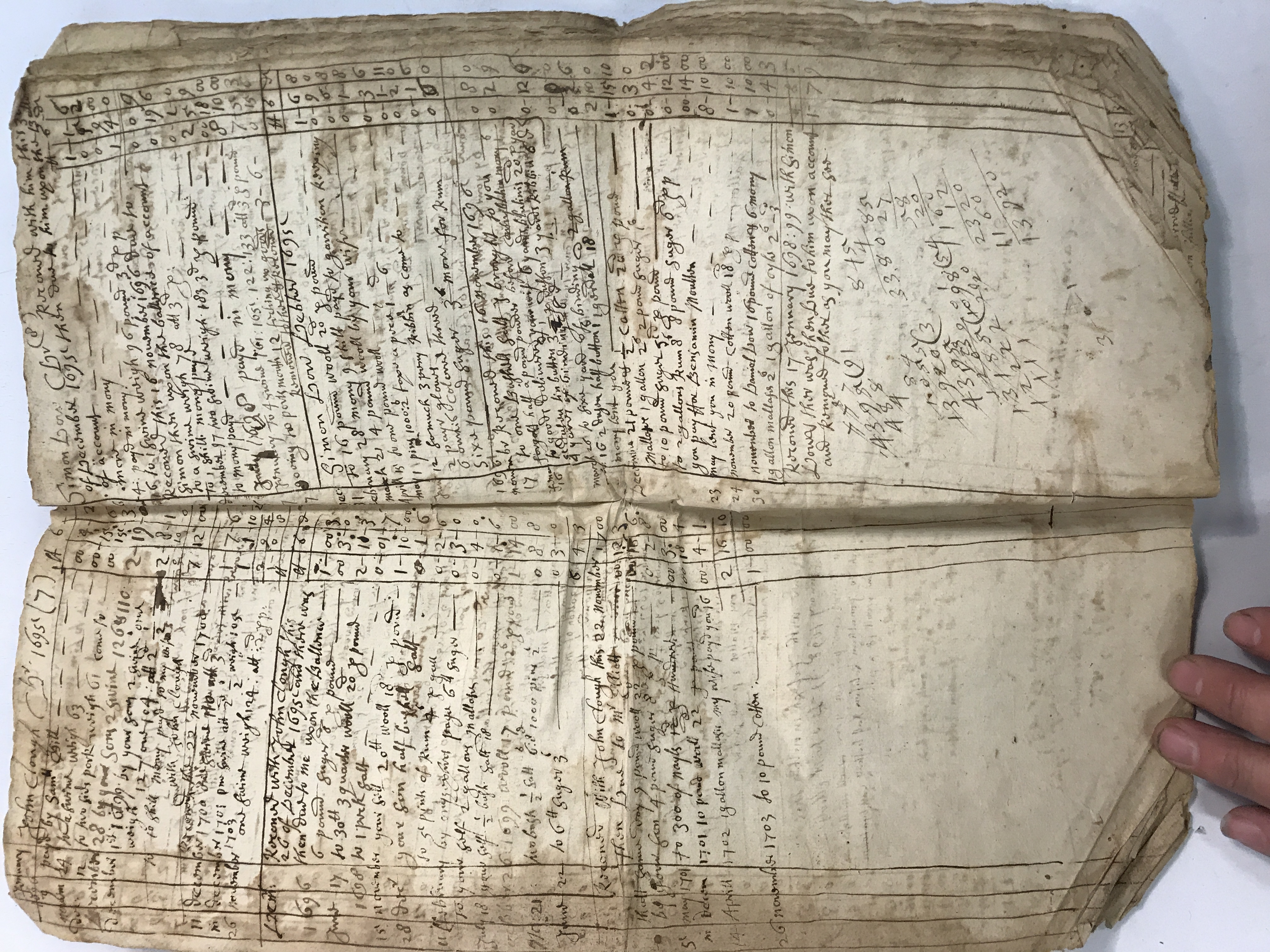
Late seventeenth-century trade accounts · view 3 of 4
Open full-resolution photograph ↗
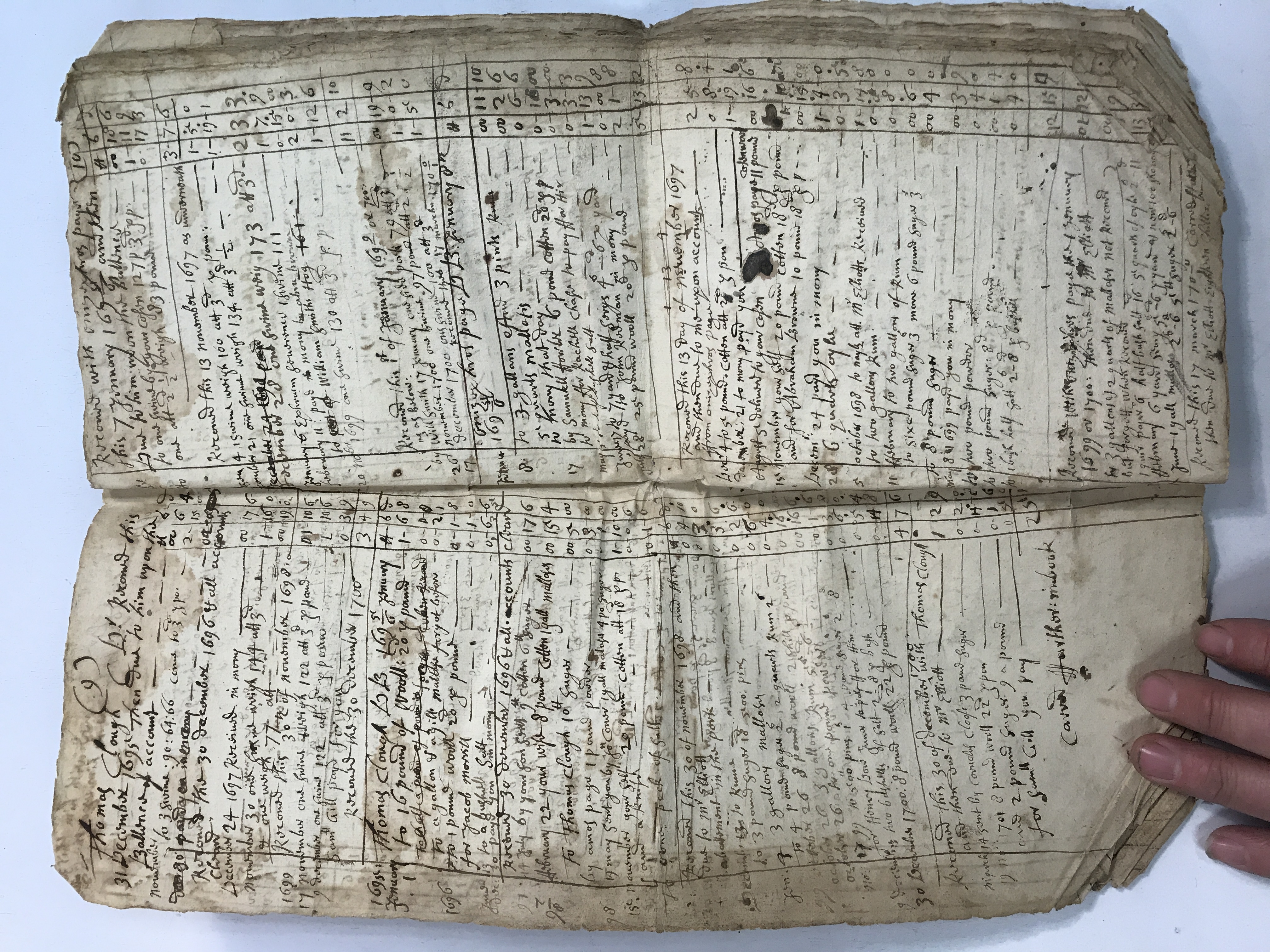
Late seventeenth-century trade accounts · view 4 of 4
Open full-resolution photograph ↗
JDT-D505 · Individual balances and repeated small purchases
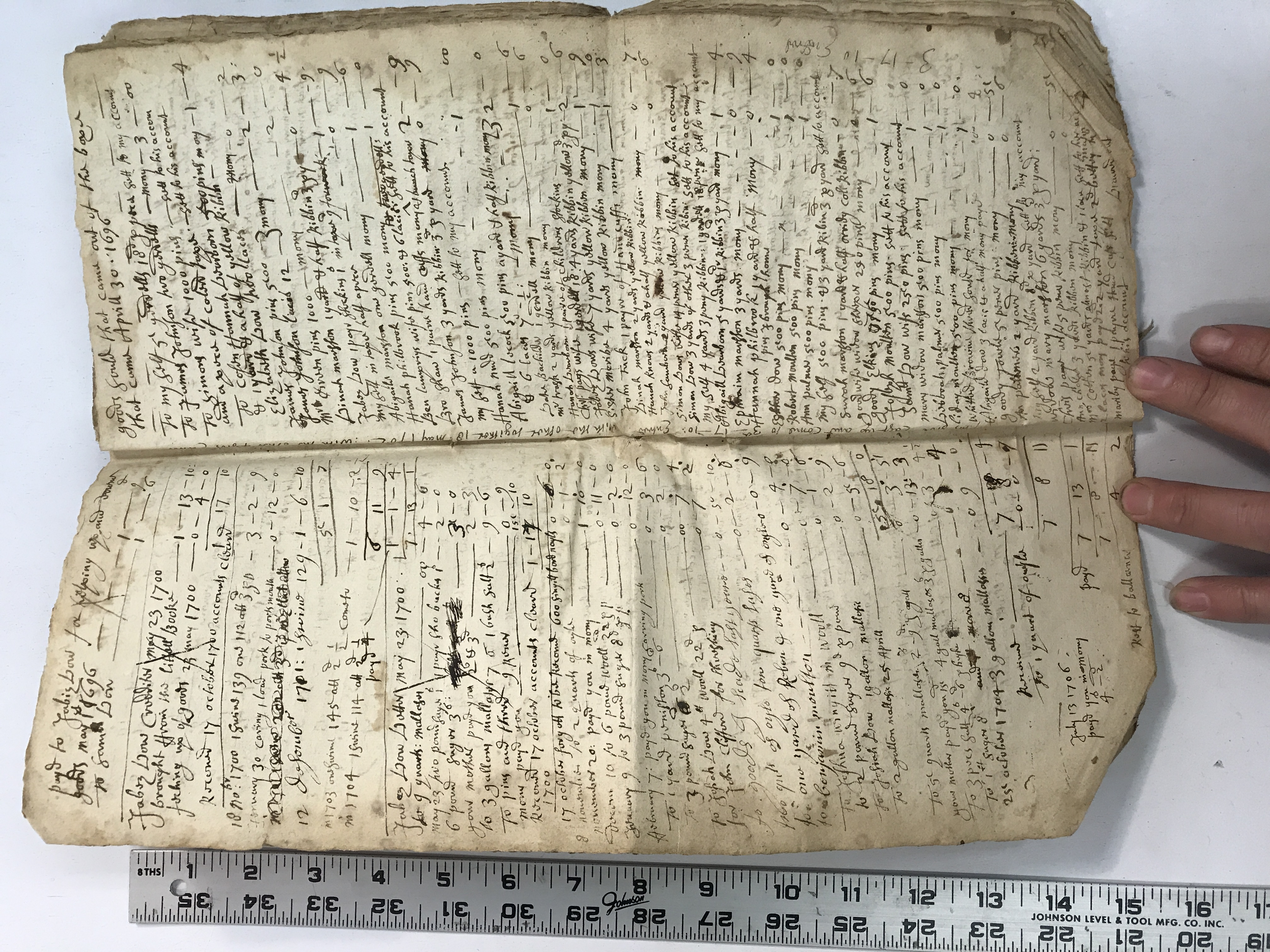
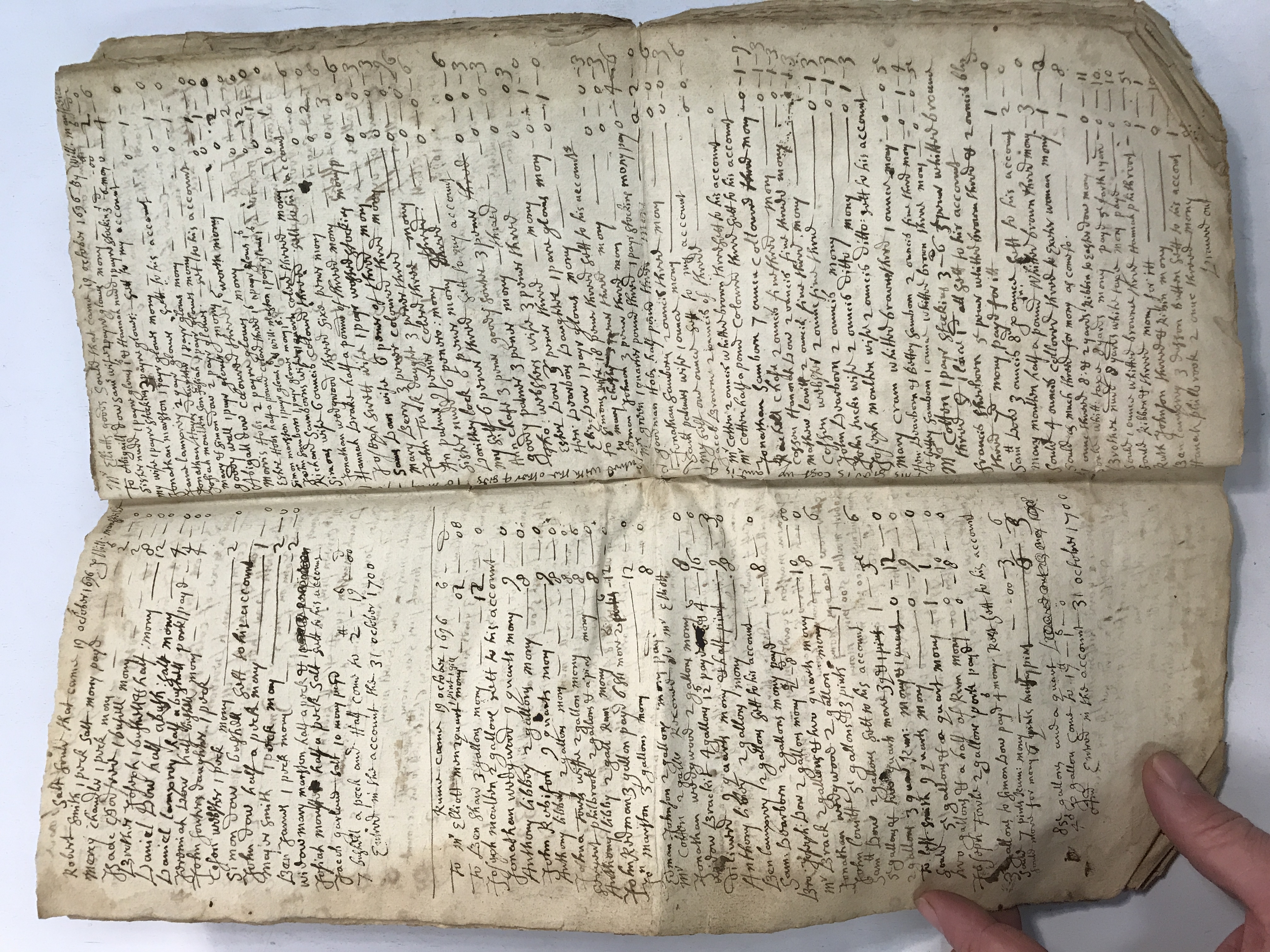
Successive openings preserve separate customers’ debits, credits and reckonings. Recurrent quantities and abbreviated goods reveal how a working ledger compressed information its keeper already understood. Ruled money columns, cancellations and balances matter as much as the names for reconstructing the accounting method.
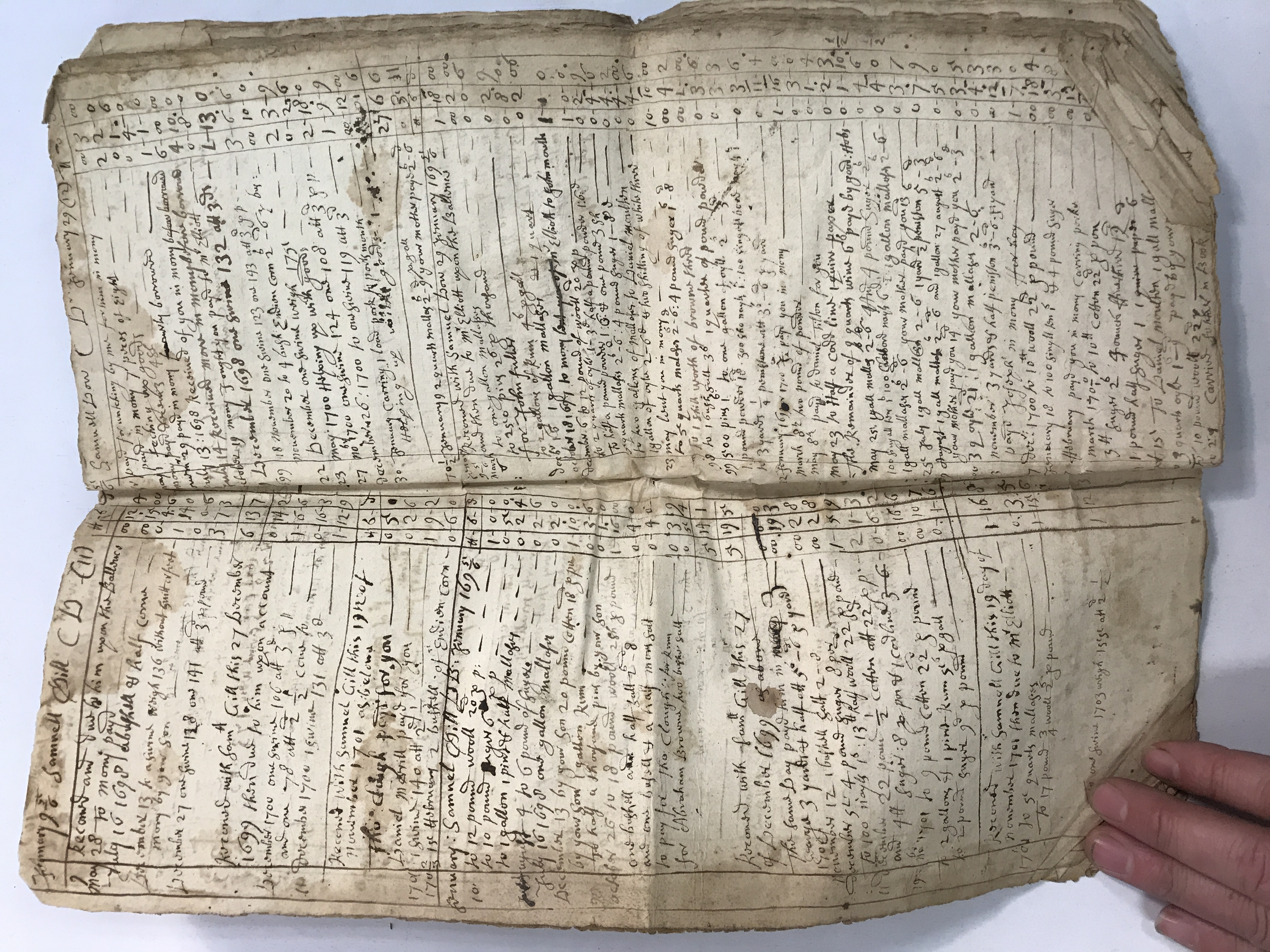
Individual balances and repeated small purchases · view 1 of 5
Open full-resolution photograph ↗
Individual balances and repeated small purchases · view 2 of 5
Open full-resolution photograph ↗
Individual balances and repeated small purchases · view 3 of 5
Open full-resolution photograph ↗
Individual balances and repeated small purchases · view 4 of 5
Open full-resolution photograph ↗
Individual balances and repeated small purchases · view 5 of 5
Open full-resolution photograph ↗
JDT-D506 · Goods, textile notions and settlement notes
One opening includes an account with John Cotton dated in the 1690s and lists of ribbon, buttons and related small goods. Neighboring pages continue the pattern of traded provisions and account settlements. Such lists place imported or purchased household materials beside agricultural produce and local payments.
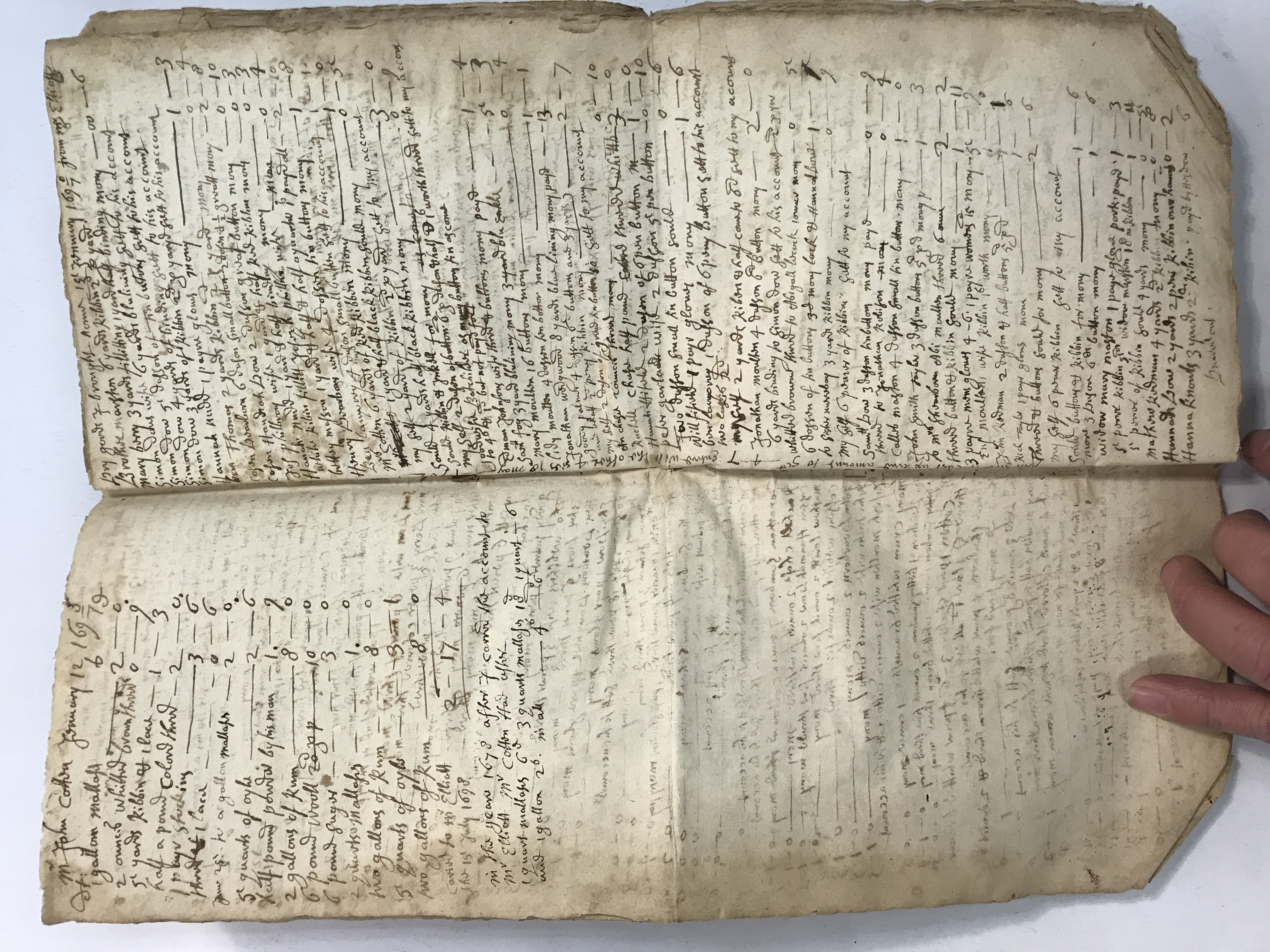
Goods, textile notions and settlement notes · view 1 of 4
Open full-resolution photograph ↗
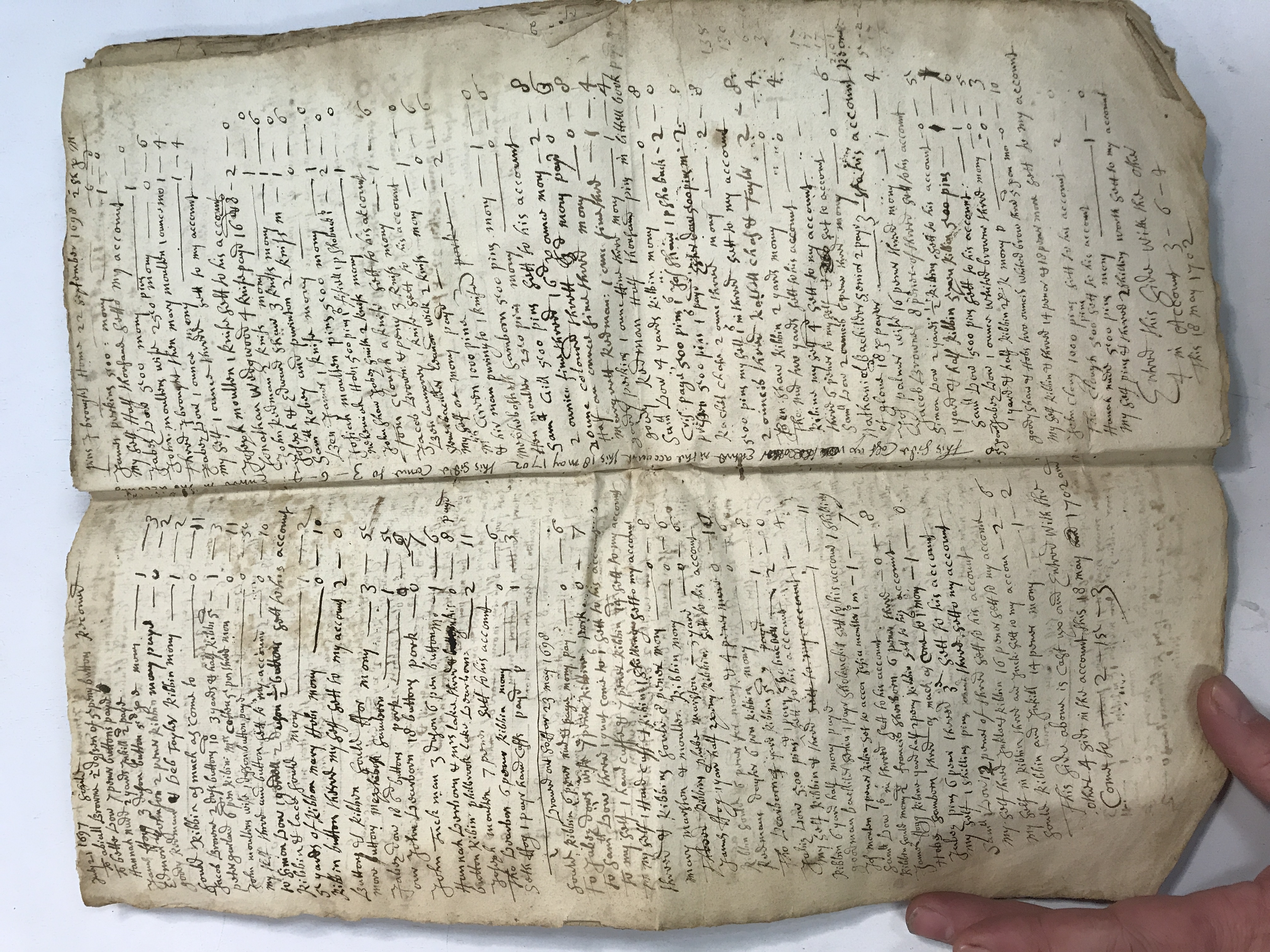
Goods, textile notions and settlement notes · view 2 of 4
Open full-resolution photograph ↗
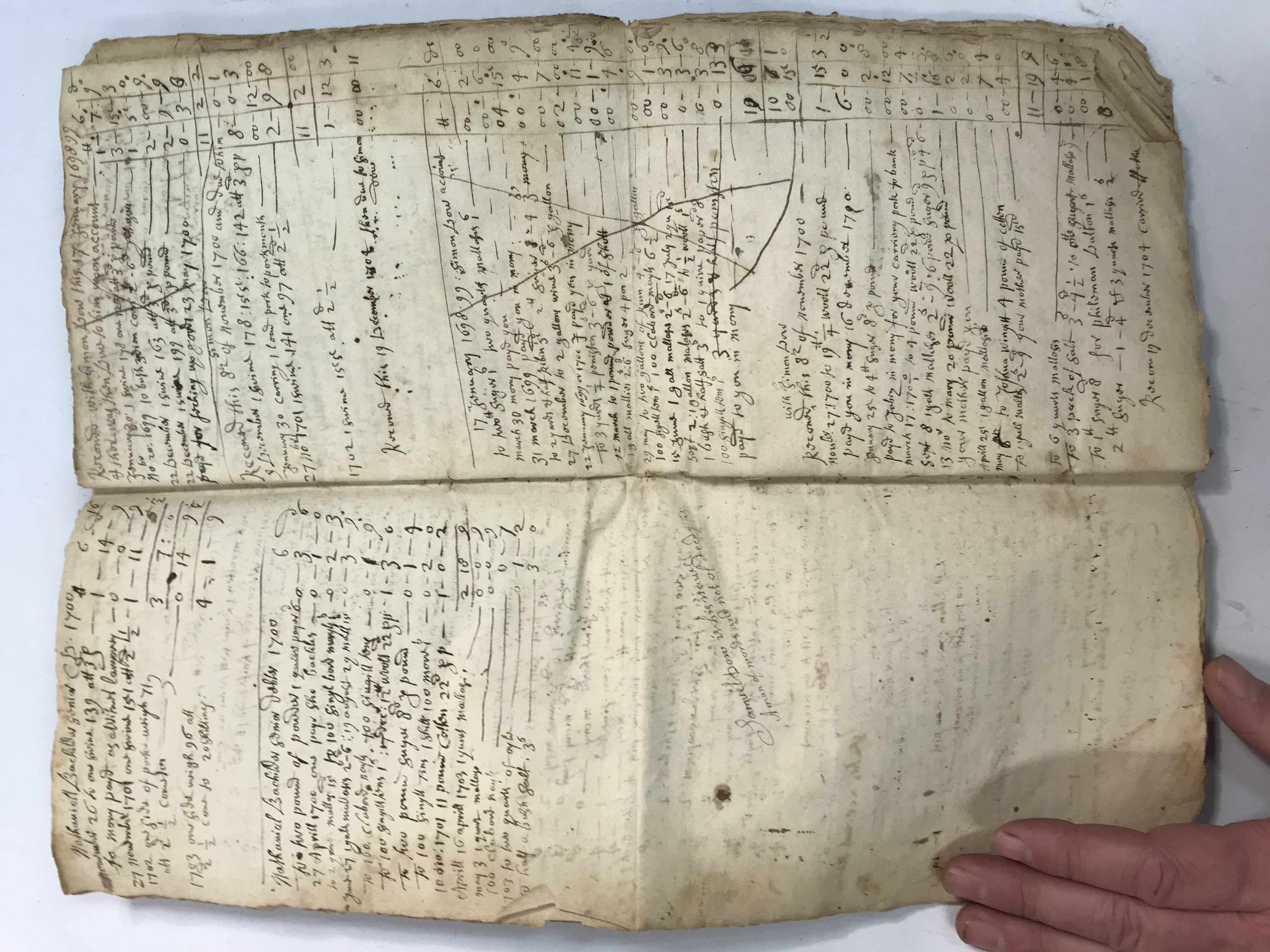
Goods, textile notions and settlement notes · view 3 of 4
Open full-resolution photograph ↗
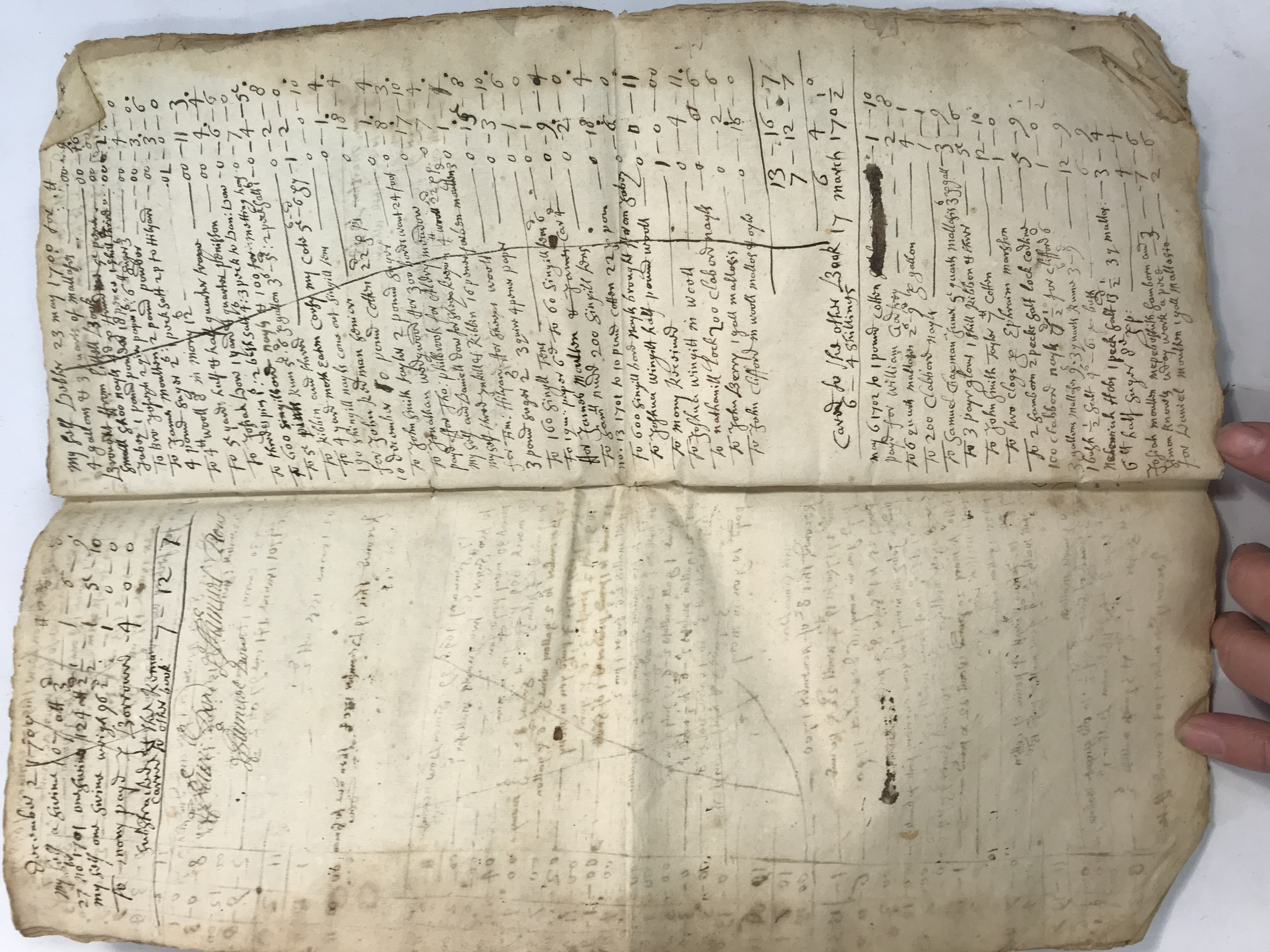
Goods, textile notions and settlement notes · view 4 of 4
Open full-resolution photograph ↗
JDT-D507 · Sparser accounts and partially unused leaves
These openings have fewer entries and broad blank areas, making the ledger’s folds, tears and ruling particularly clear. Short balances and carried amounts may connect to fuller accounts elsewhere in the book. Blank space is retained because it helps preserve the original sequence rather than only selected written passages.
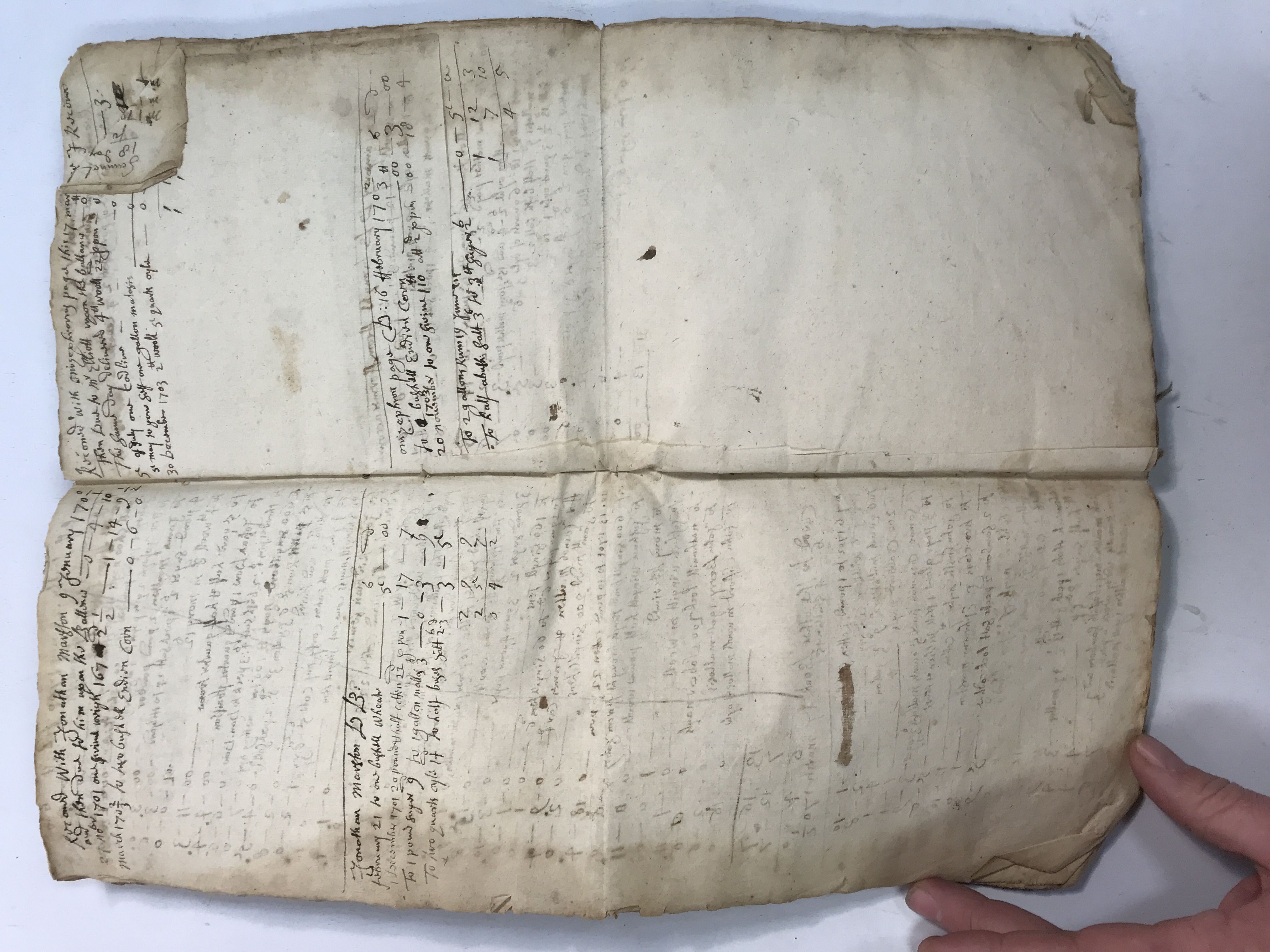
Sparser accounts and partially unused leaves · view 1 of 4
Open full-resolution photograph ↗
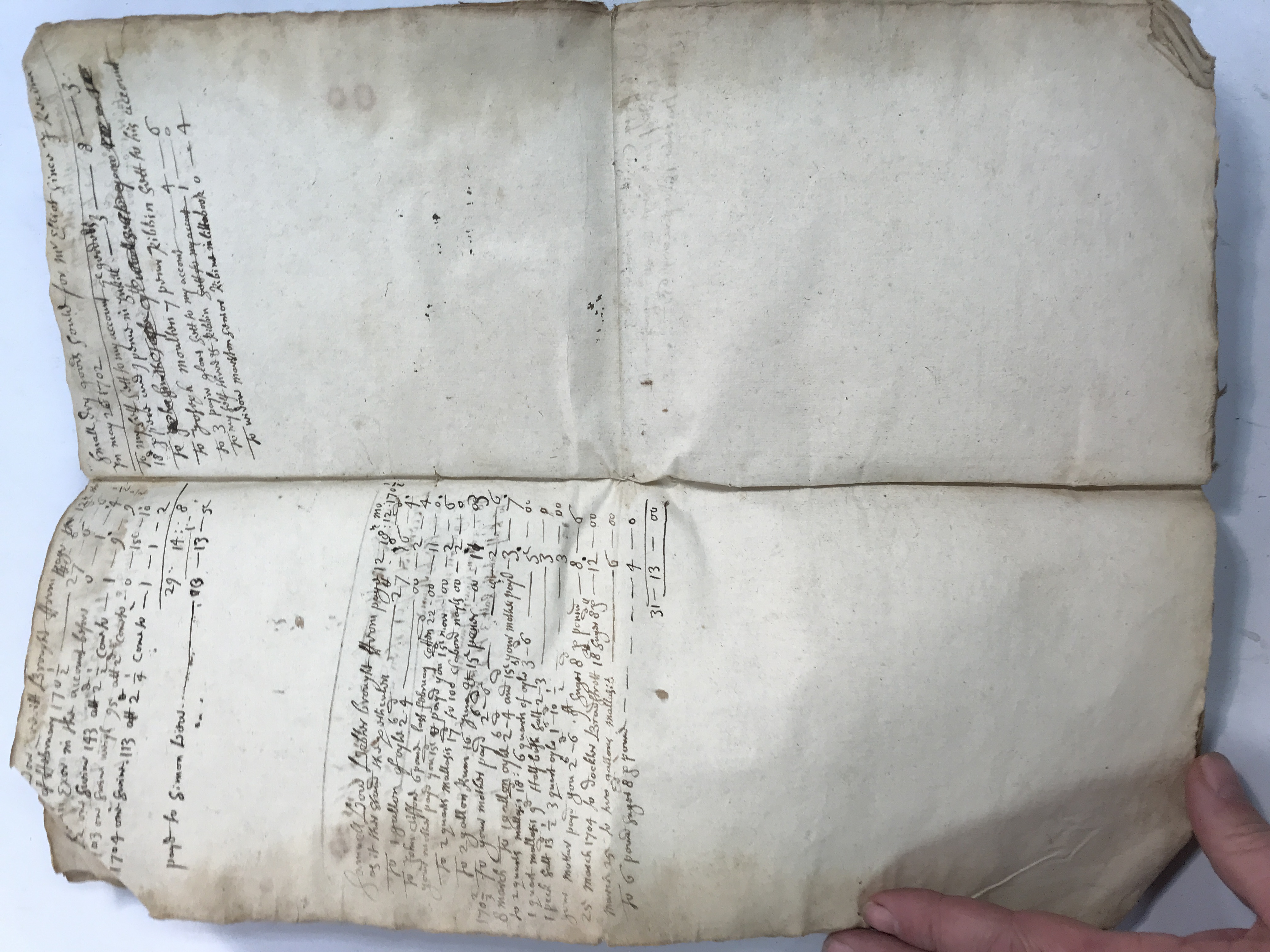
Sparser accounts and partially unused leaves · view 2 of 4
Open full-resolution photograph ↗
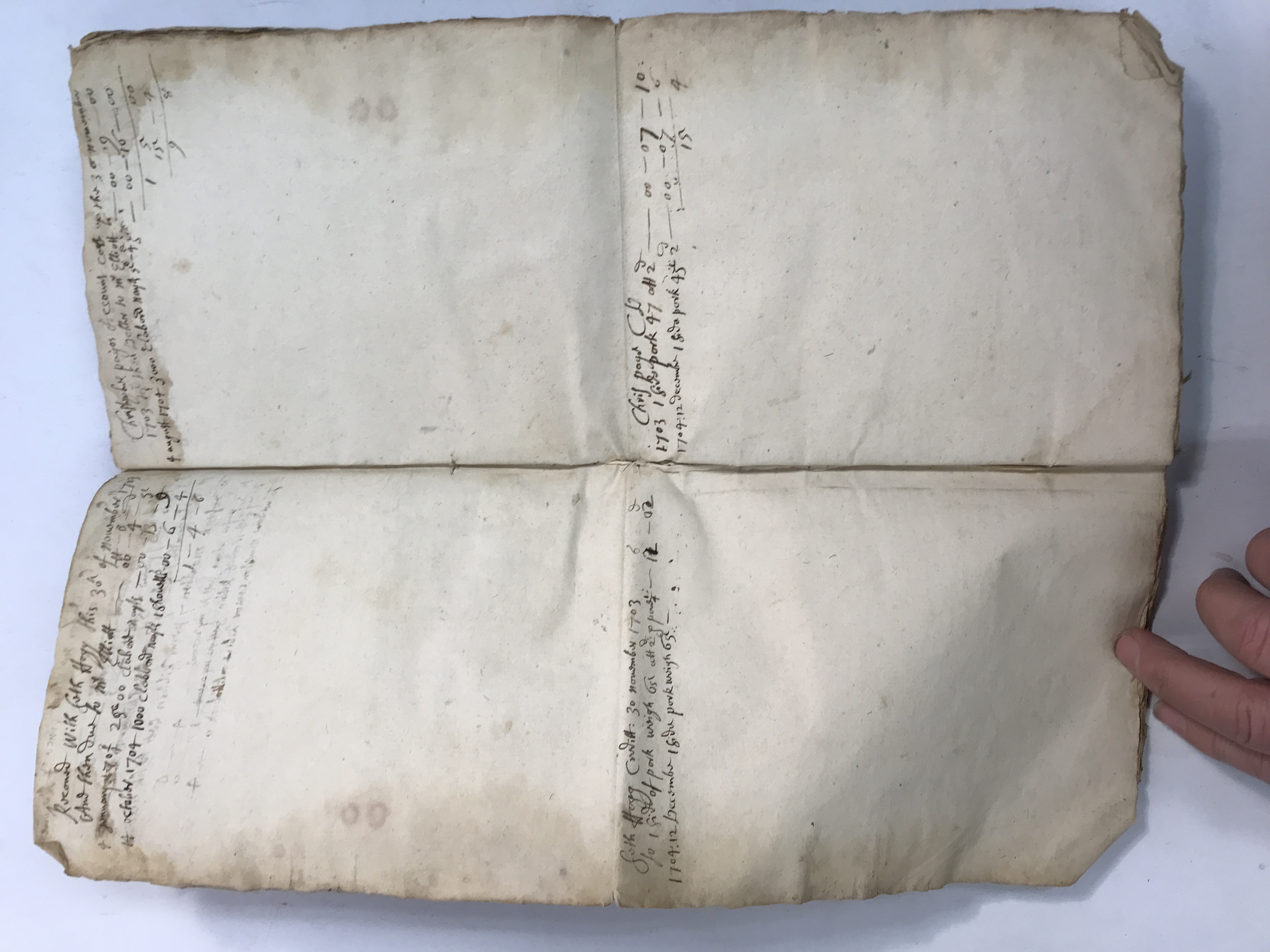
Sparser accounts and partially unused leaves · view 3 of 4
Open full-resolution photograph ↗
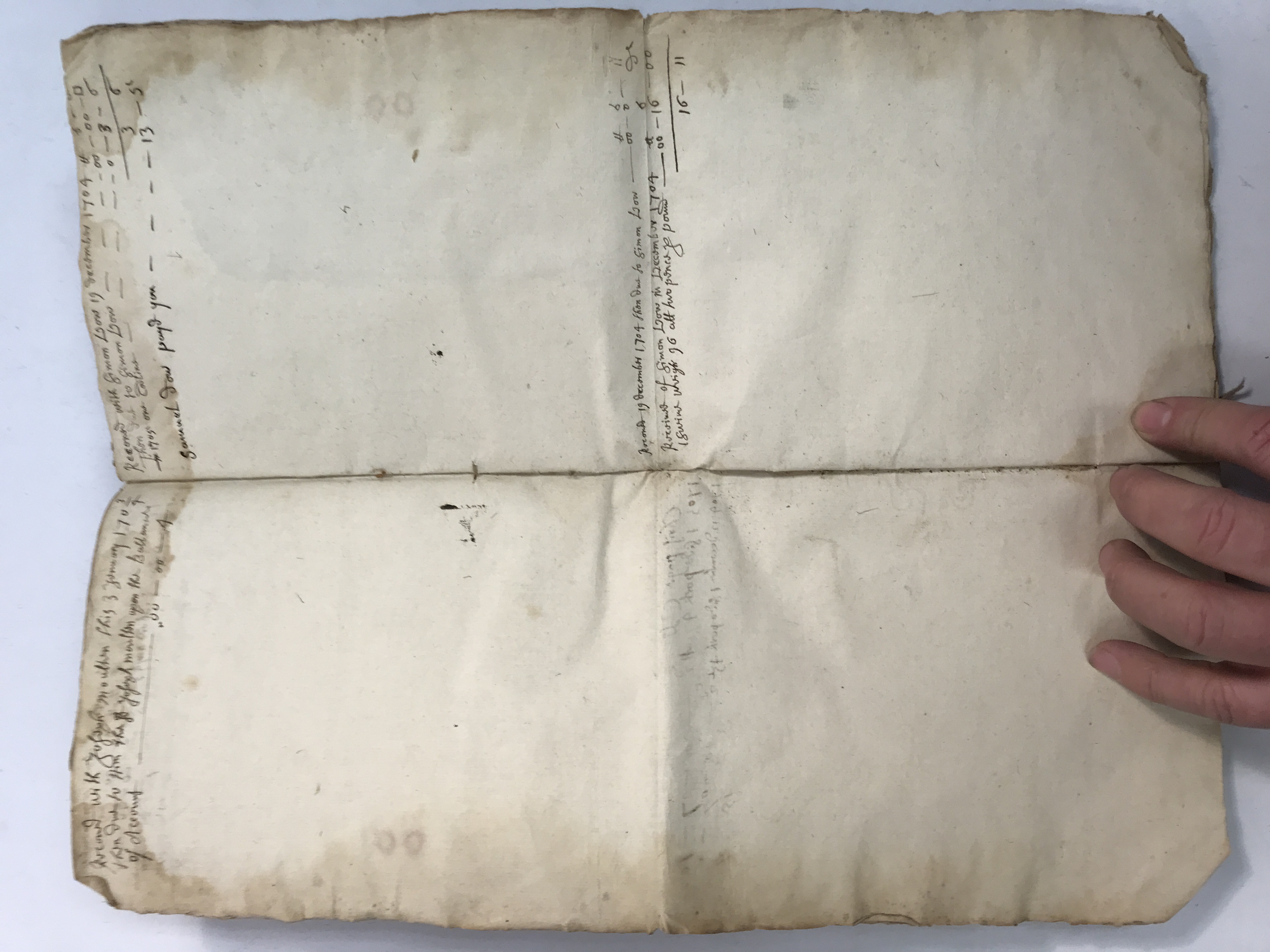
Sparser accounts and partially unused leaves · view 4 of 4
Open full-resolution photograph ↗
JDT-D508 · Damaged leaves and the transition within the book
Large losses along the page edges expose the next layers of paper. Surviving lines remain near the top and inner margins. These views document where reading is limited by missing material and provide continuity into the ledger’s following sequence.
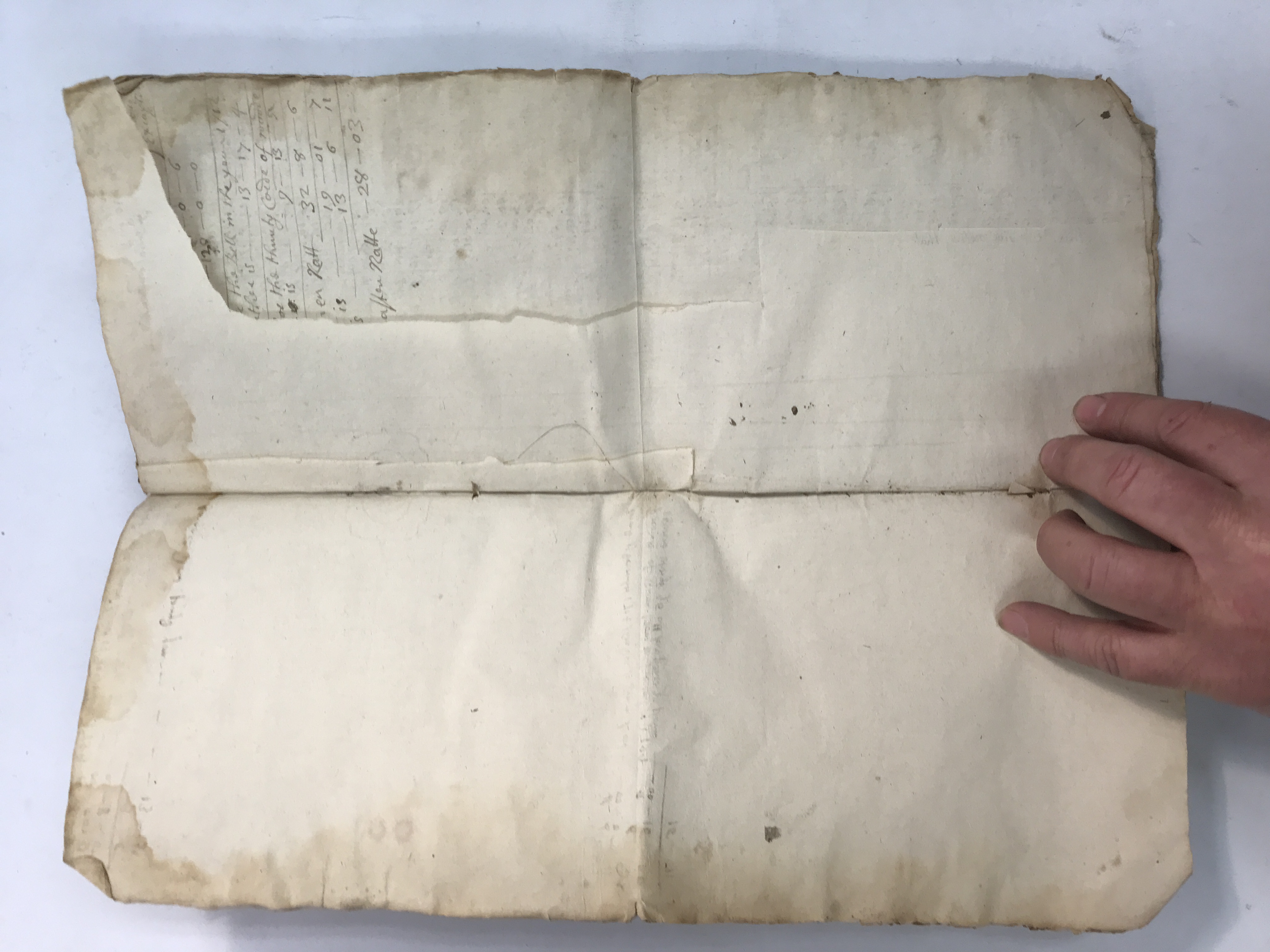
Damaged leaves and the transition within the book · view 1 of 2
Open full-resolution photograph ↗
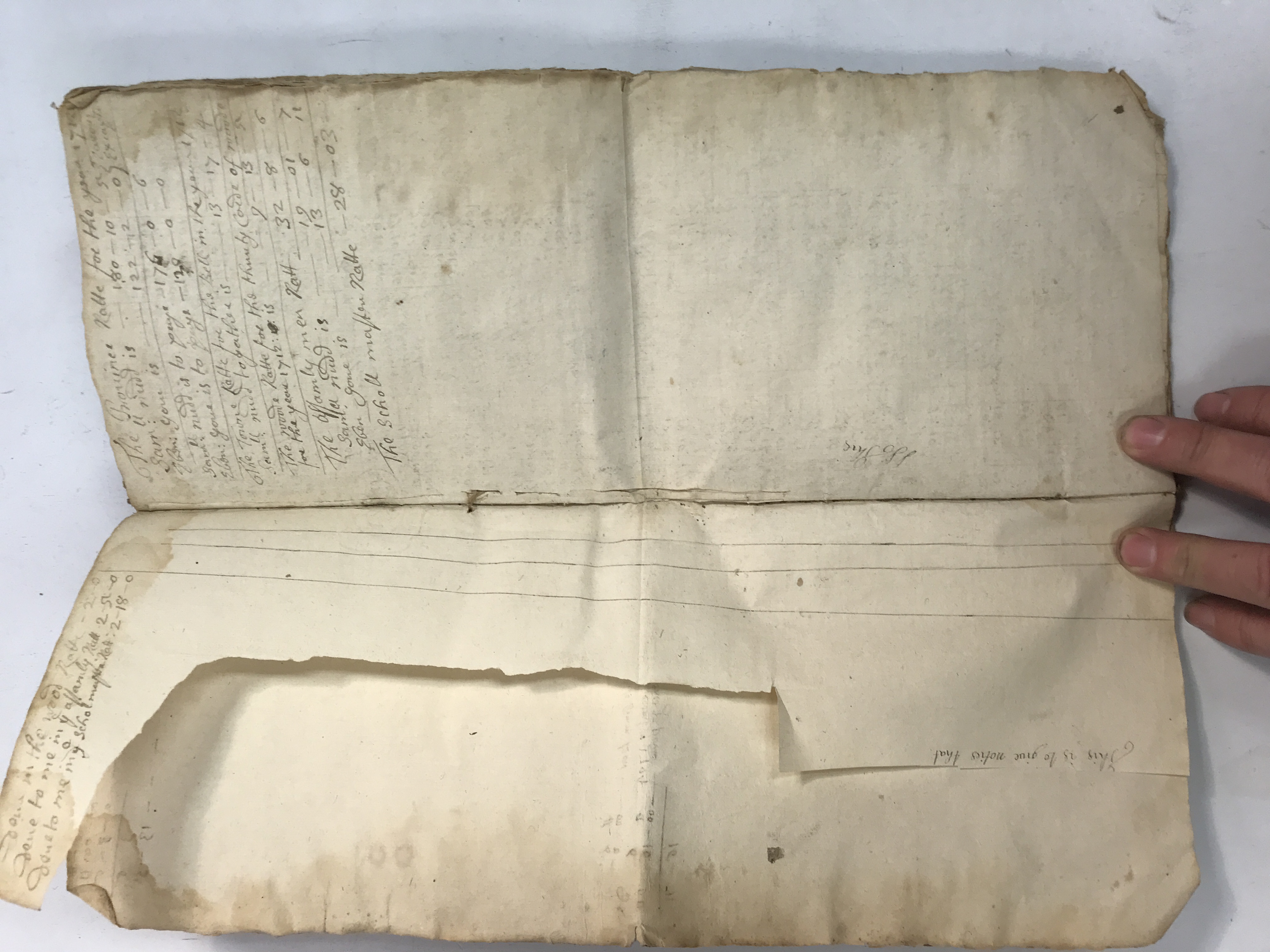
Damaged leaves and the transition within the book · view 2 of 2
Open full-resolution photograph ↗
Collection photographs supplied by Whit. Descriptions are finding aids, not full transcriptions. Names, dates and associations remain provisional where the handwriting is uncertain.