
The Joseph Dow trunk archive · Document gallery 60
Lot 3A: Hampton church records and family research
26 photographs · 14 document groups
Photographed by Whit from the recovered Joseph Dow collection. Descriptions draw on visible names, dates and subjects; uncertain readings remain provisional. Reading copies are turned upright, and each image links to the unchanged full-resolution original.
JDT-D451 · Lot 3A: collection overview and paper edges
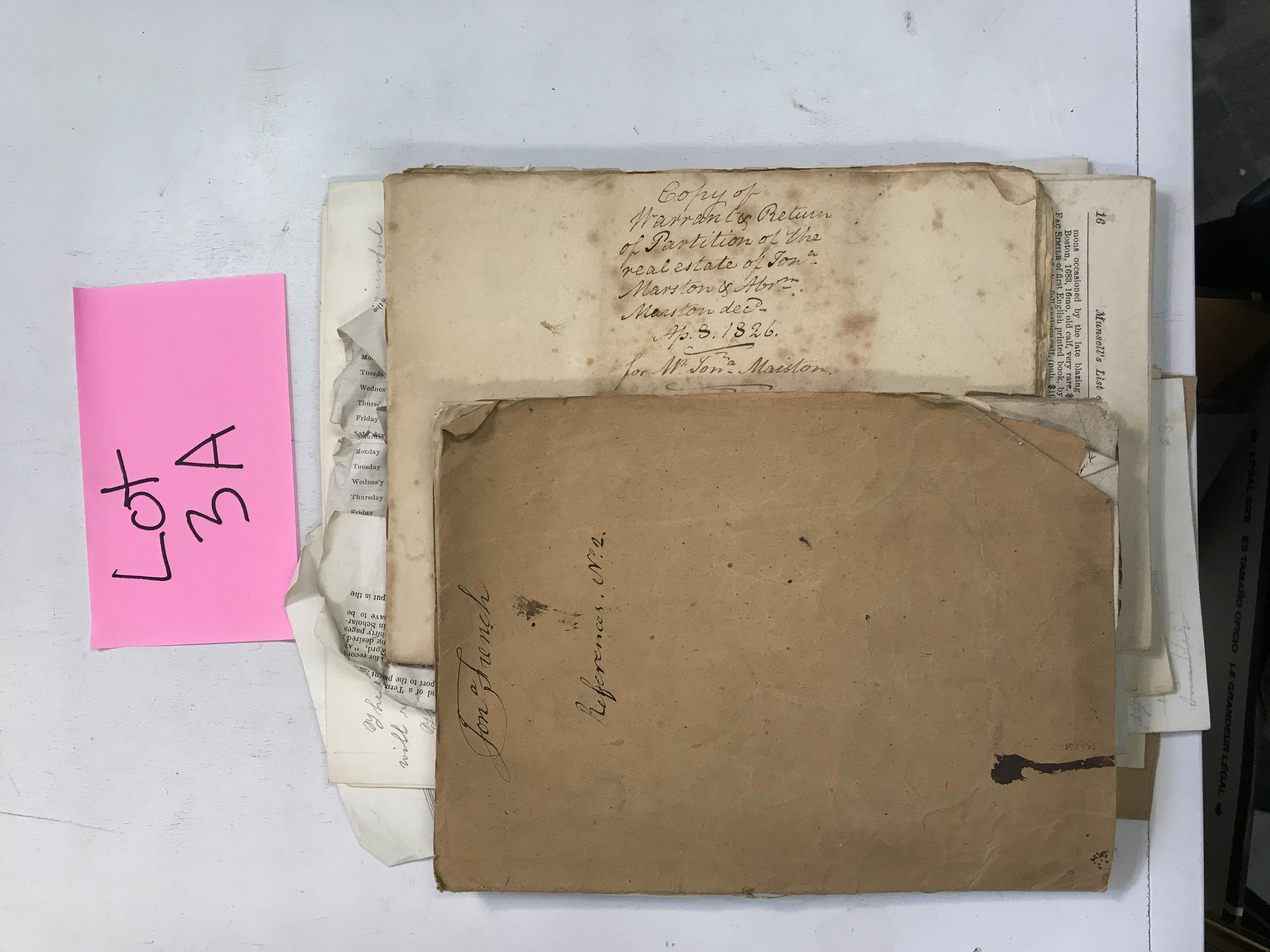
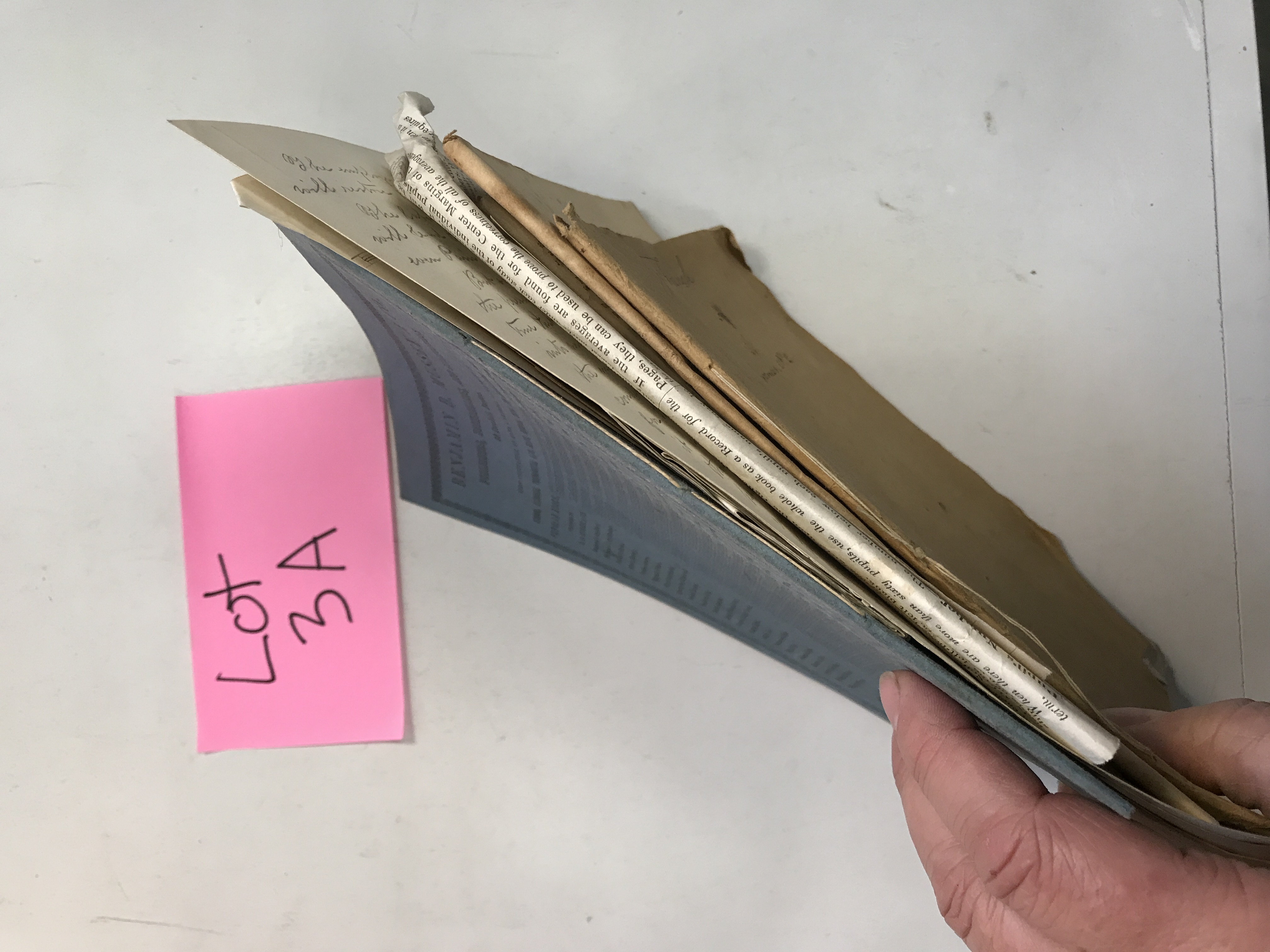
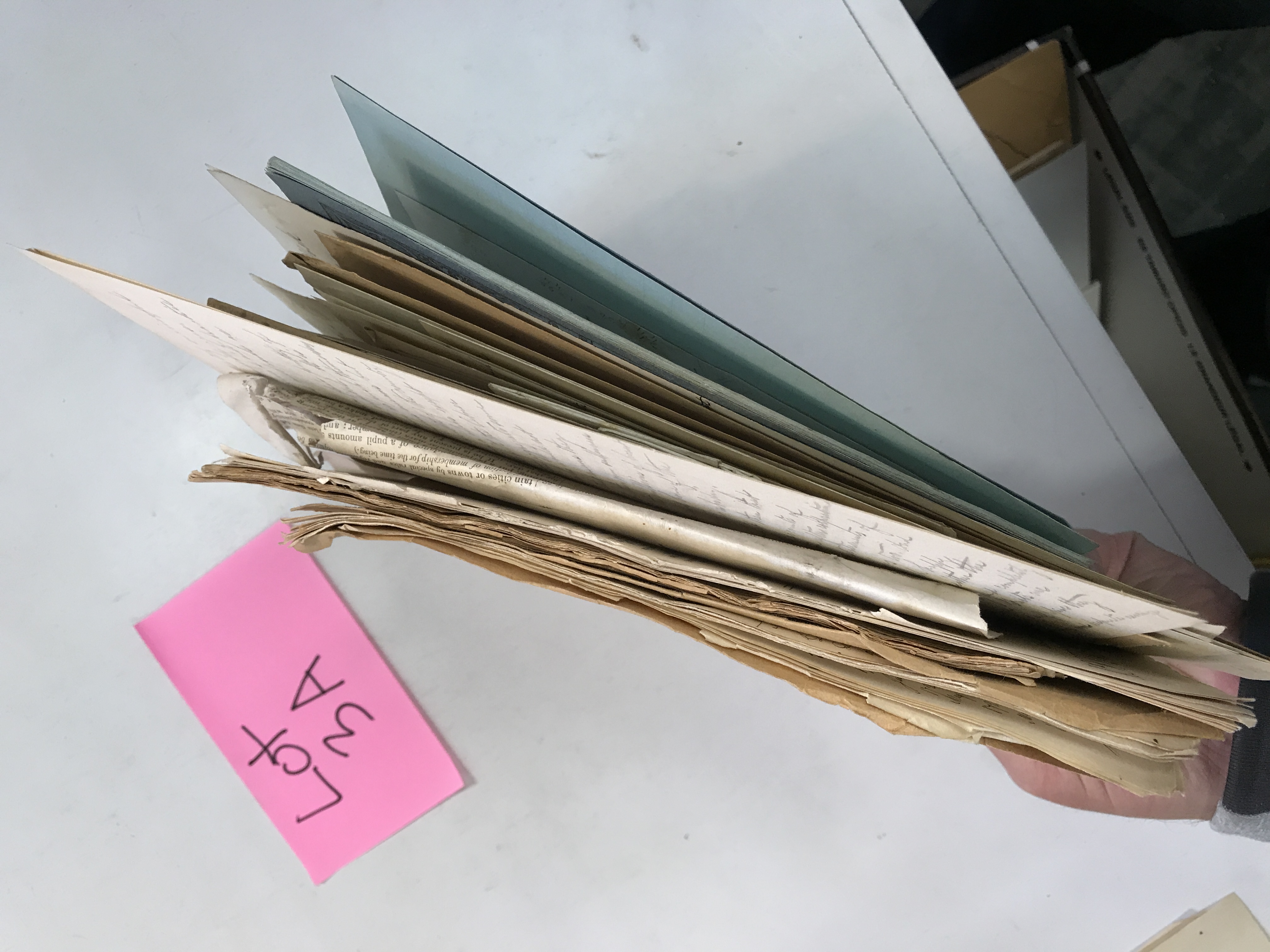
The pink Lot 3A label identifies a gathering of notebooks, folded manuscripts and printed leaves. The brown wrapper is marked “Jonᵃ French — References, No. 2”; a neighboring folded paper identifies the Marston estate partition of 1826. Two edge views preserve the arrangement and mixed paper formats.
Lot 3A: collection overview and paper edges · view 1 of 3
Open full-resolution photograph ↗
Lot 3A: collection overview and paper edges · view 2 of 3
Open full-resolution photograph ↗
Lot 3A: collection overview and paper edges · view 3 of 3
Open full-resolution photograph ↗
JDT-D452 · Jonathan French’s reference notebook: Hampton church history
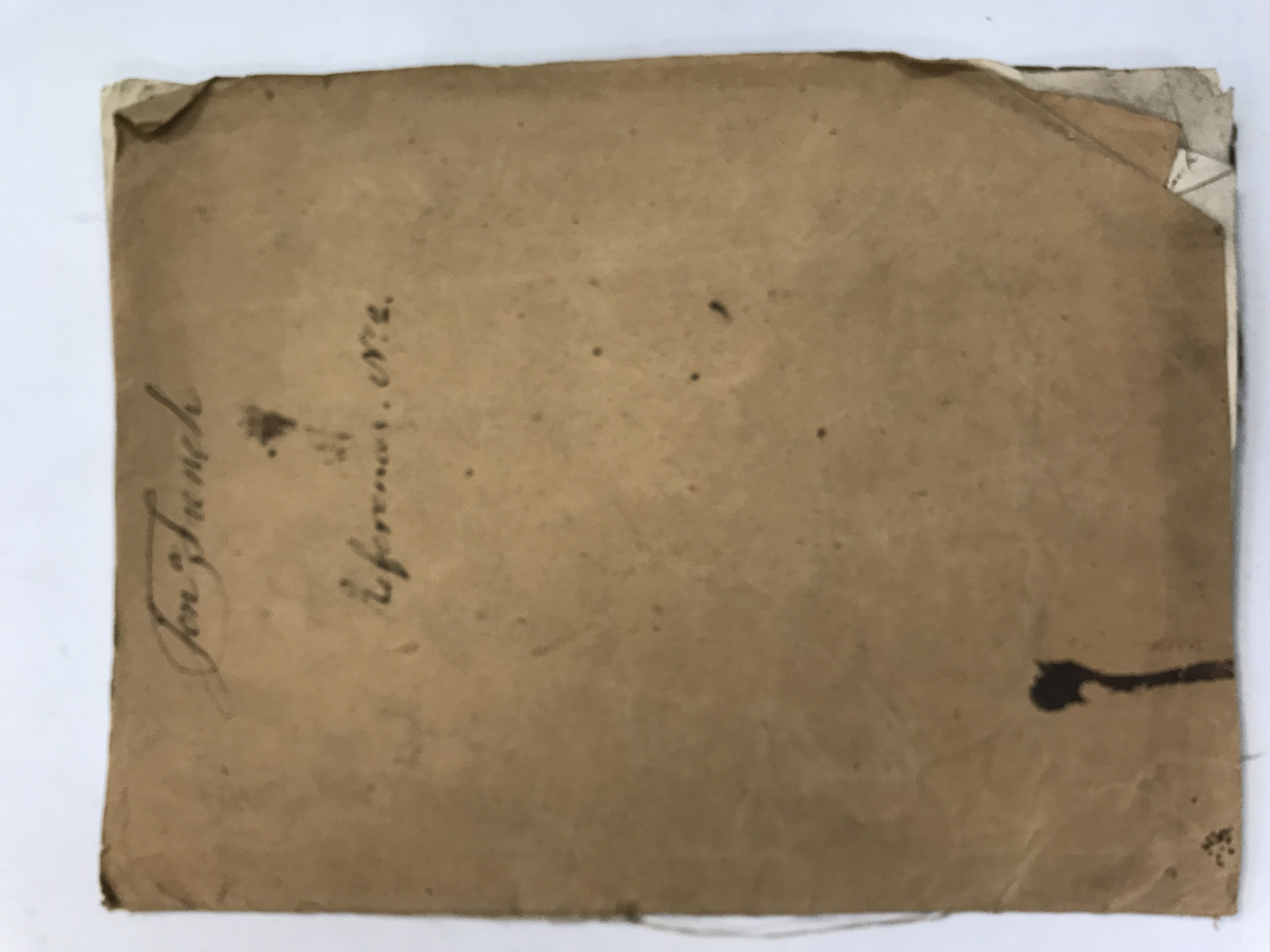
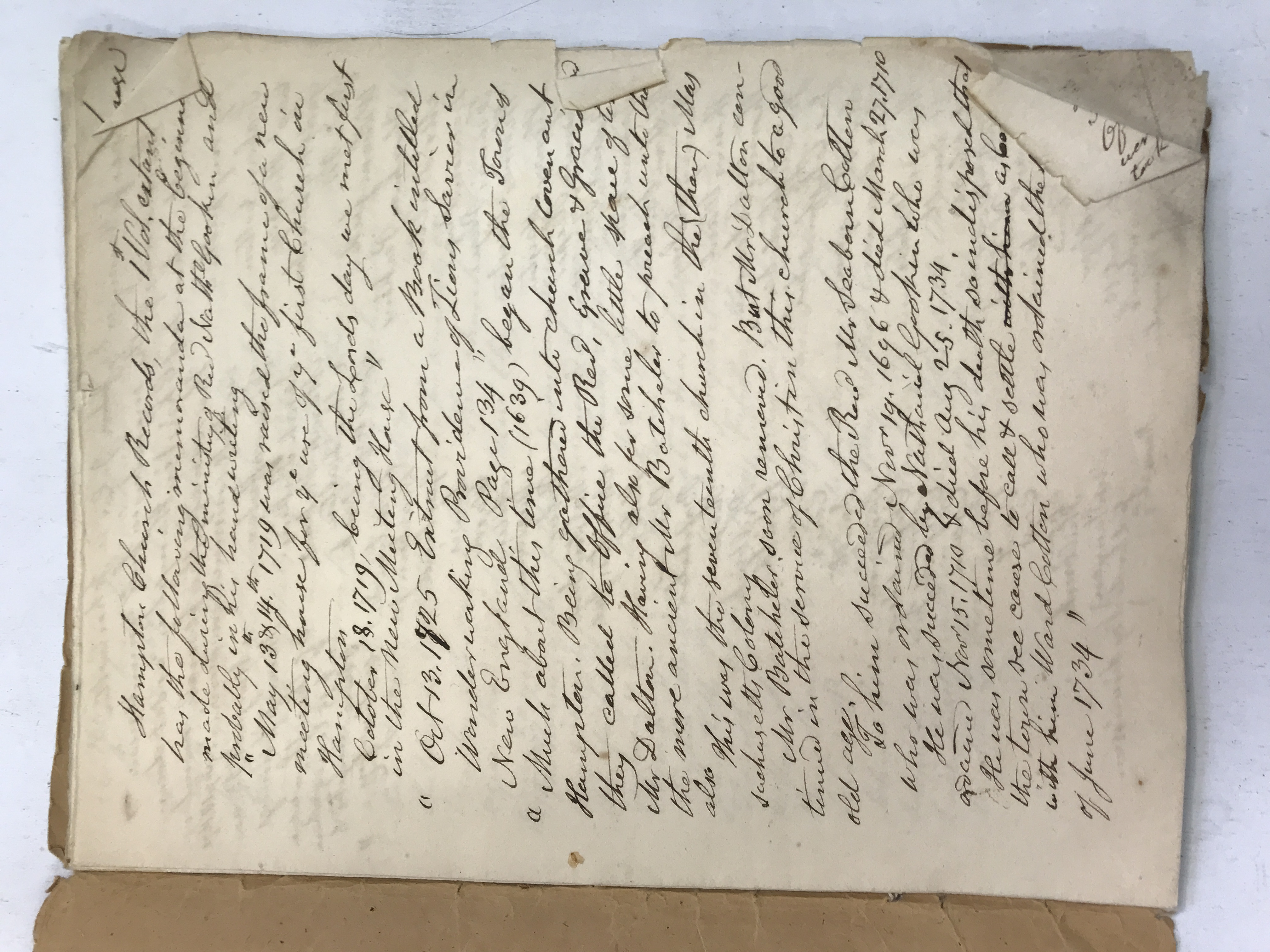
The cover reads “Jonᵃ French — References, No. 2.” The opening page extracts memoranda from Hampton’s first surviving church-record volume, including the raising of a new meetinghouse frame on 13 and 14 May 1719 and the first service there on 18 October. It traces the ministry from Stephen Bachiler and Timothy Dalton through Seaborn Cotton, Nathaniel Gookin and Ward Cotton.
Jonathan French’s reference notebook: Hampton church history · view 1 of 2
Open full-resolution photograph ↗
Jonathan French’s reference notebook: Hampton church history · view 2 of 2
Open full-resolution photograph ↗
JDT-D453 · Hampton communicants: lists copied by John Cotton
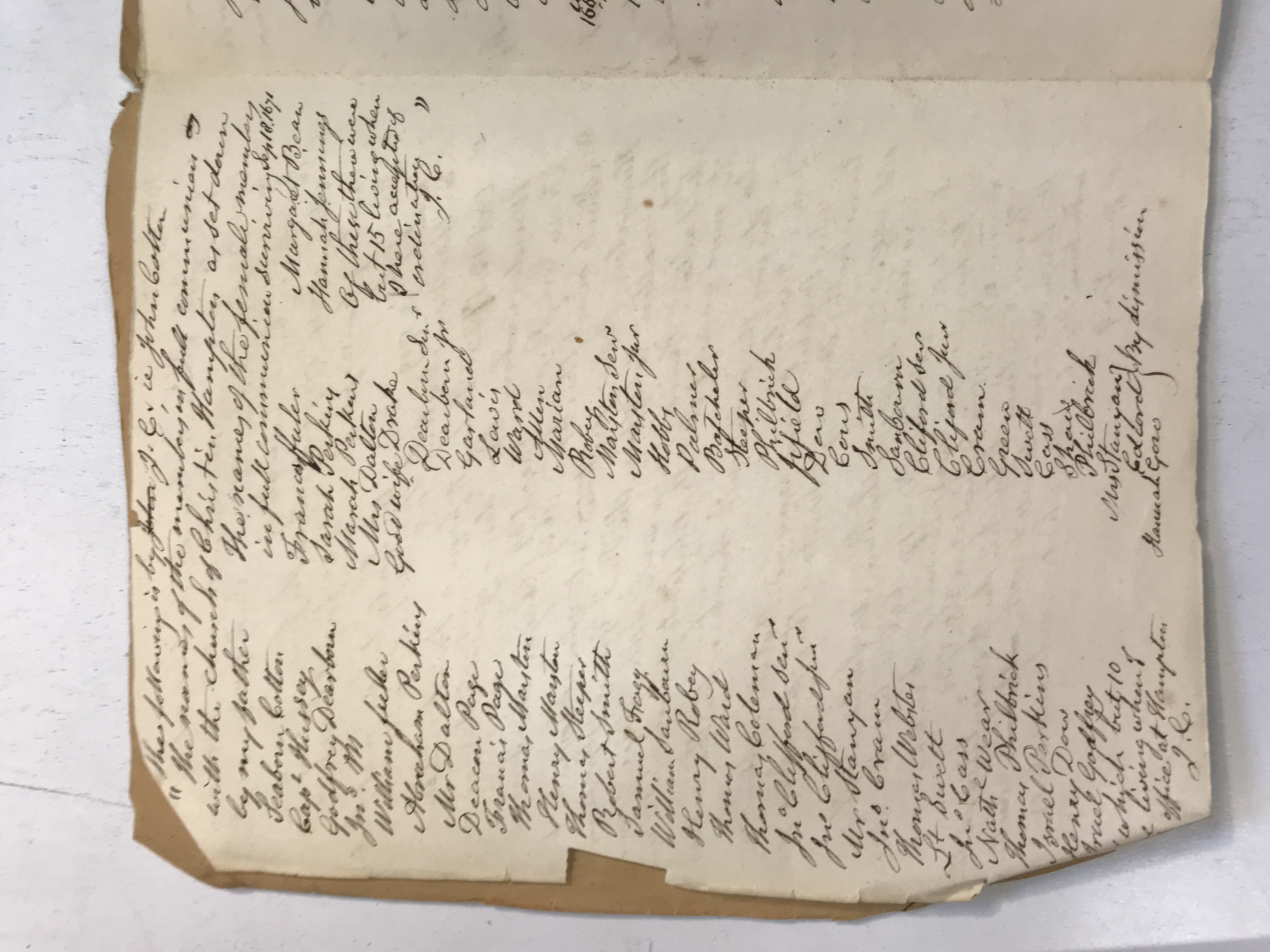
The manuscript identifies the following material as John Cotton’s copy of his father’s record. Separate male and female lists preserve names of church members, with a note that fifteen of the women were living when he accepted the invitation. Names visible include Henry Dow, Abraham Perkins, Mary Perkins and Goodwife Drake.
Hampton communicants: lists copied by John Cotton · view 1 of 1
Open full-resolution photograph ↗
JDT-D454 · The covenant and adult children — church meeting of 17 January 1667
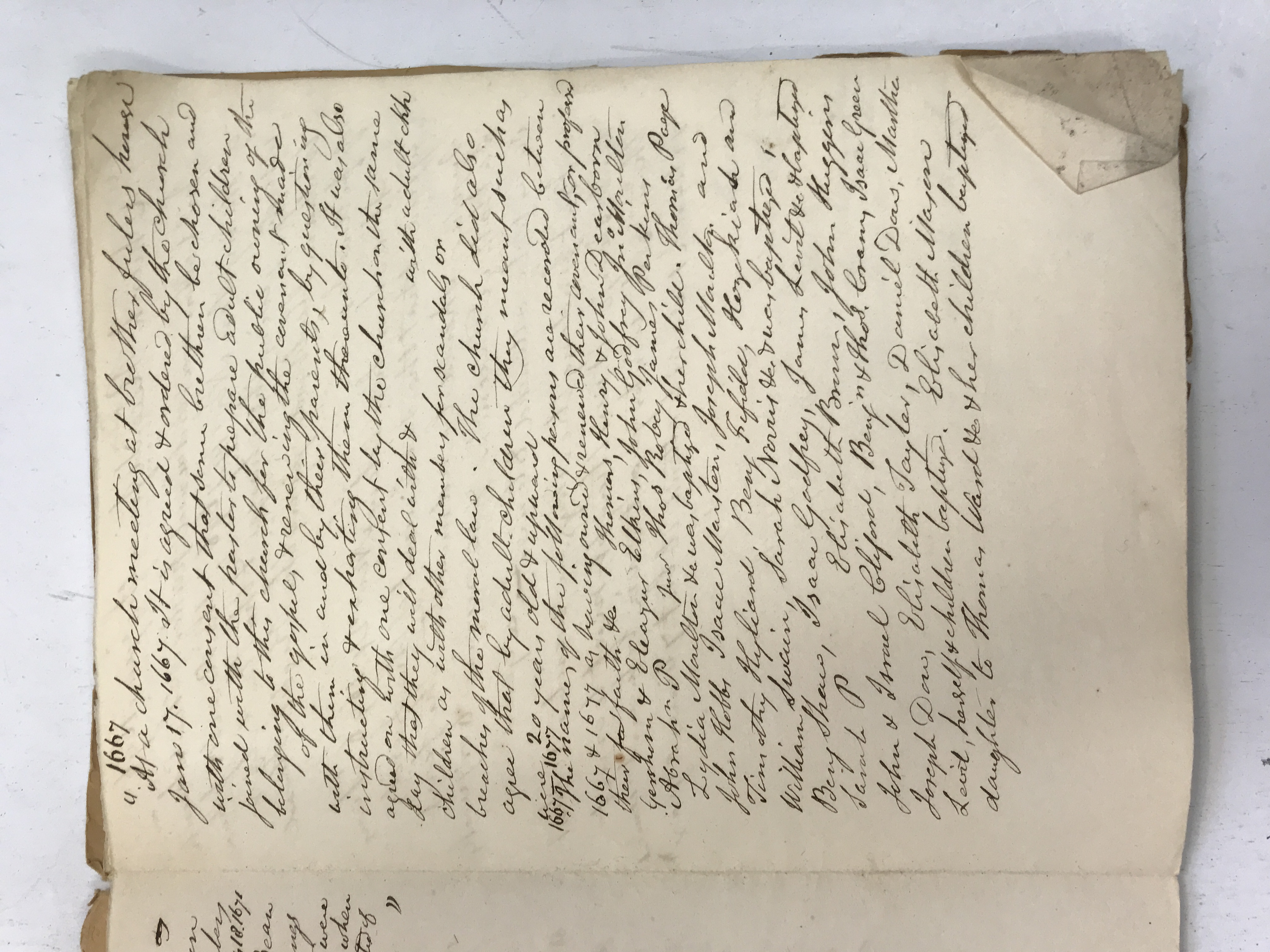
At a meeting in Brother Ja[c]y’s house, the church agrees to prepare adult children to own and renew the covenant through questioning and instruction. It defines adult children as those twenty or older and lists people who renewed the covenant or professed their faith between 1667 and 1677.
The covenant and adult children — church meeting of 17 January 1667 · view 1 of 1
Open full-resolution photograph ↗
JDT-D455 · John Cotton’s ordination and church proceedings — 1696–1710
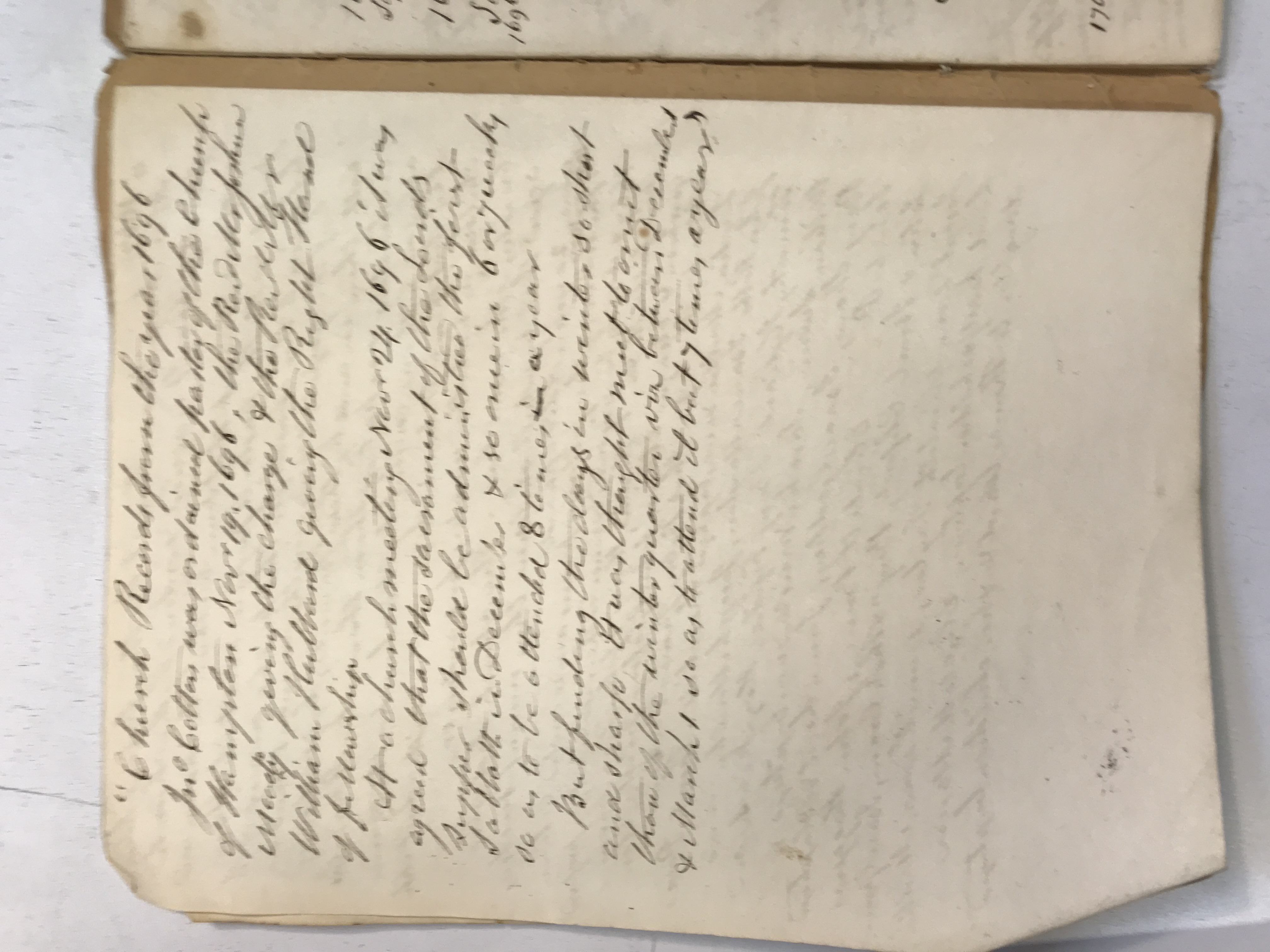
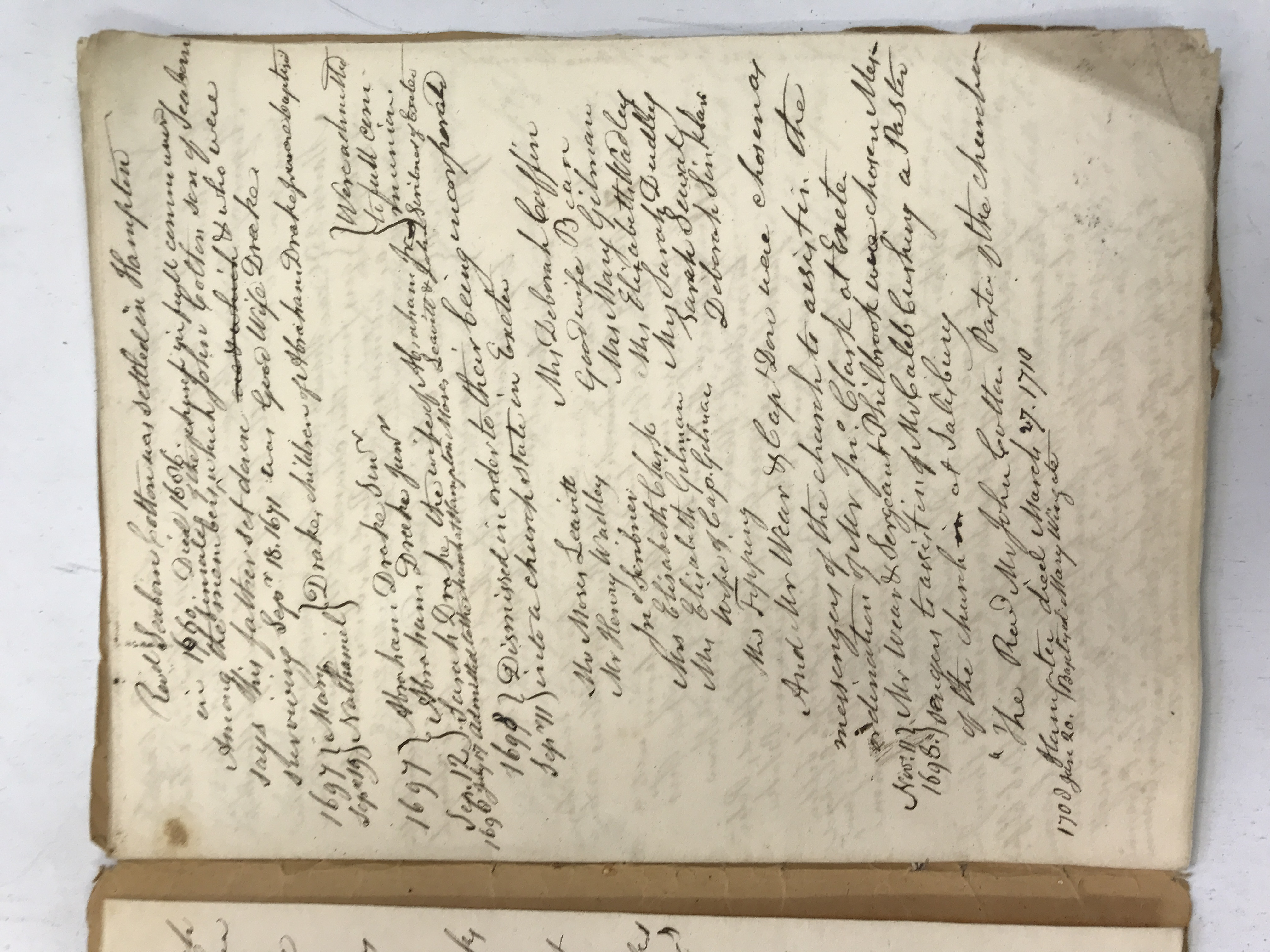
The extracts record John Cotton’s ordination on 19 November 1696, with John Moody giving the charge and William Hubbard the right hand of fellowship. They discuss reducing winter communion meetings because the days were short and sharp, admissions and baptisms, and dismissals to form the Exeter church. John Cotton’s death is recorded as 27 March 1710.
John Cotton’s ordination and church proceedings — 1696–1710 · view 1 of 2
Open full-resolution photograph ↗
John Cotton’s ordination and church proceedings — 1696–1710 · view 2 of 2
Open full-resolution photograph ↗
JDT-D456 · Nathaniel Gookin’s ministry, parish separation and church rules
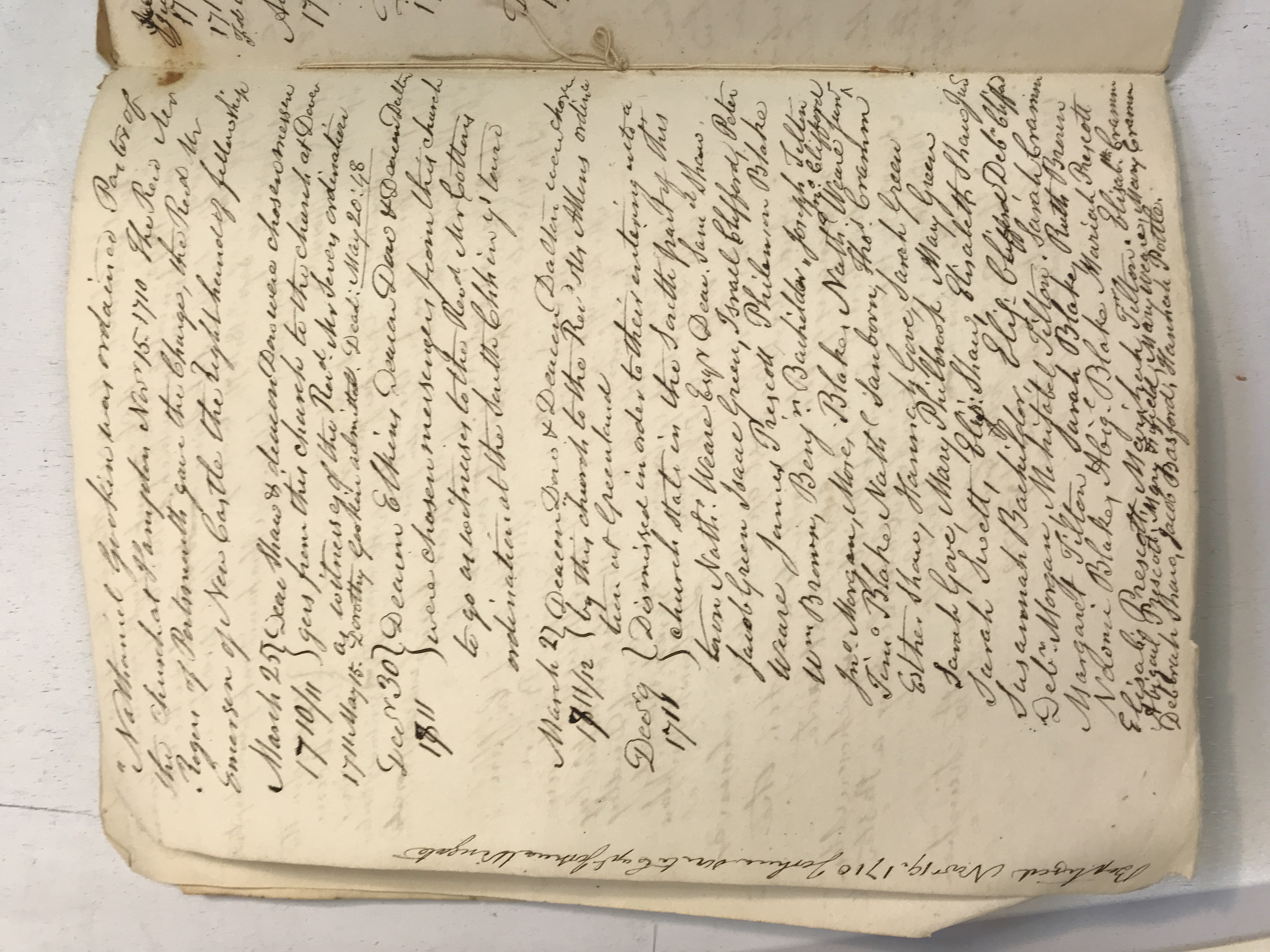
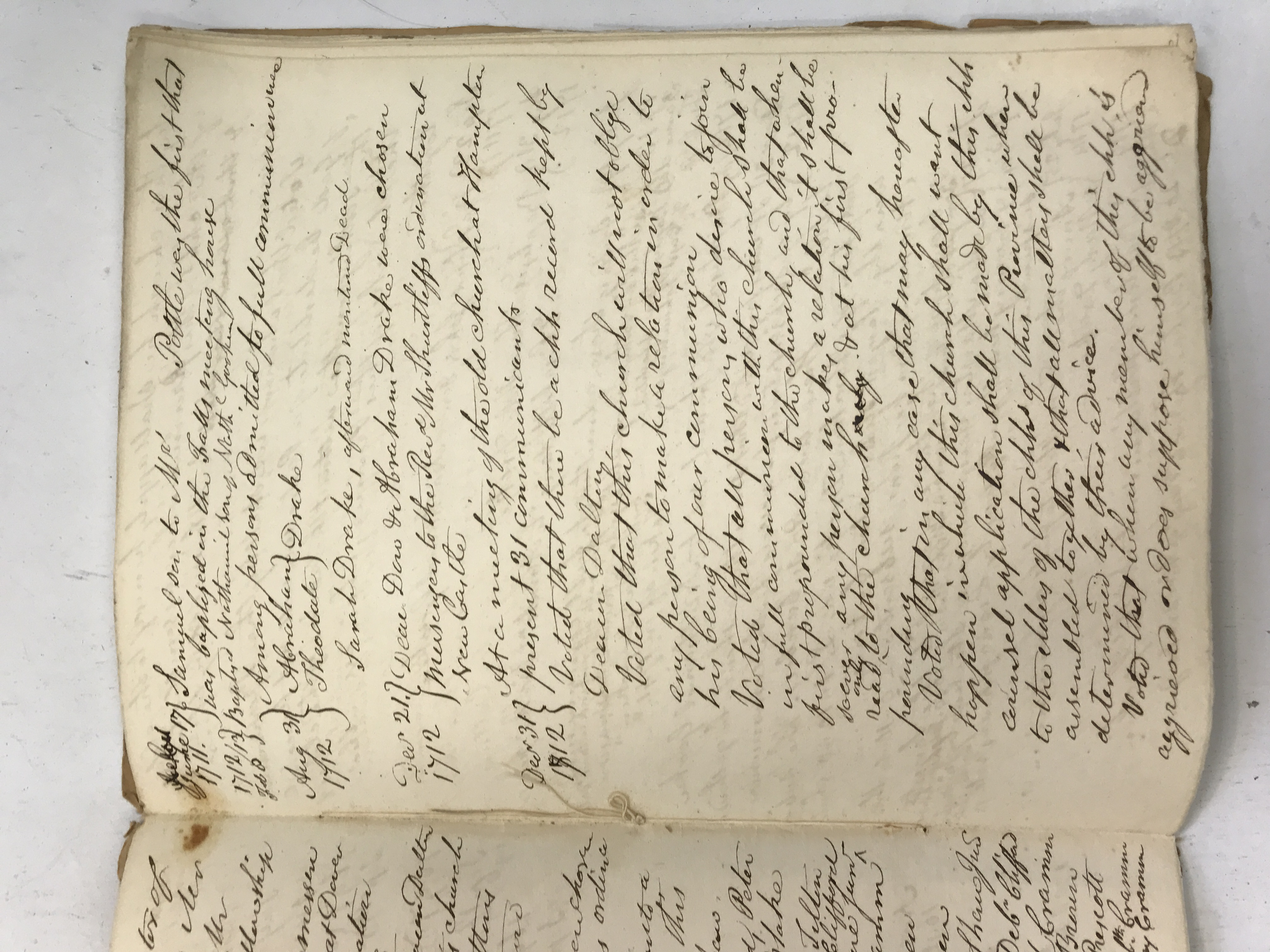
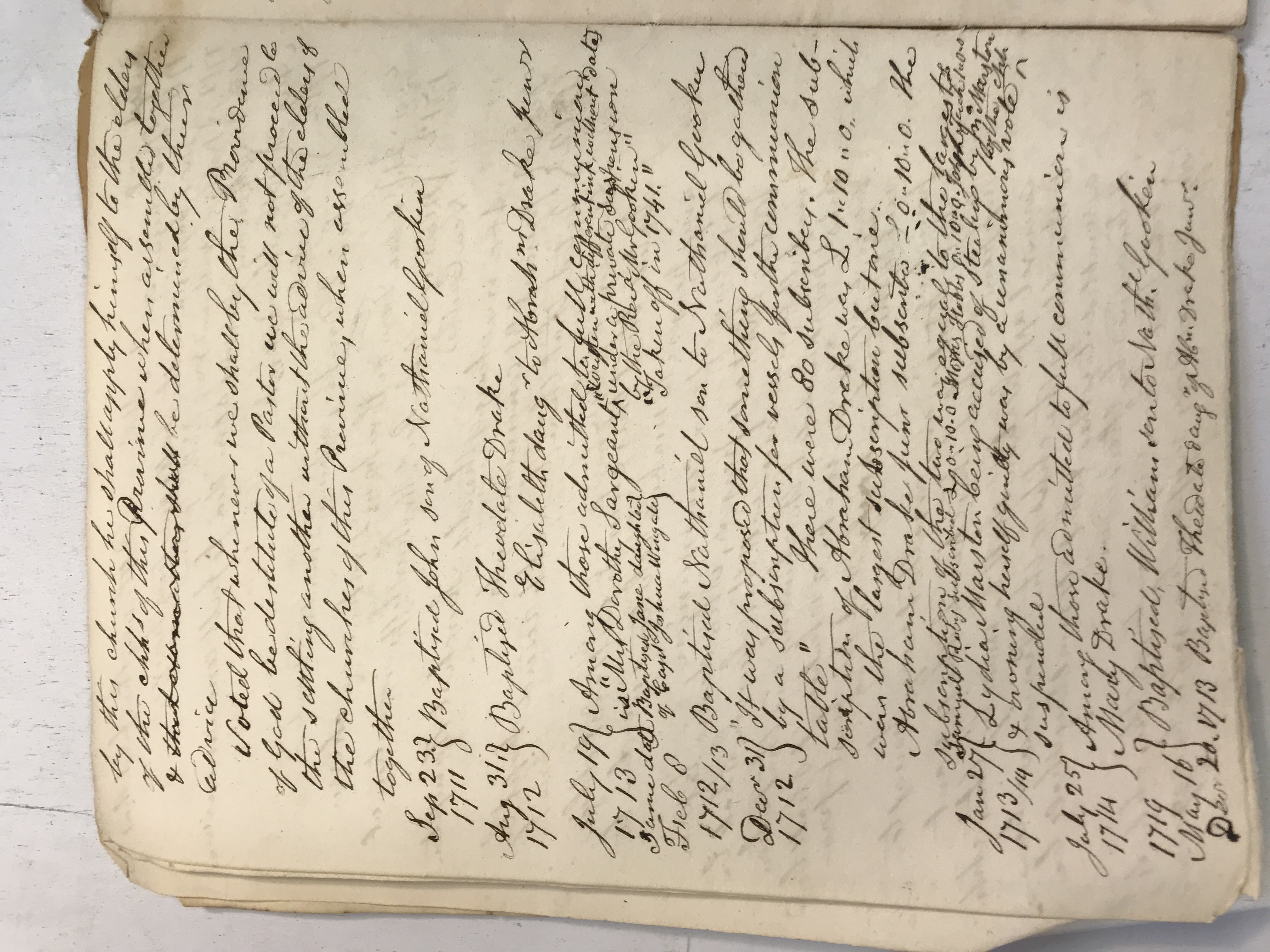
The notes begin with Nathaniel Gookin’s ordination on 15 November 1710 and name messengers sent to neighboring ordinations. A 1711 dismissal list concerns formation of a church in the southern part of Hampton. Later votes address communion admission, keeping records, appeals to neighboring elders and choosing a successor to a pastor; another entry records subscriptions for communion vessels.
Nathaniel Gookin’s ministry, parish separation and church rules · view 1 of 3
Open full-resolution photograph ↗
Nathaniel Gookin’s ministry, parish separation and church rules · view 2 of 3
Open full-resolution photograph ↗
Nathaniel Gookin’s ministry, parish separation and church rules · view 3 of 3
Open full-resolution photograph ↗
JDT-D457 · Selected baptisms and family relationships — 1715–1730
The dated extracts connect children with parents in the Gookin, Drake, Godfrey, Chapman, Winget and other families. They include the baptism of a dangerously sick child, children presented by a grandfather, twins and the choice of deacons in 1716. The closing note says Nathaniel Gookin had baptized 891 people by 14 June 1730.
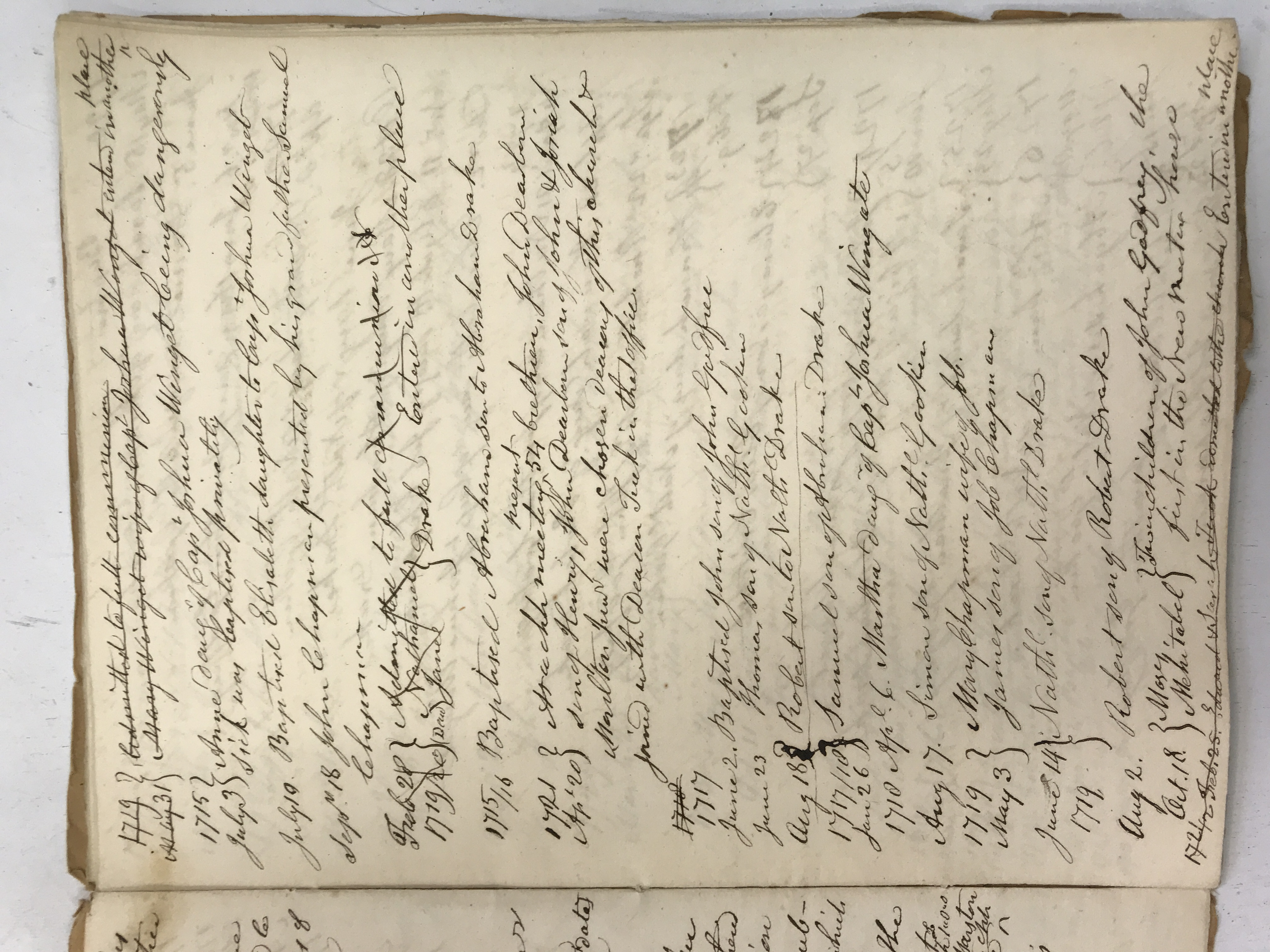
Selected baptisms and family relationships — 1715–1730 · view 1 of 3
Open full-resolution photograph ↗
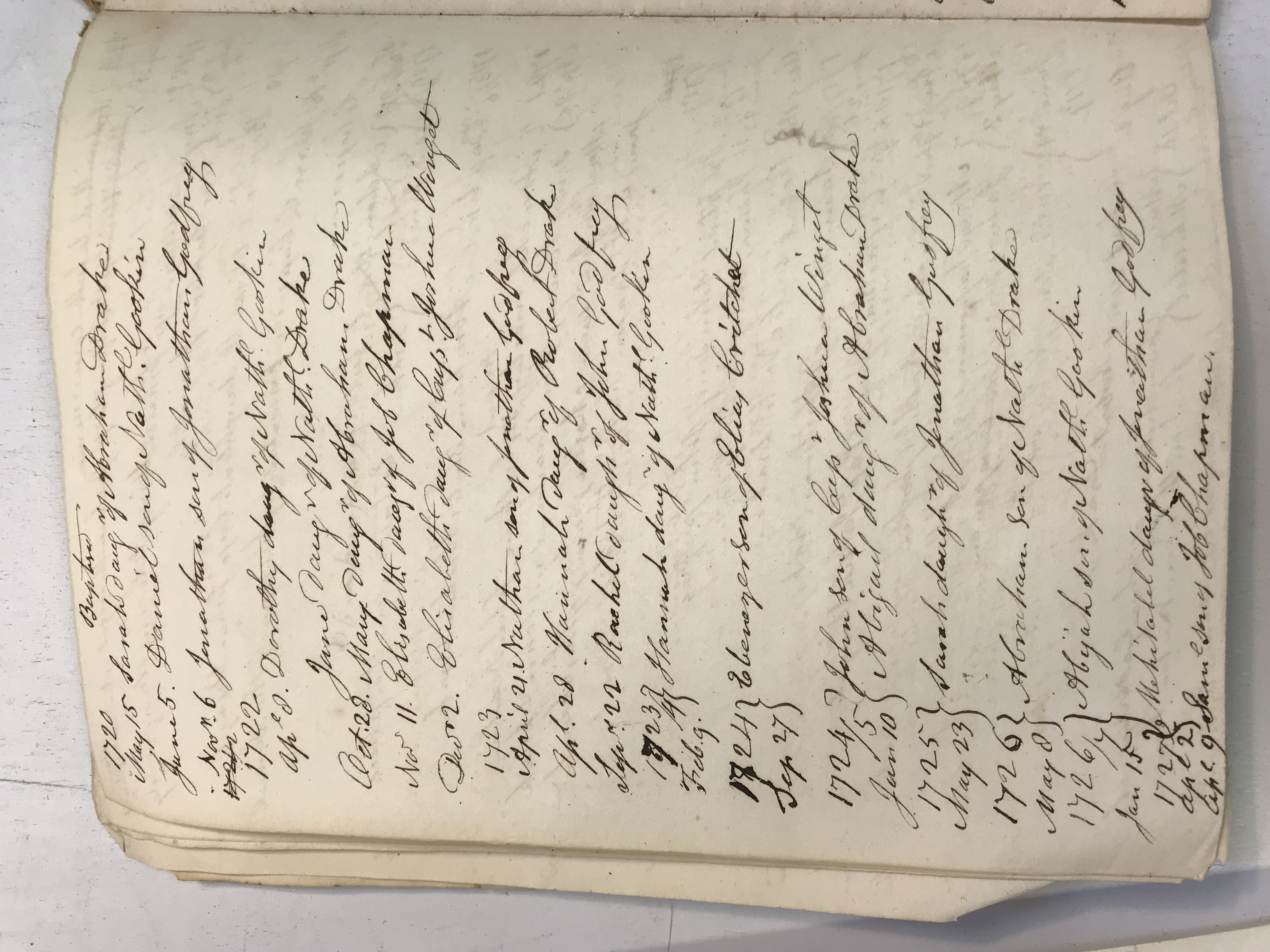
Selected baptisms and family relationships — 1715–1730 · view 2 of 3
Open full-resolution photograph ↗
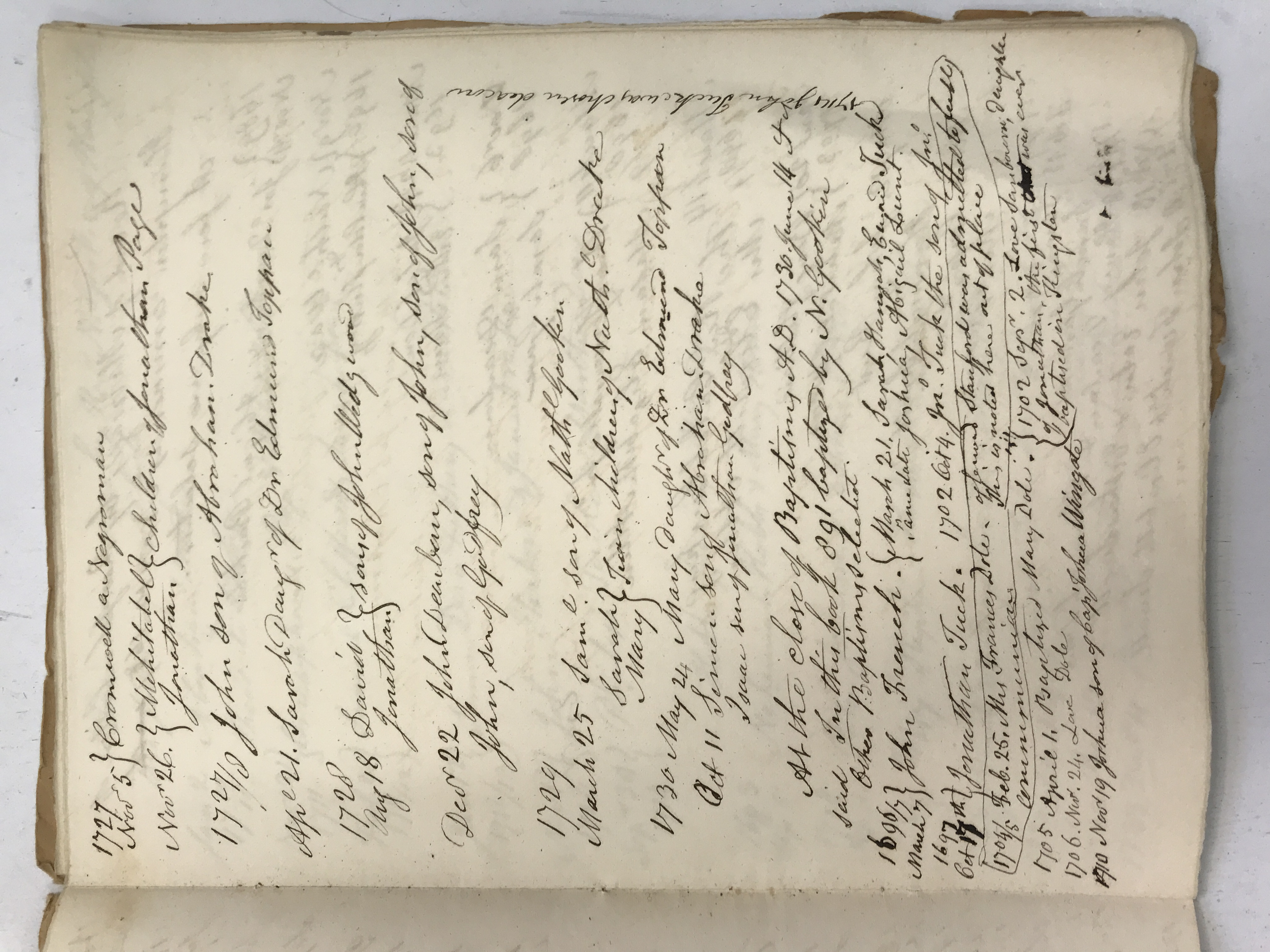
Selected baptisms and family relationships — 1715–1730 · view 3 of 3
Open full-resolution photograph ↗
JDT-D458 · Marriages recorded by John Cotton and Nathaniel Gookin
Selected entries pair spouses with dates, including Jabez Dow and Esther Shaw, Samuel Dow and Sarah Garland, Simon Dow and Mary Lancaster, and Philip Towle and Martha Dow. The following section turns to Hobbs family marriages, among them Nehemiah Hobbs and Mary Holmes and Stephen Hobbs and Patience Tole. Split years are retained in the photographs.
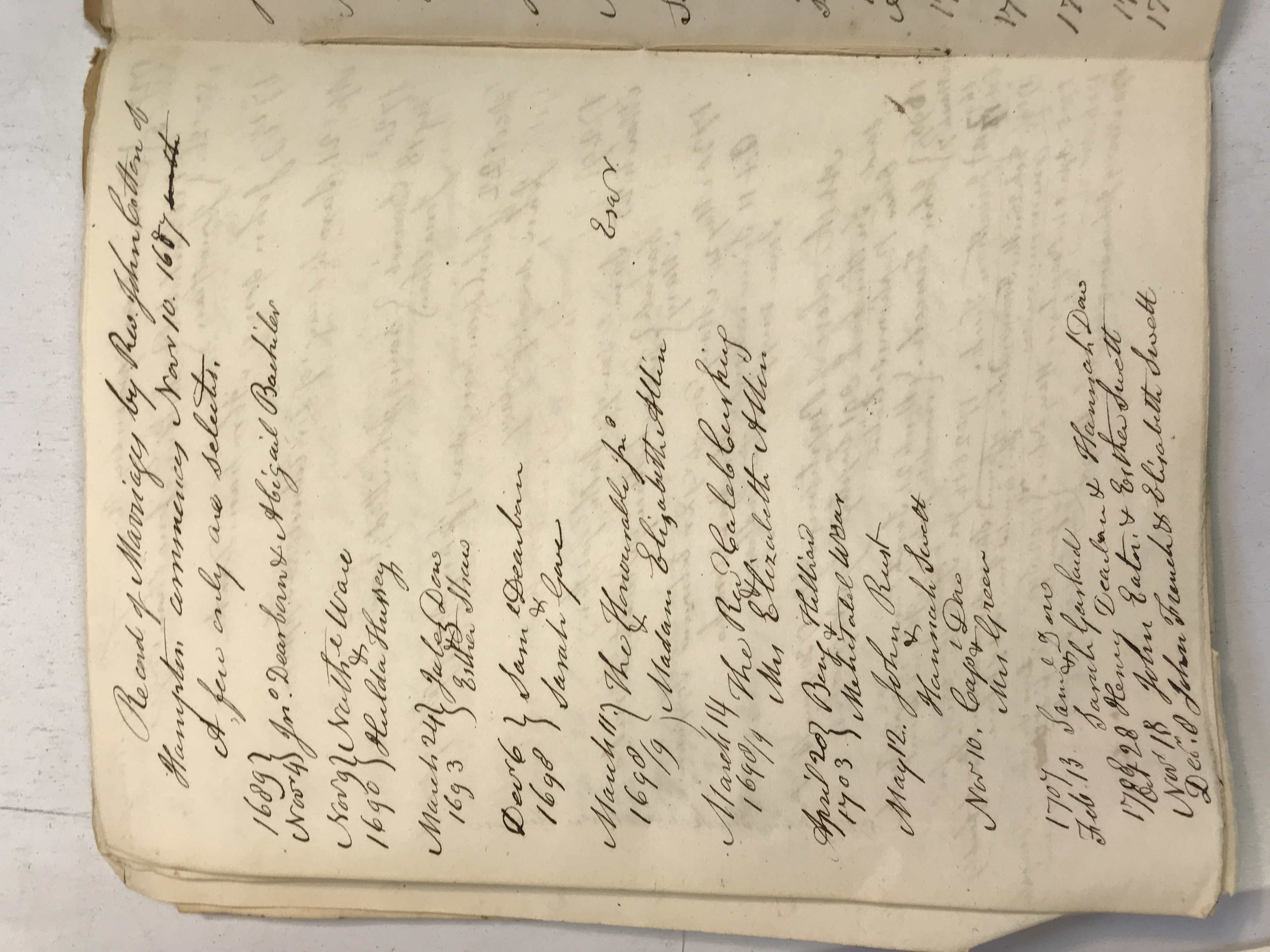
Marriages recorded by John Cotton and Nathaniel Gookin · view 1 of 2
Open full-resolution photograph ↗
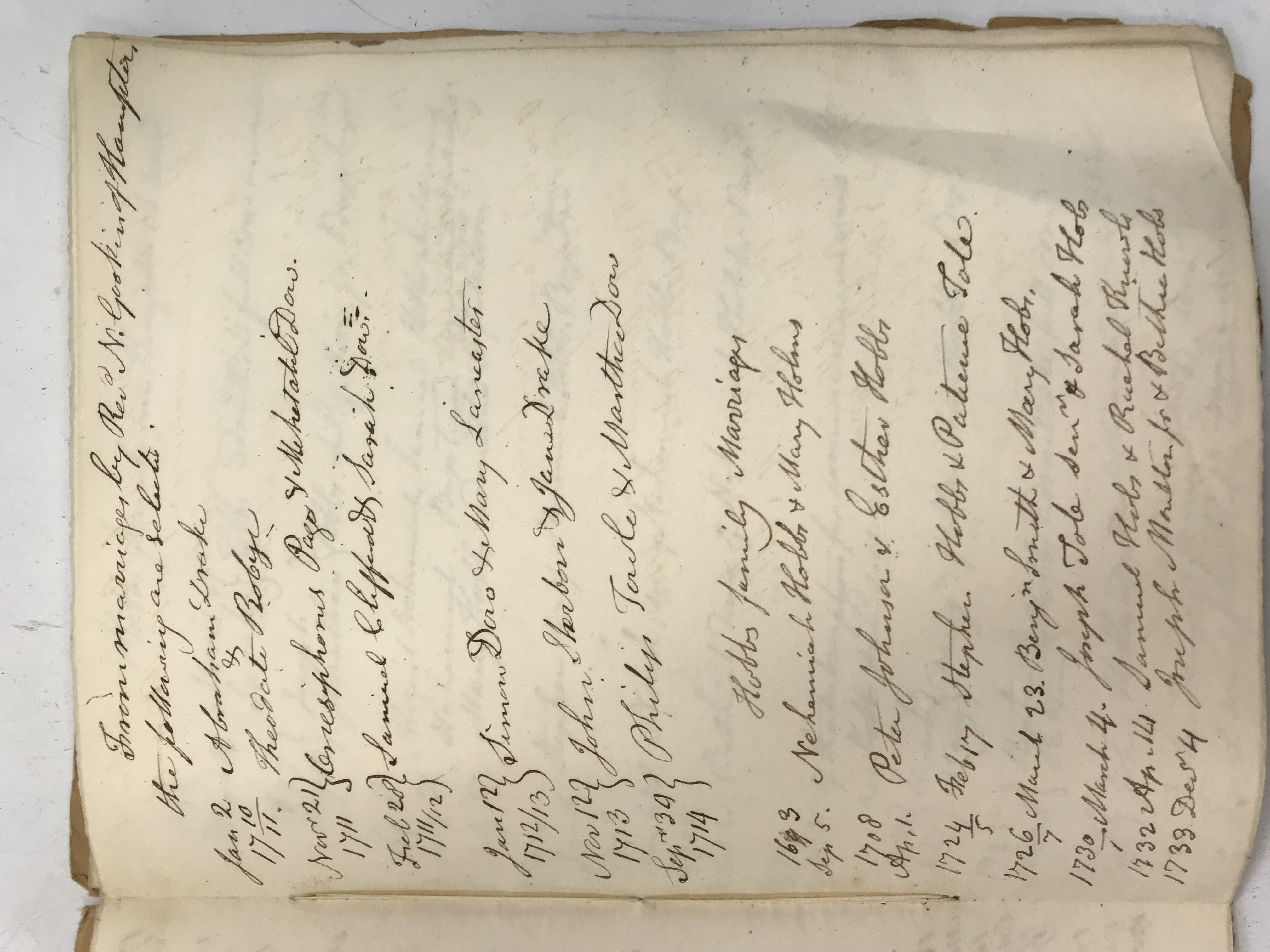
Marriages recorded by John Cotton and Nathaniel Gookin · view 2 of 2
Open full-resolution photograph ↗
JDT-D459 · Hobbs family: communion admissions, baptisms and covenant
The family extracts begin with Morris and Sarah Hobbs admitted to full communion in 1696/7. Subsequent entries identify children of Morris Jr., Nehemiah, John, James and Stephen Hobbs. The continuation records baptisms through 1732 and later covenant notes, including an inquiry about a Drake family entry.
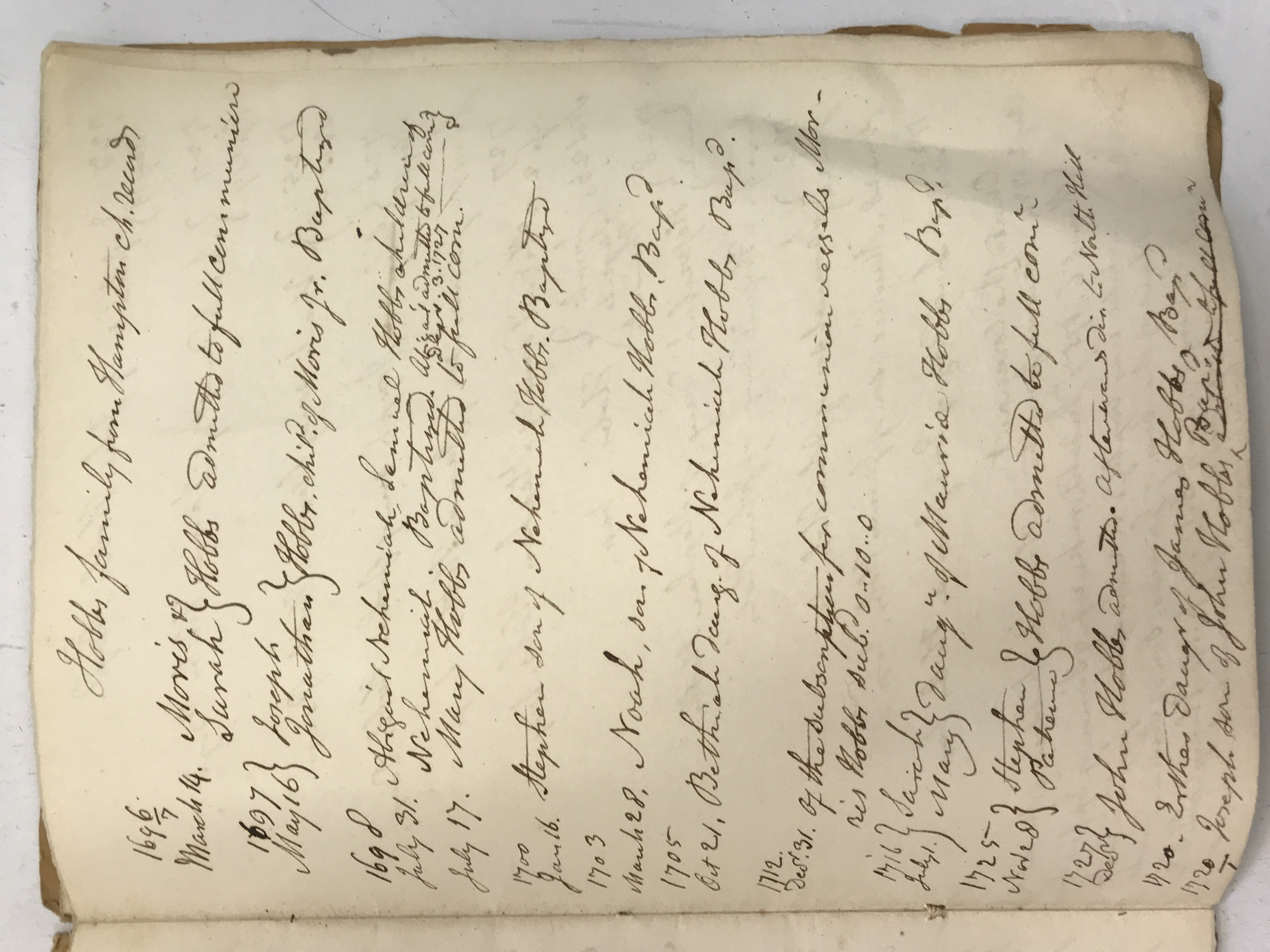
Hobbs family: communion admissions, baptisms and covenant · view 1 of 2
Open full-resolution photograph ↗
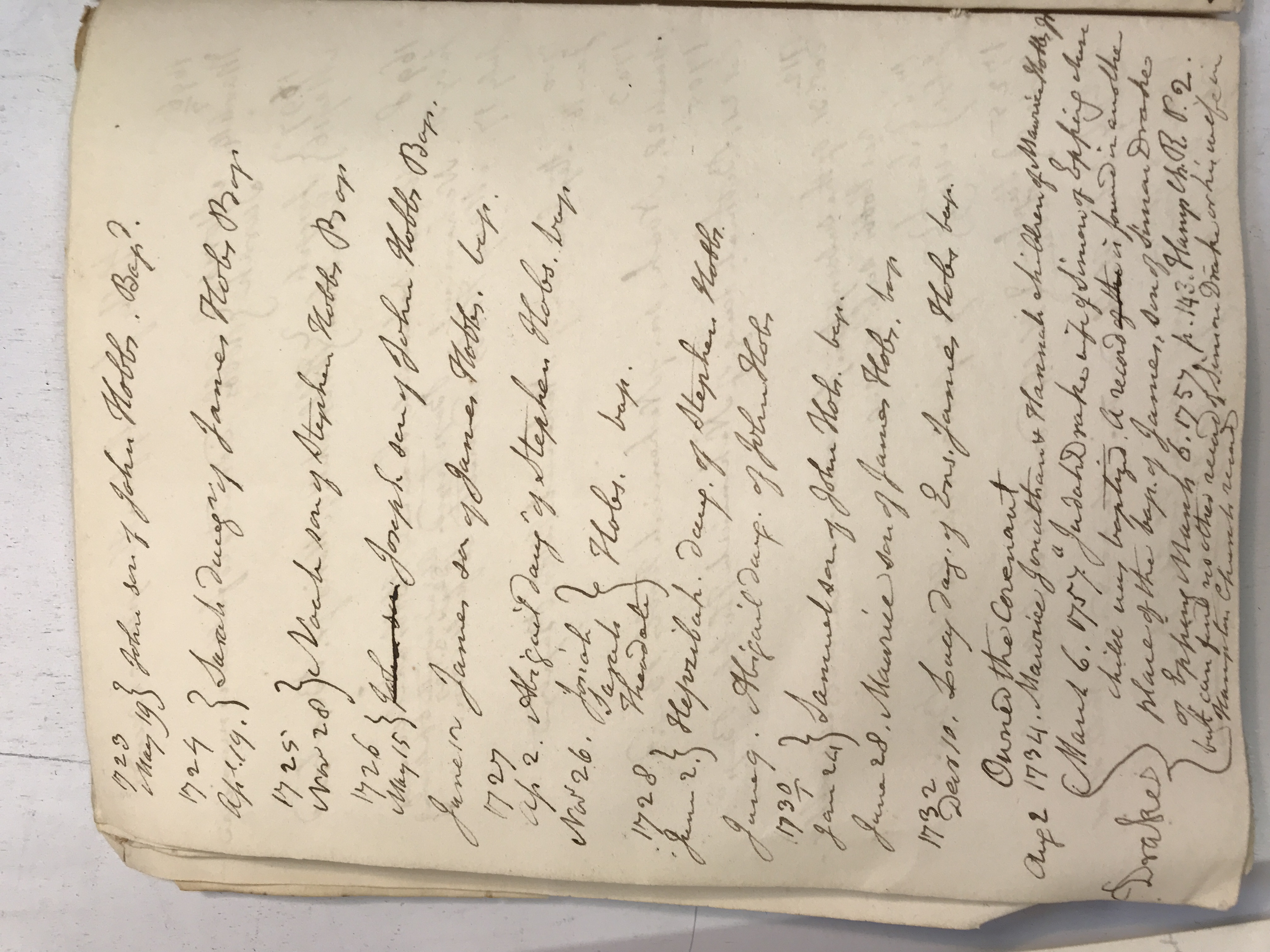
Hobbs family: communion admissions, baptisms and covenant · view 2 of 2
Open full-resolution photograph ↗
JDT-D460 · Thomas Barnard and neighboring ordinations — 1736–1739
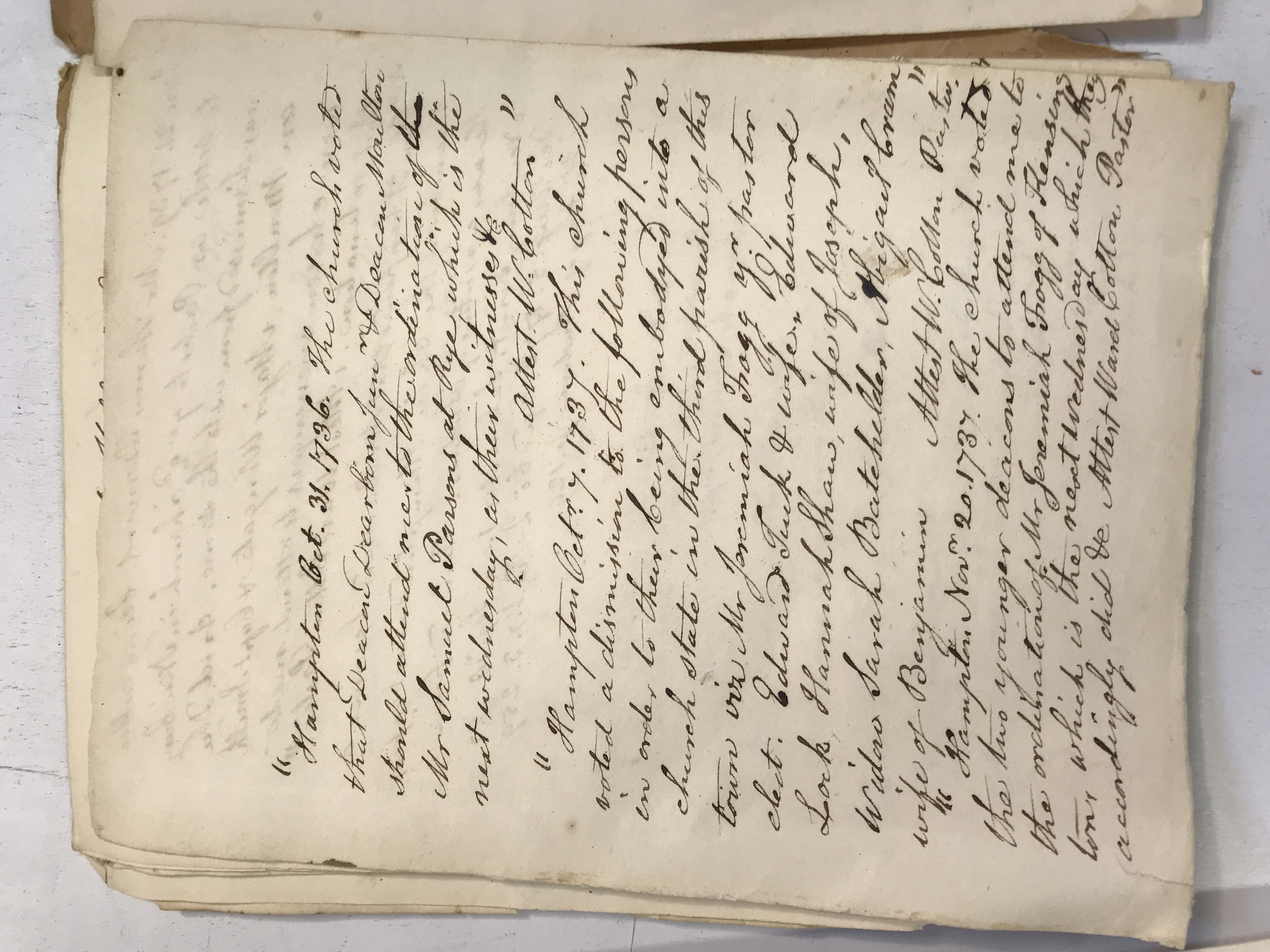
A church extract records Thomas Barnard’s dismissal on 21 January 1739 to become pastor of Newbury’s second church; Joseph Dow adds a pencil note about Barnard’s service as Hampton schoolmaster. The next page records messengers for Samuel Parsons’s ordination at Rye and Jeremiah Fogg’s at Kensington, along with the 1737 dismissal of people forming Hampton’s third-parish church.
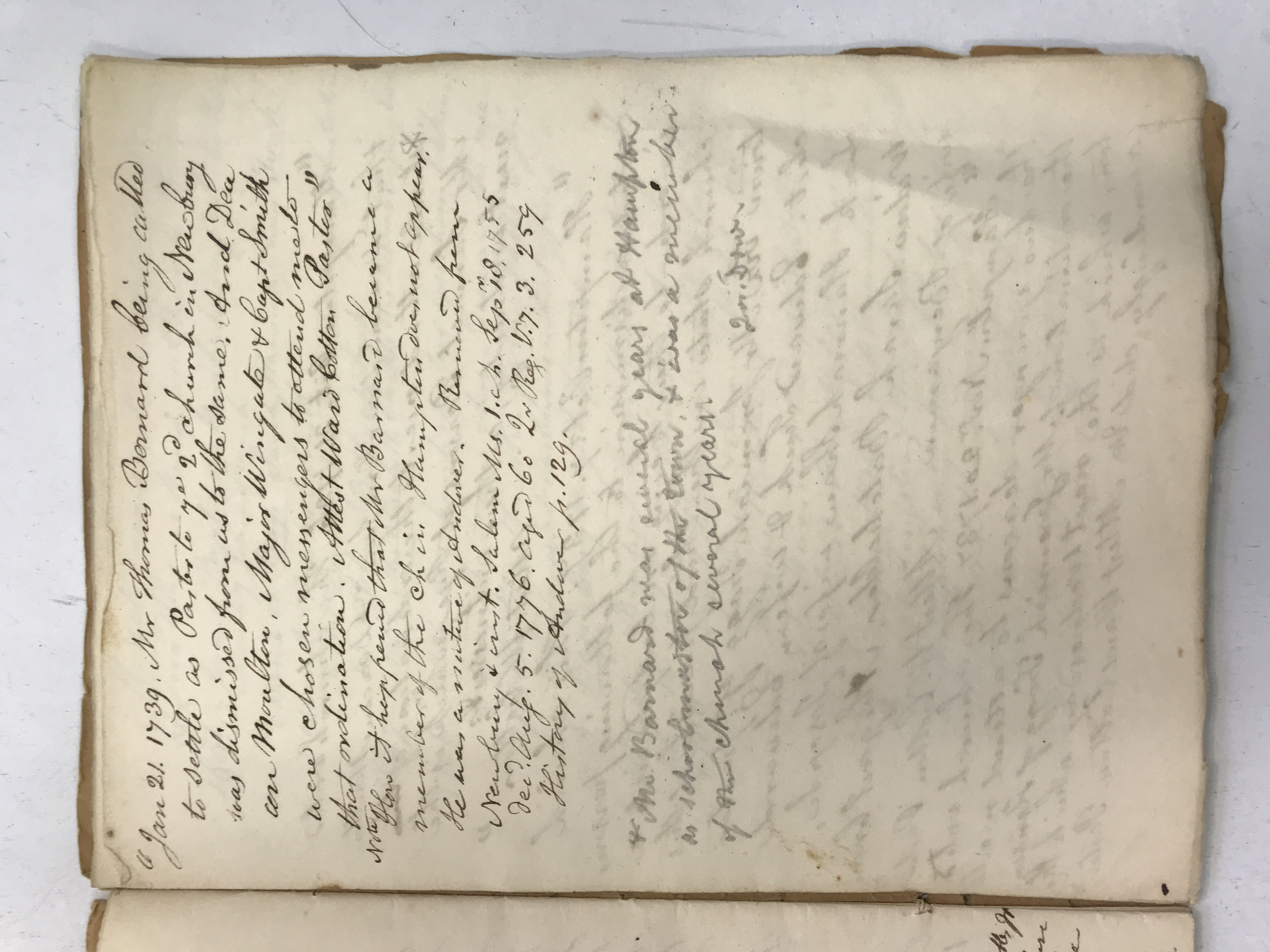
Thomas Barnard and neighboring ordinations — 1736–1739 · view 1 of 2
Open full-resolution photograph ↗
Thomas Barnard and neighboring ordinations — 1736–1739 · view 2 of 2
Open full-resolution photograph ↗
JDT-D461 · Miscellaneous church references: French, Tuck, Dole and others
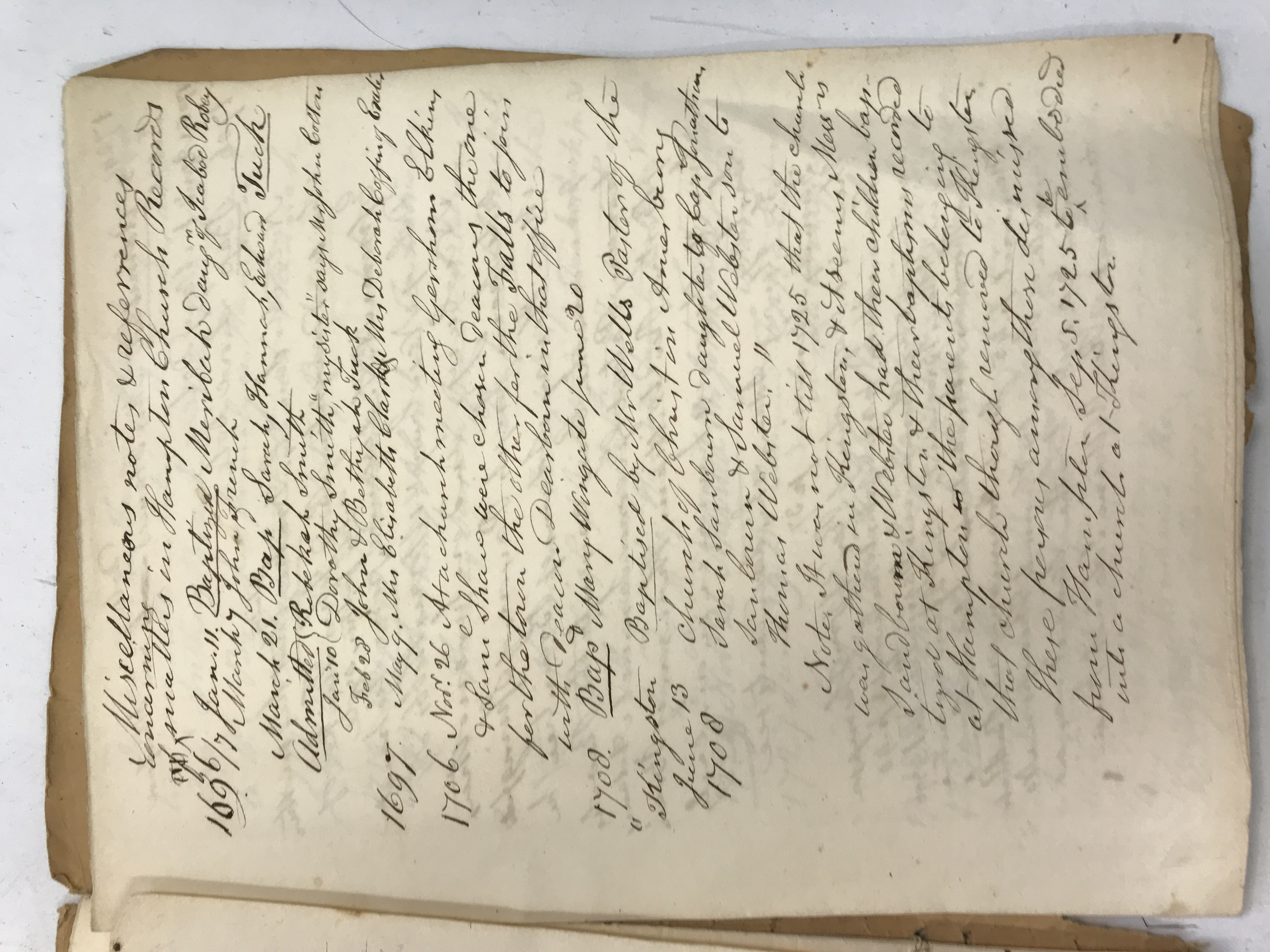
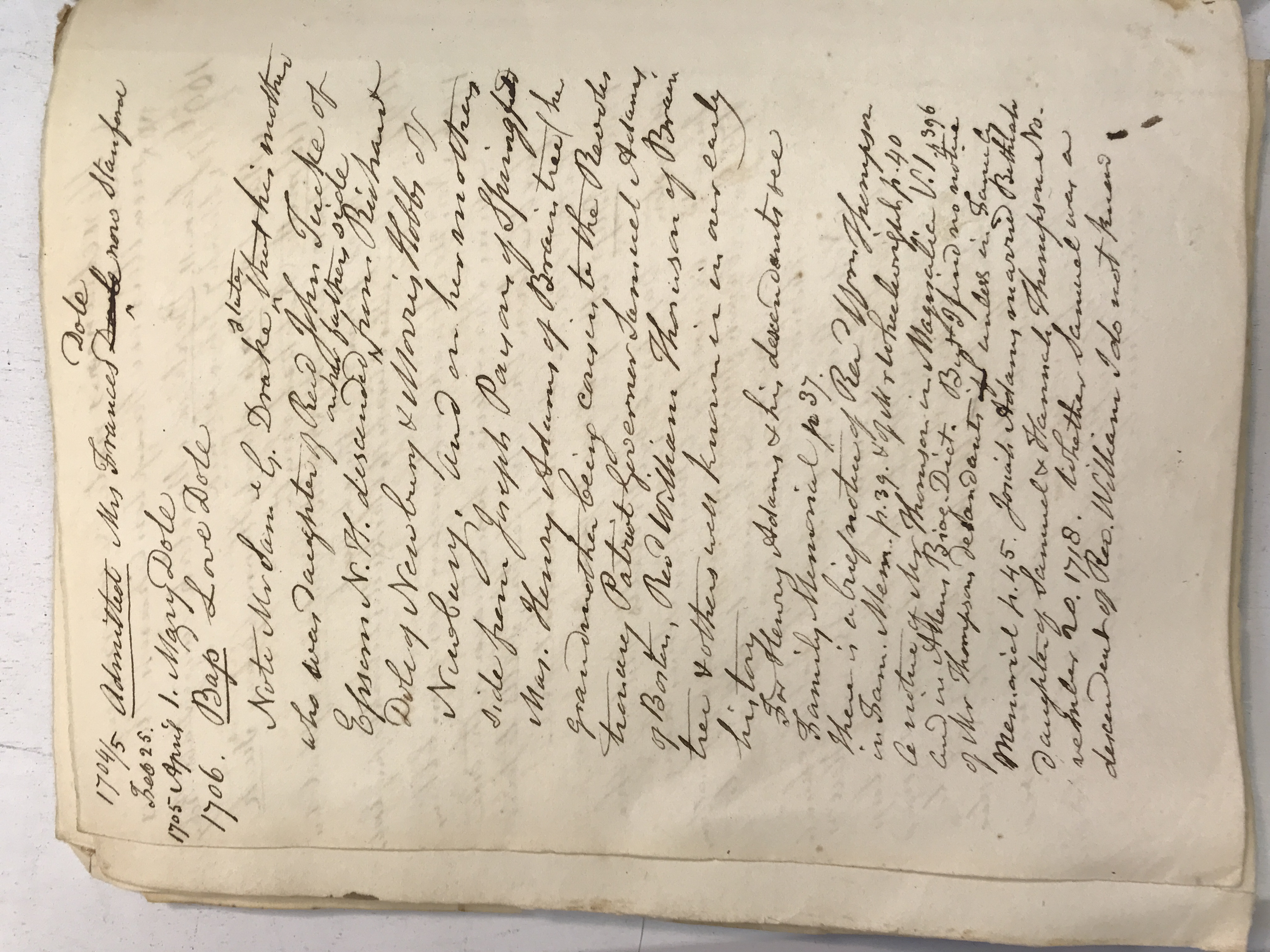
Research notes select baptisms, admissions and deacon appointments, including John French in 1696/7 and the 1706 choice of Gershom Elkins and Samuel Shaw. A note distinguishes baptisms recorded at Hampton for families later at Kingston. The following page explores Frances Dole, Mary and Love Dole, Samuel G. Drake’s ancestry and references concerning the Adams and Thompson families.
Miscellaneous church references: French, Tuck, Dole and others · view 1 of 2
Open full-resolution photograph ↗
Miscellaneous church references: French, Tuck, Dole and others · view 2 of 2
Open full-resolution photograph ↗
JDT-D462 · Brackett family connection and related marriage notes
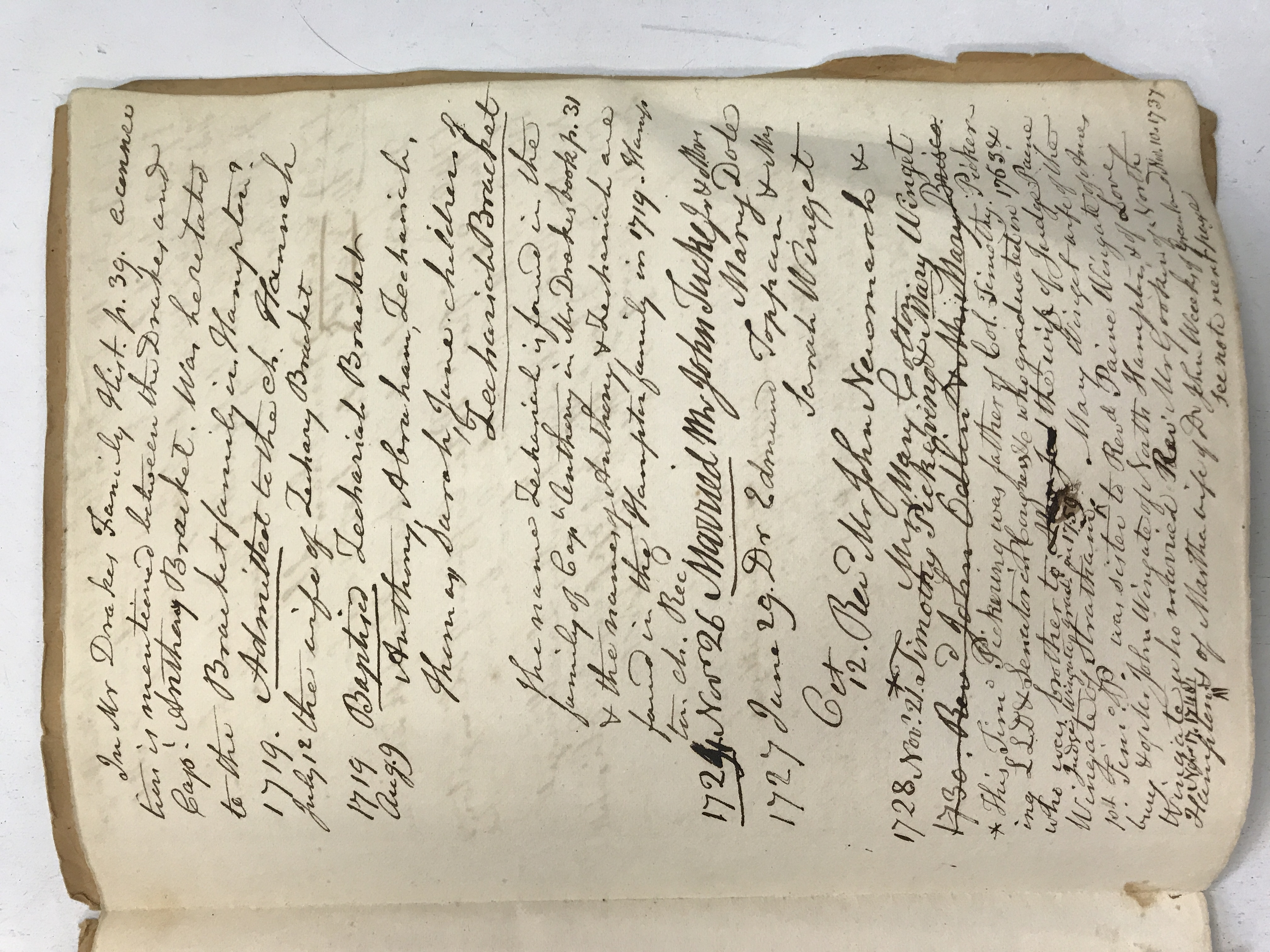
The writer tests a proposed connection between the Drake family and Captain Anthony Brackett against Hampton church entries. It lists Hannah Brackett’s admission and the 1719 baptism of Zechariah Brackett’s children, including Anthony and Abraham, then compares names with Drake’s family history. Marriage entries and additional family notes follow below.
Brackett family connection and related marriage notes · view 1 of 1
Open full-resolution photograph ↗
JDT-D463 · Marriage extracts and research corrections — 1737–1750
Selected marriages include Nathaniel Morrill of Nottingham with Elizabeth Sargent of Hampton, Peter Coffin of Kingston with Dorothy Gookin, and Ebenezer Fink of Epping with Elizabeth, daughter of Ward Cotton. The leaf preserves crossed-out readings, inserted places and a continued genealogical note, showing the research in progress.
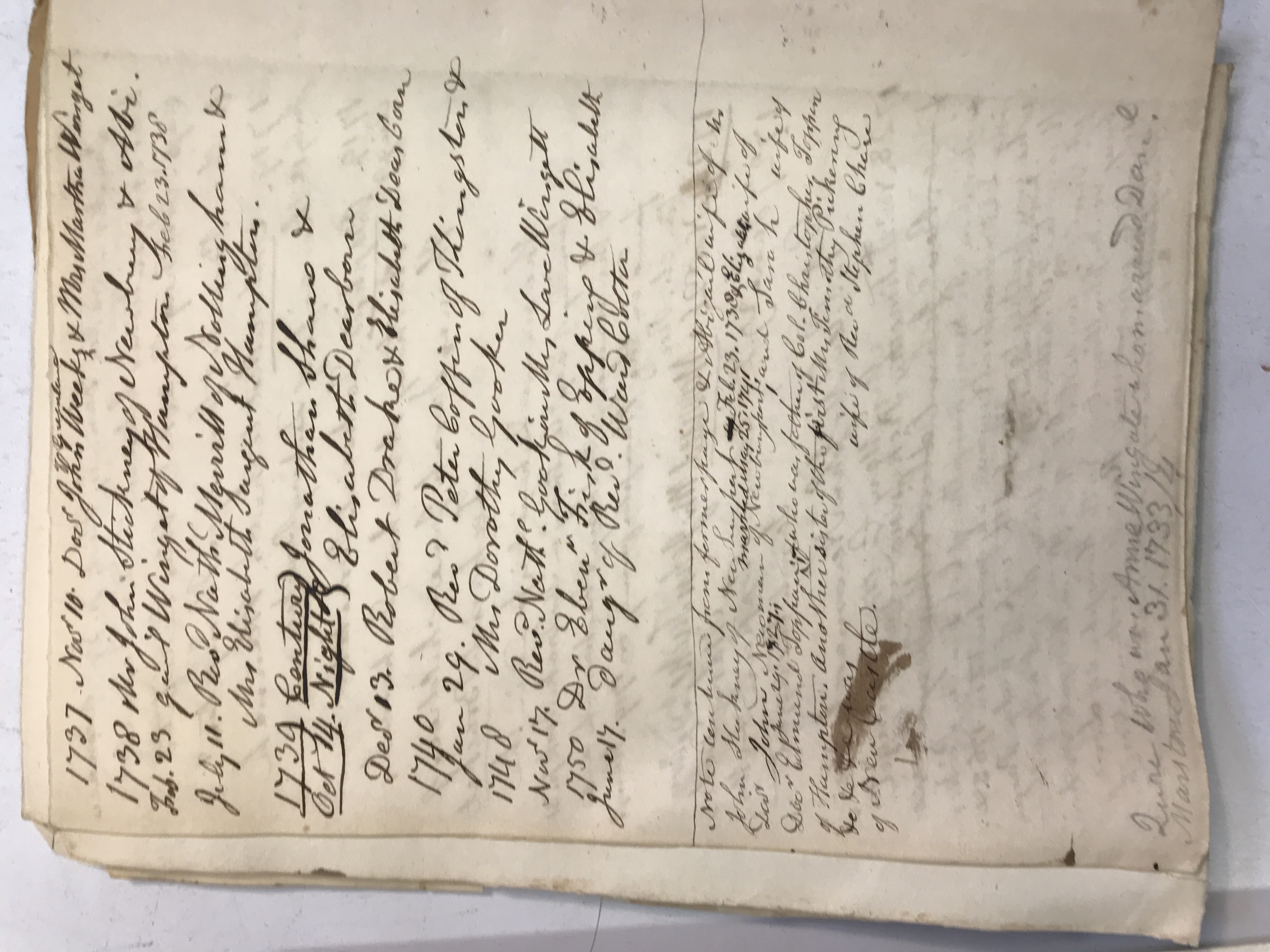
Marriage extracts and research corrections — 1737–1750 · view 1 of 1
Open full-resolution photograph ↗
JDT-D464 · Reference notebook: back wrapper
The plain brown back wrapper preserves wear, creases and a folded corner. It marks the end of this photographed notebook before the Marston estate papers begin.
Reference notebook: back wrapper · view 1 of 1
Open full-resolution photograph ↗
Collection photographs supplied by Whit. Descriptions are finding aids, not full transcriptions. Names, dates and associations remain provisional where the handwriting is uncertain.