
The Joseph Dow trunk archive · Document gallery 17
Addresses, influence & the search for truth
28 photographs · 7 document groups
Photographed by Whit from the recovered Joseph Dow collection. Related pages, close-ups, folds and reverse inscriptions remain together in the supplied sequence. Reading views are turned where needed; full-resolution links preserve the supplied originals. Titles are finding aids and uncertain readings remain open.
JDT-D107 · Salutationum Oratio: Latin address
Opening, close-up and concluding views of a Latin address headed “Salutationum Oratio.” The manuscript is presented for reading without an unverified translation.
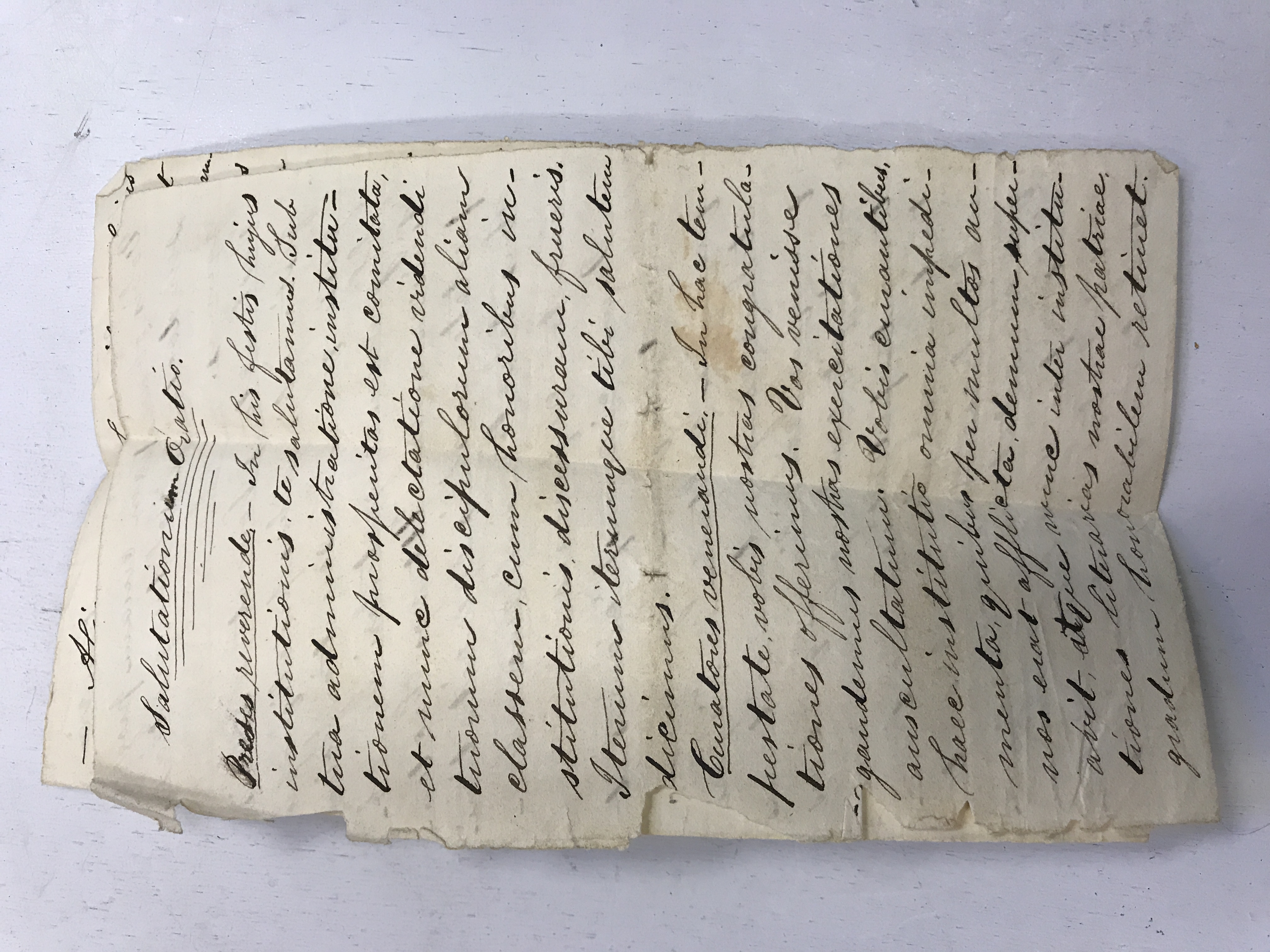
Salutationum Oratio: Latin address
Open full-resolution photograph ↗
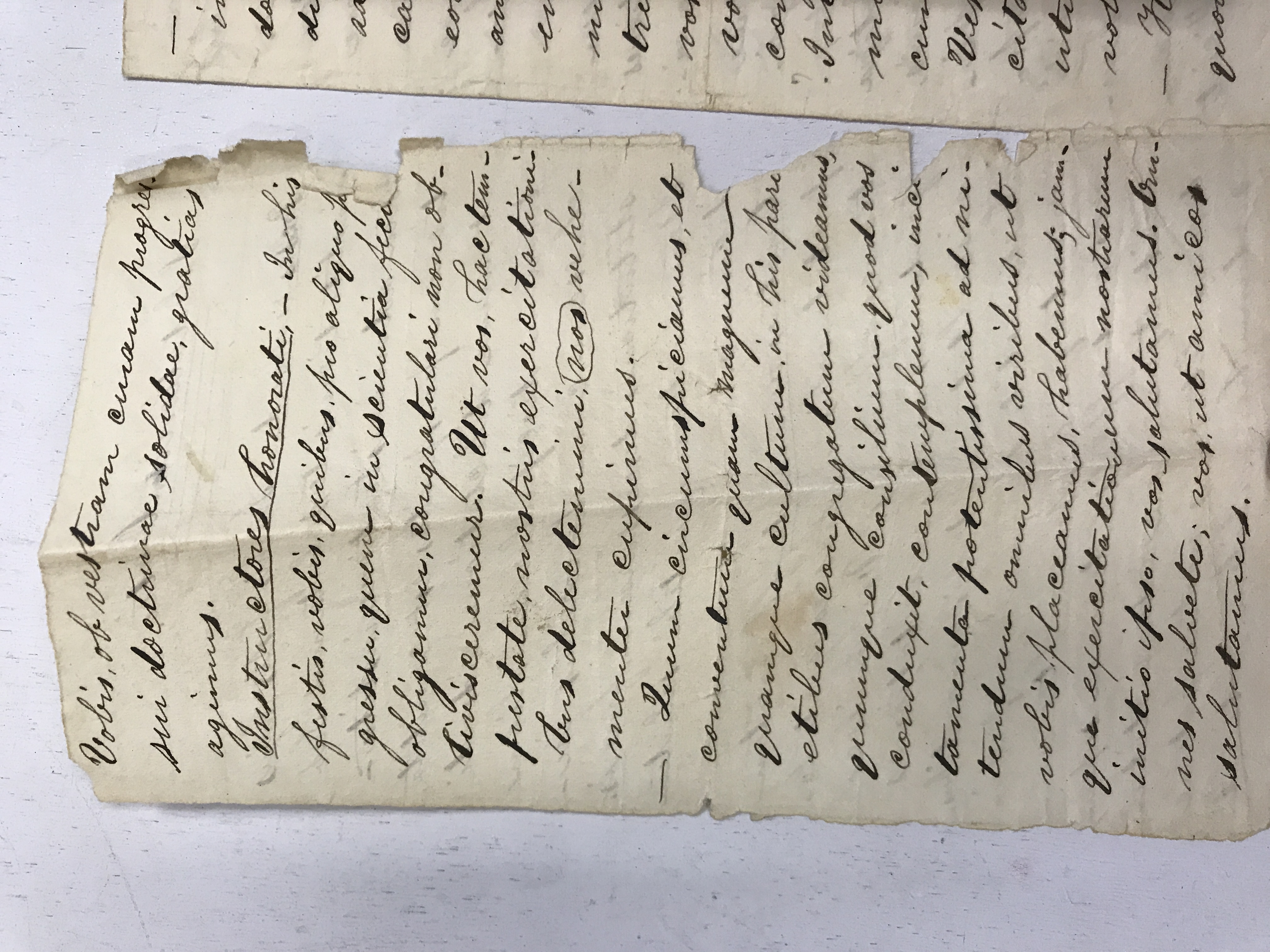
Salutationum Oratio: Latin address
Open full-resolution photograph ↗
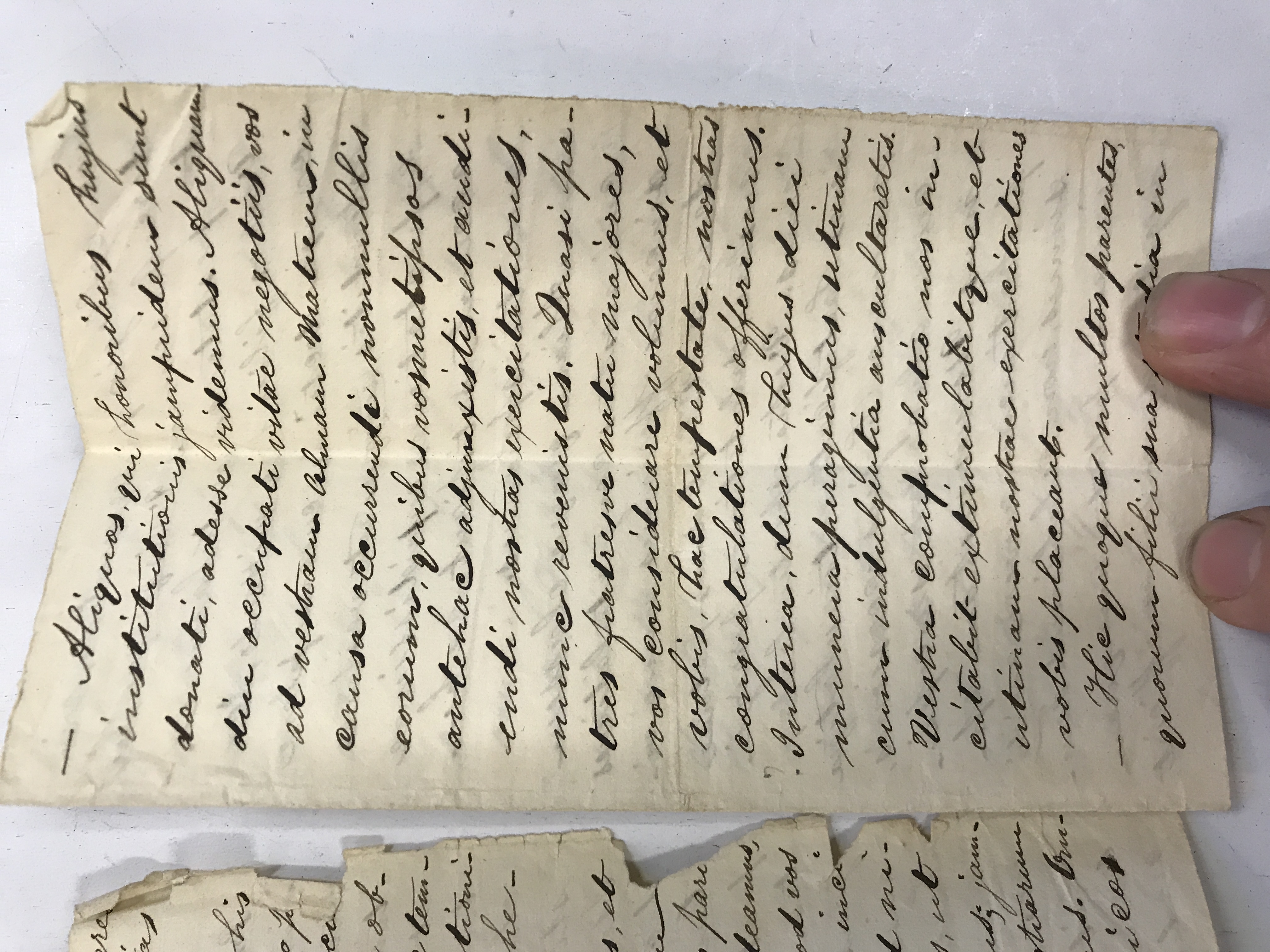
Salutationum Oratio: Latin address
Open full-resolution photograph ↗
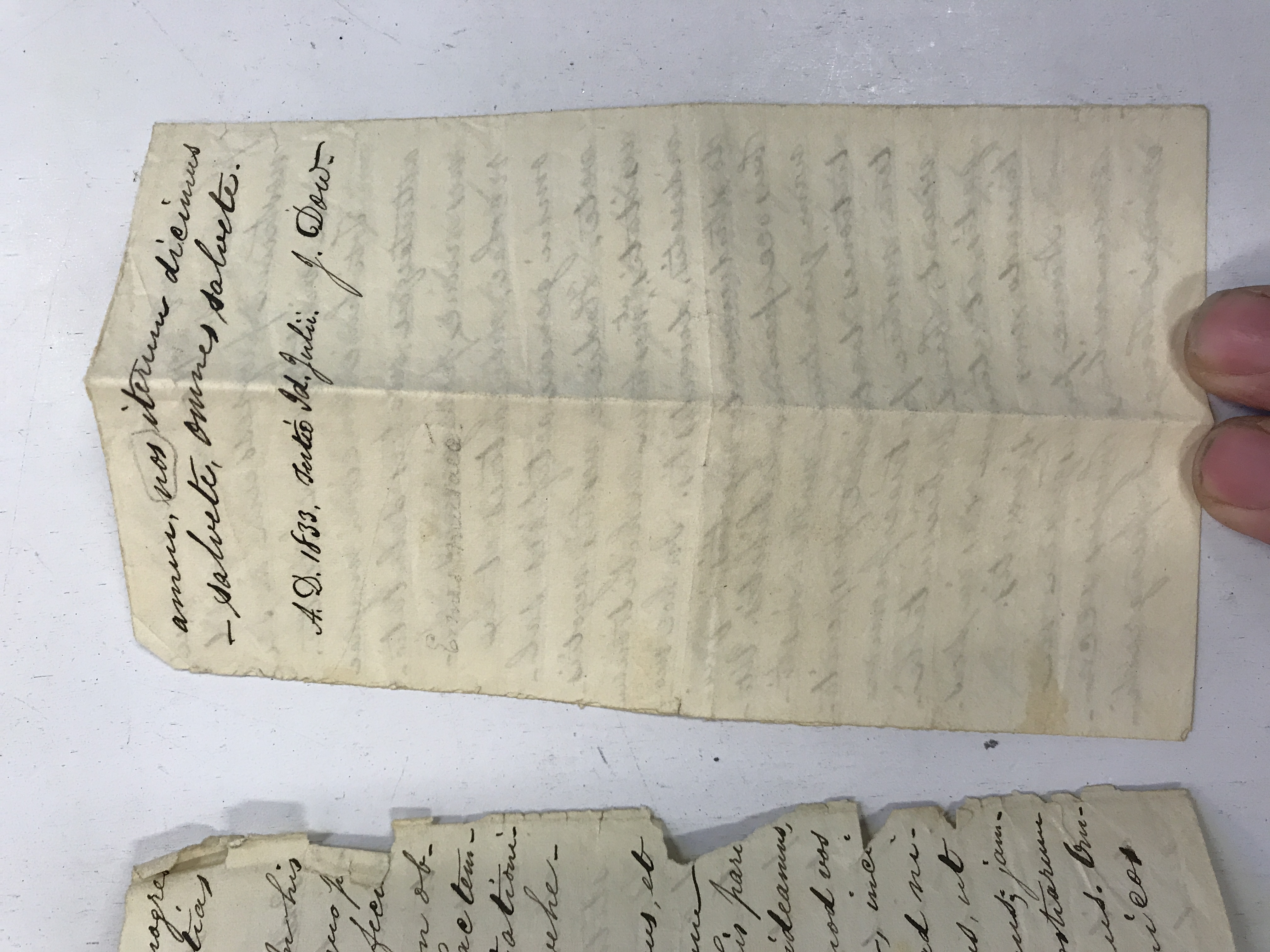
Salutationum Oratio: Latin address
Open full-resolution photograph ↗
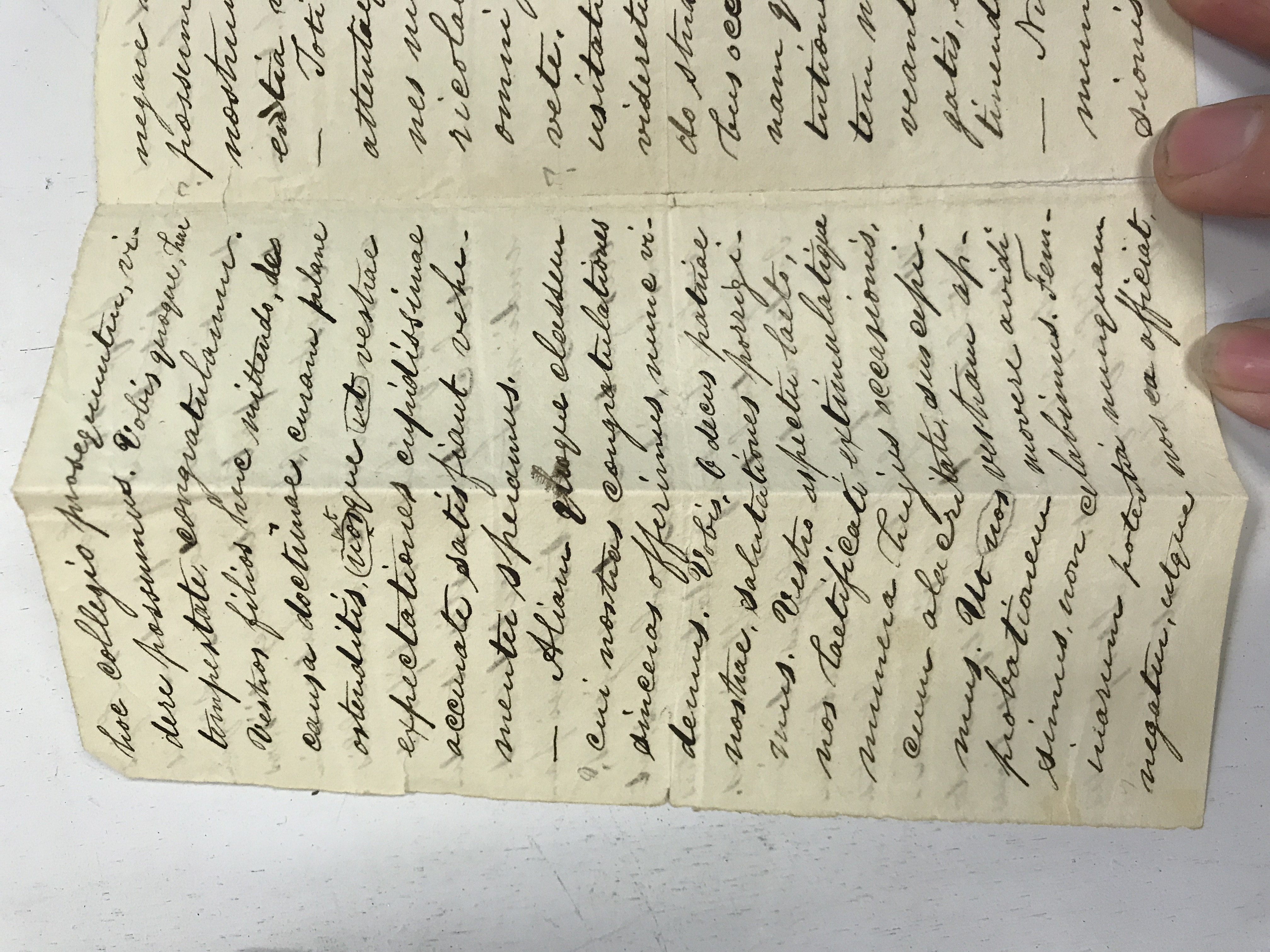
Salutationum Oratio: Latin address
Open full-resolution photograph ↗
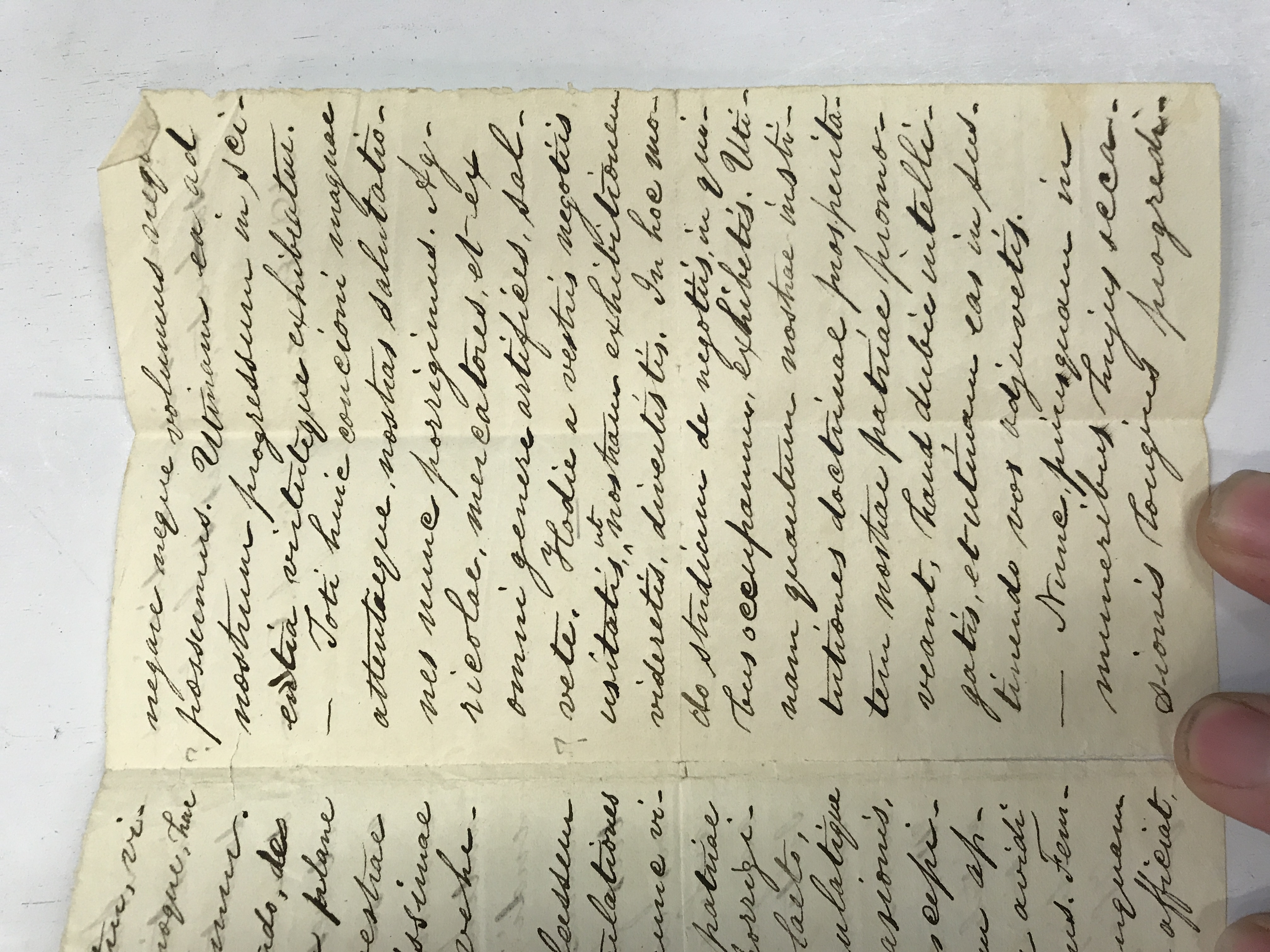
Salutationum Oratio: Latin address
Open full-resolution photograph ↗
JDT-D108 · Arnold
A historical composition headed “Arnold,” discussing patriotism, military service and the figure’s reputation. The text and reverse inscription remain together.
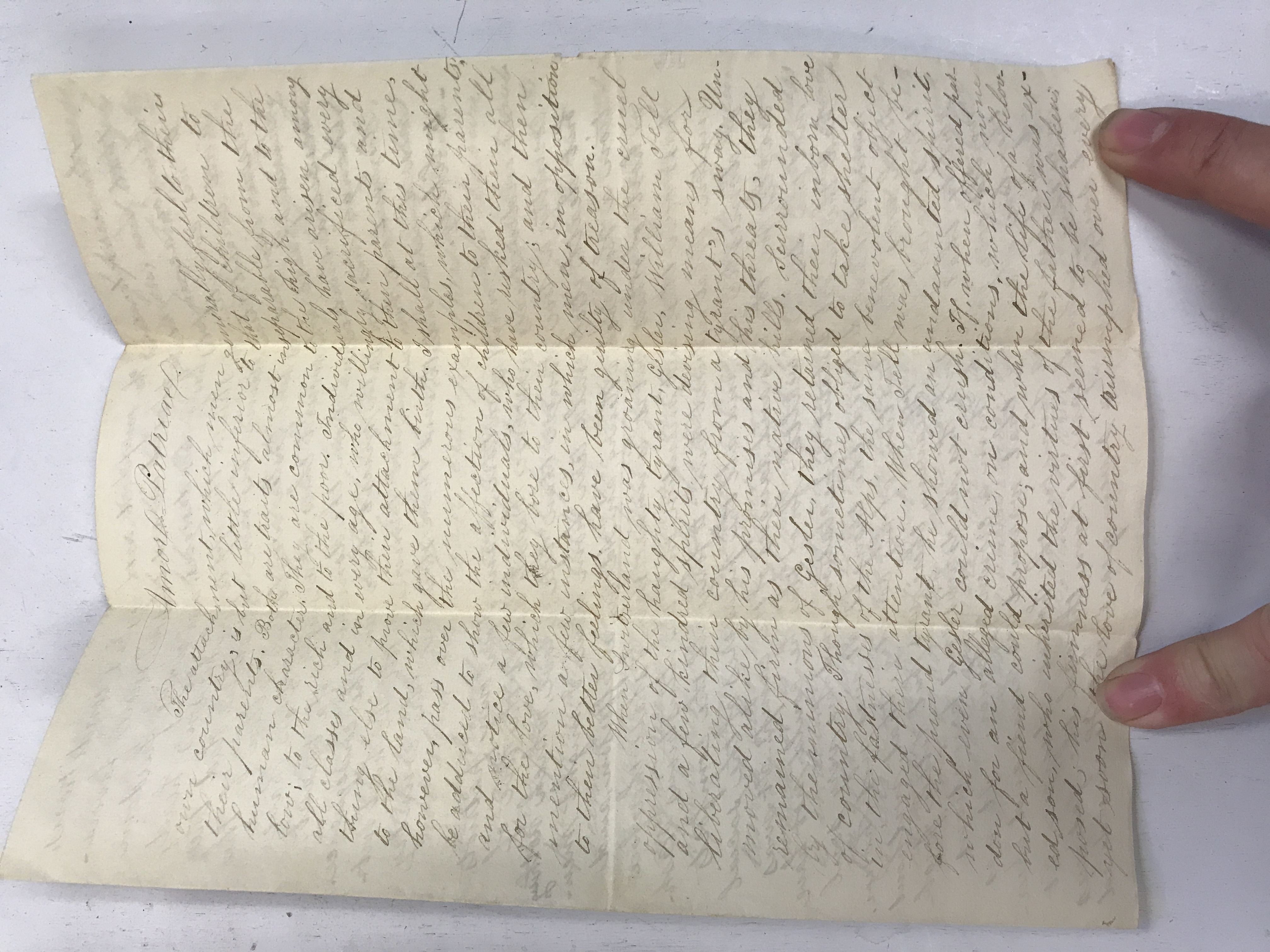
Arnold
Open full-resolution photograph ↗
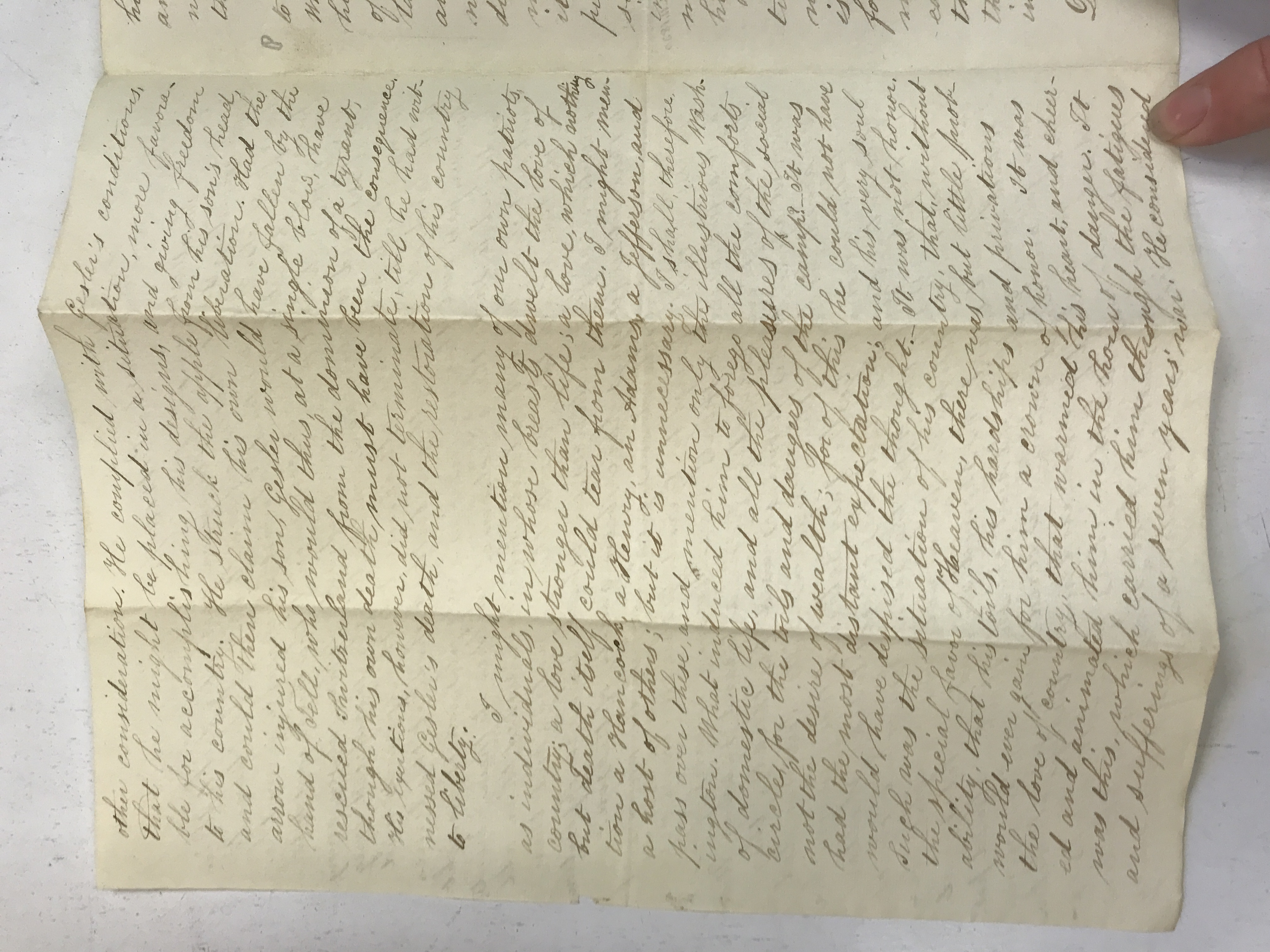
Arnold
Open full-resolution photograph ↗
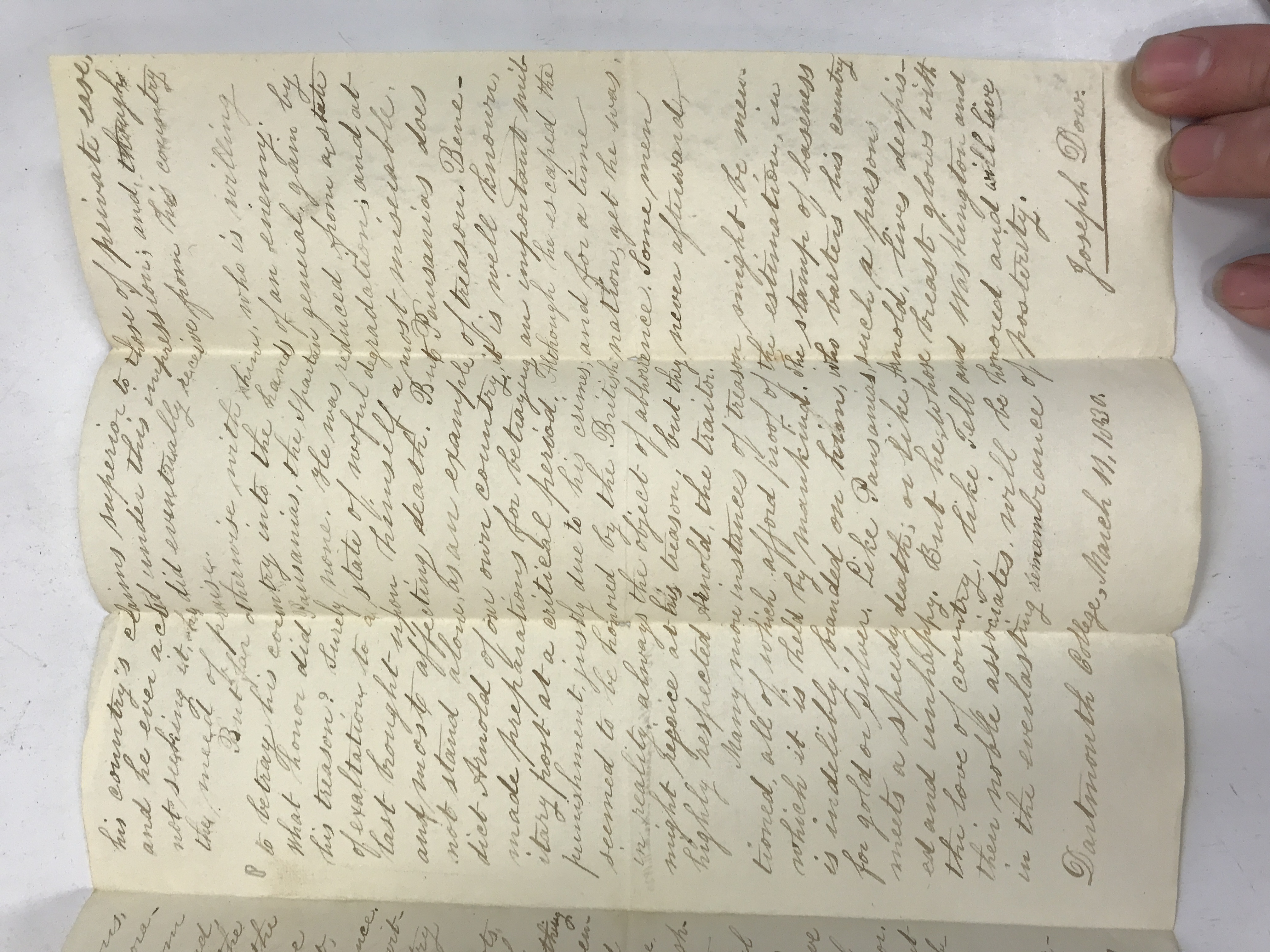
Arnold
Open full-resolution photograph ↗
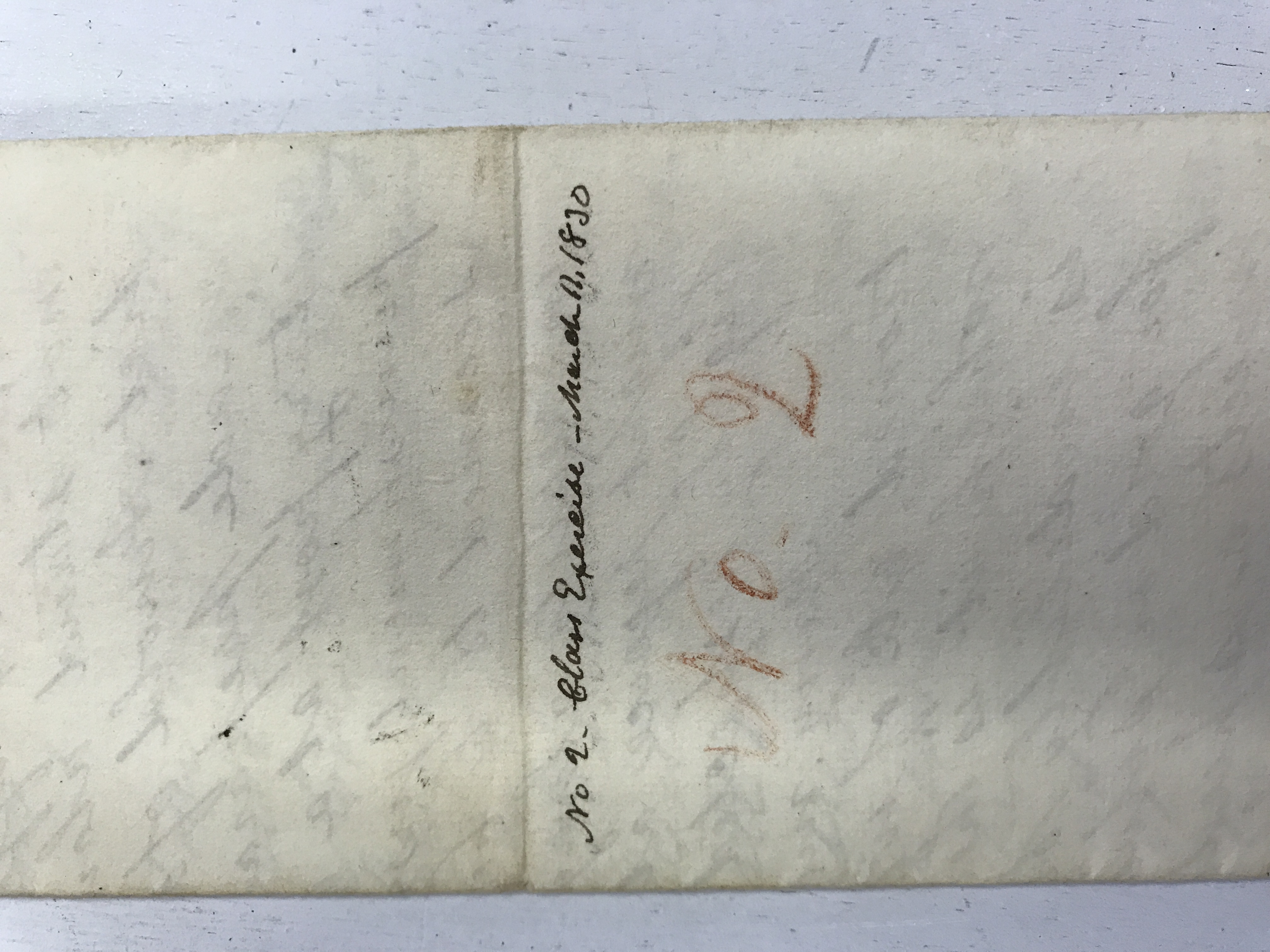
Arnold
Open full-resolution photograph ↗
JDT-D109 · European settlement and treatment of Indigenous peoples
A historical composition examining conduct during European settlement and questioning the treatment of Indigenous peoples. The manuscript contains language of its period; this finding aid describes its subject.
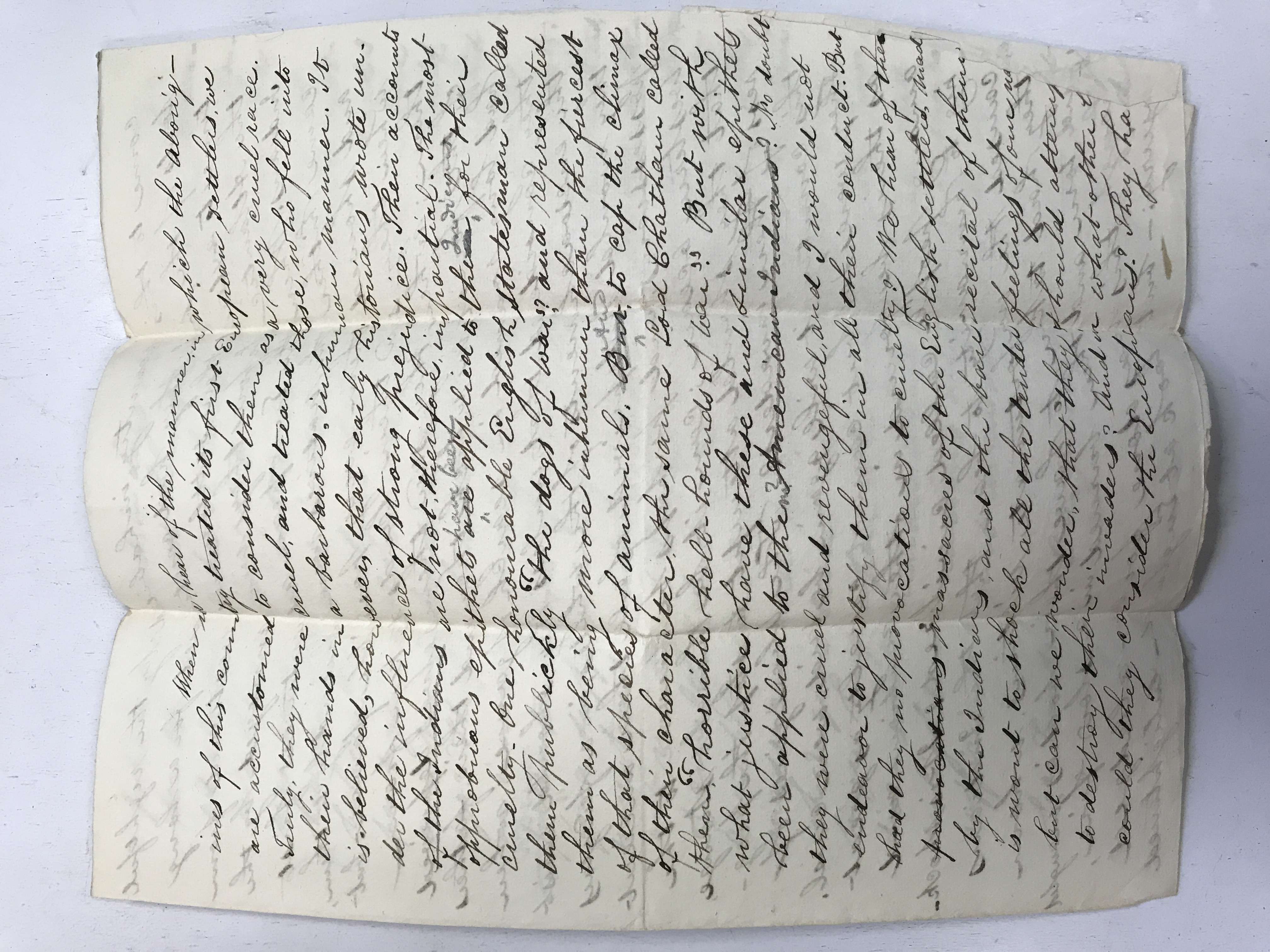
European settlement and treatment of Indigenous peoples
Open full-resolution photograph ↗
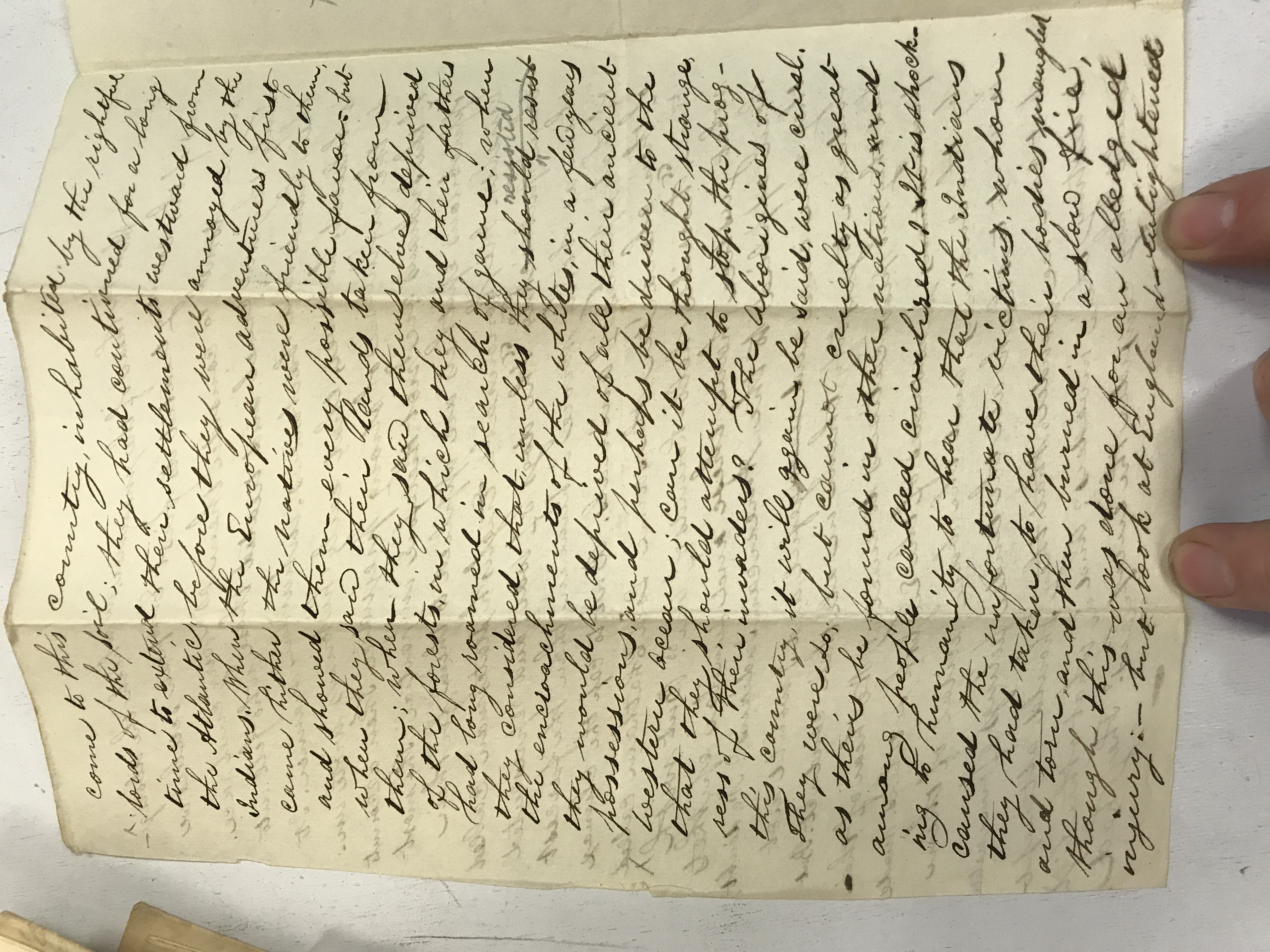
European settlement and treatment of Indigenous peoples
Open full-resolution photograph ↗
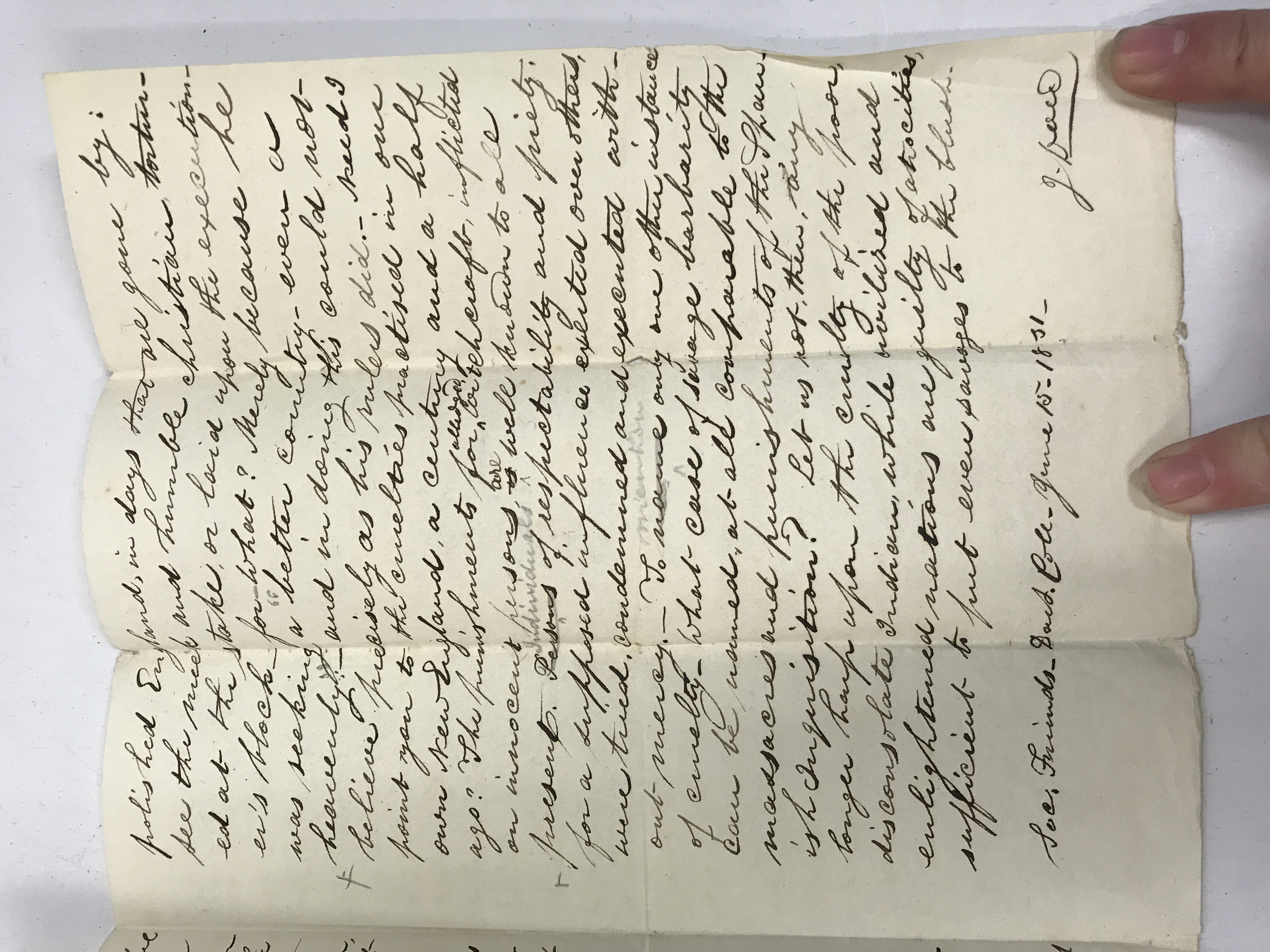
European settlement and treatment of Indigenous peoples
Open full-resolution photograph ↗
JDT-D110 · Individual influence
A composition on the influence one individual may have on another, with wider views, an opening detail, the conclusion and the reverse.
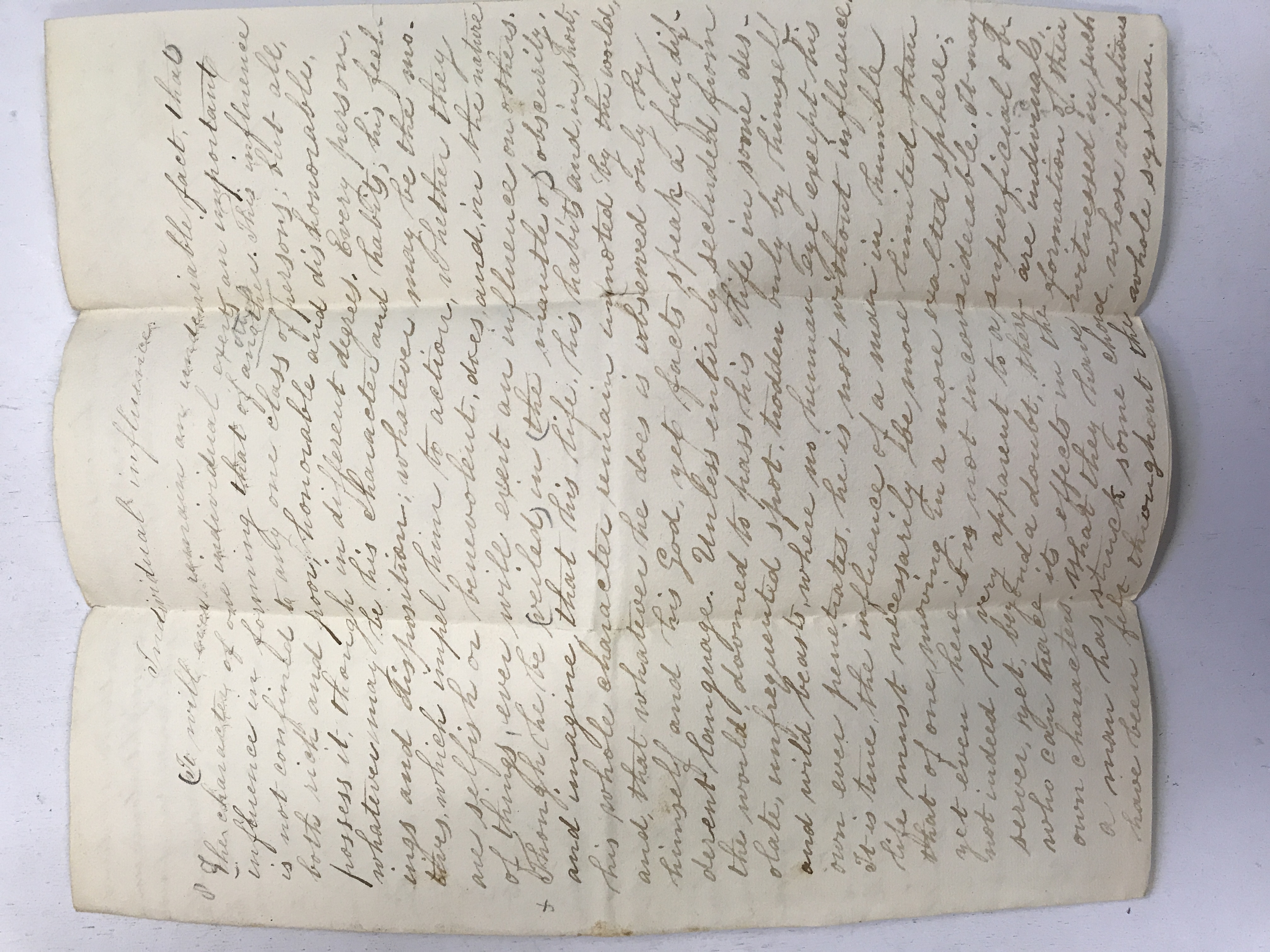
Individual influence
Open full-resolution photograph ↗
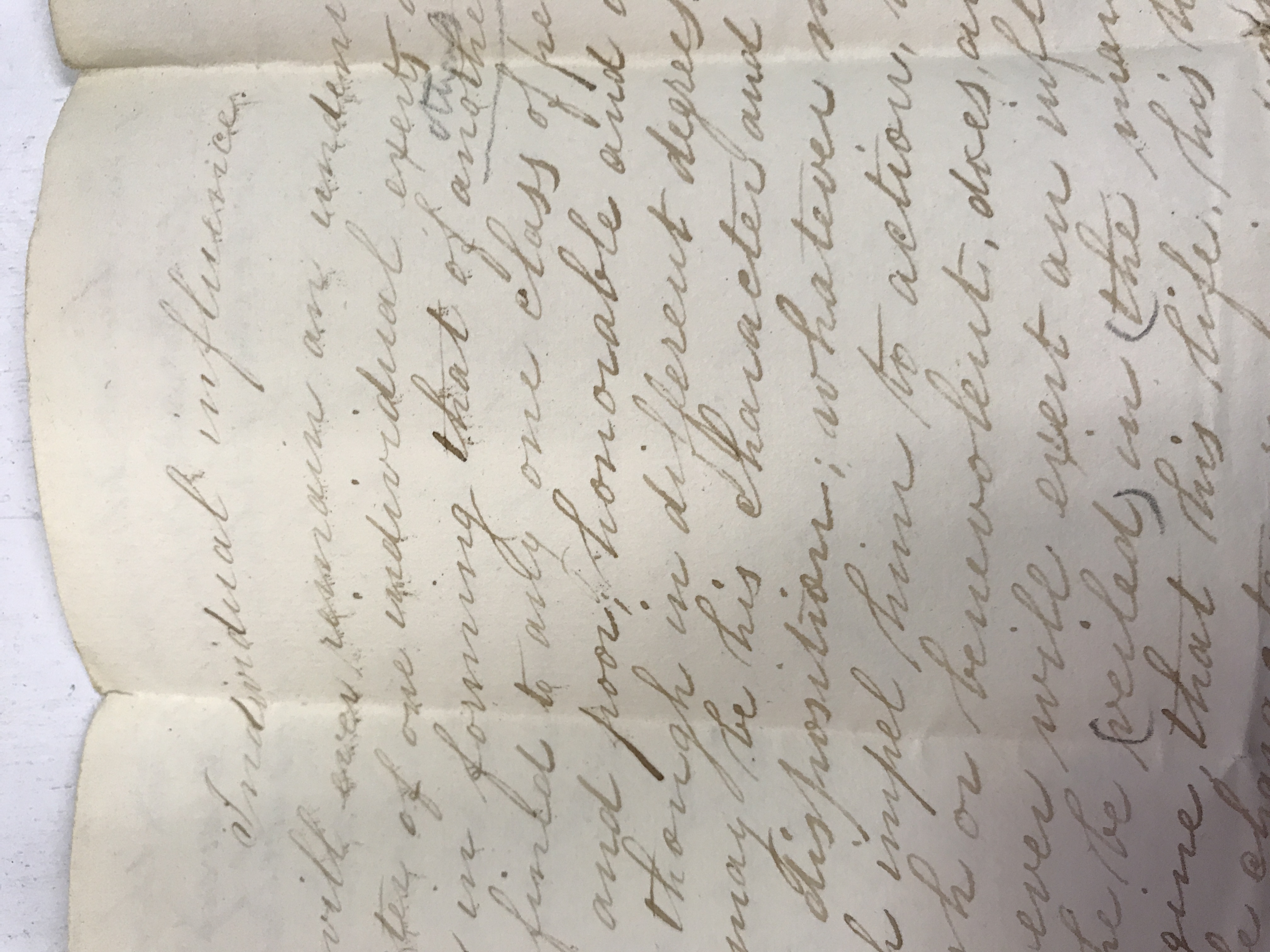
Individual influence
Open full-resolution photograph ↗
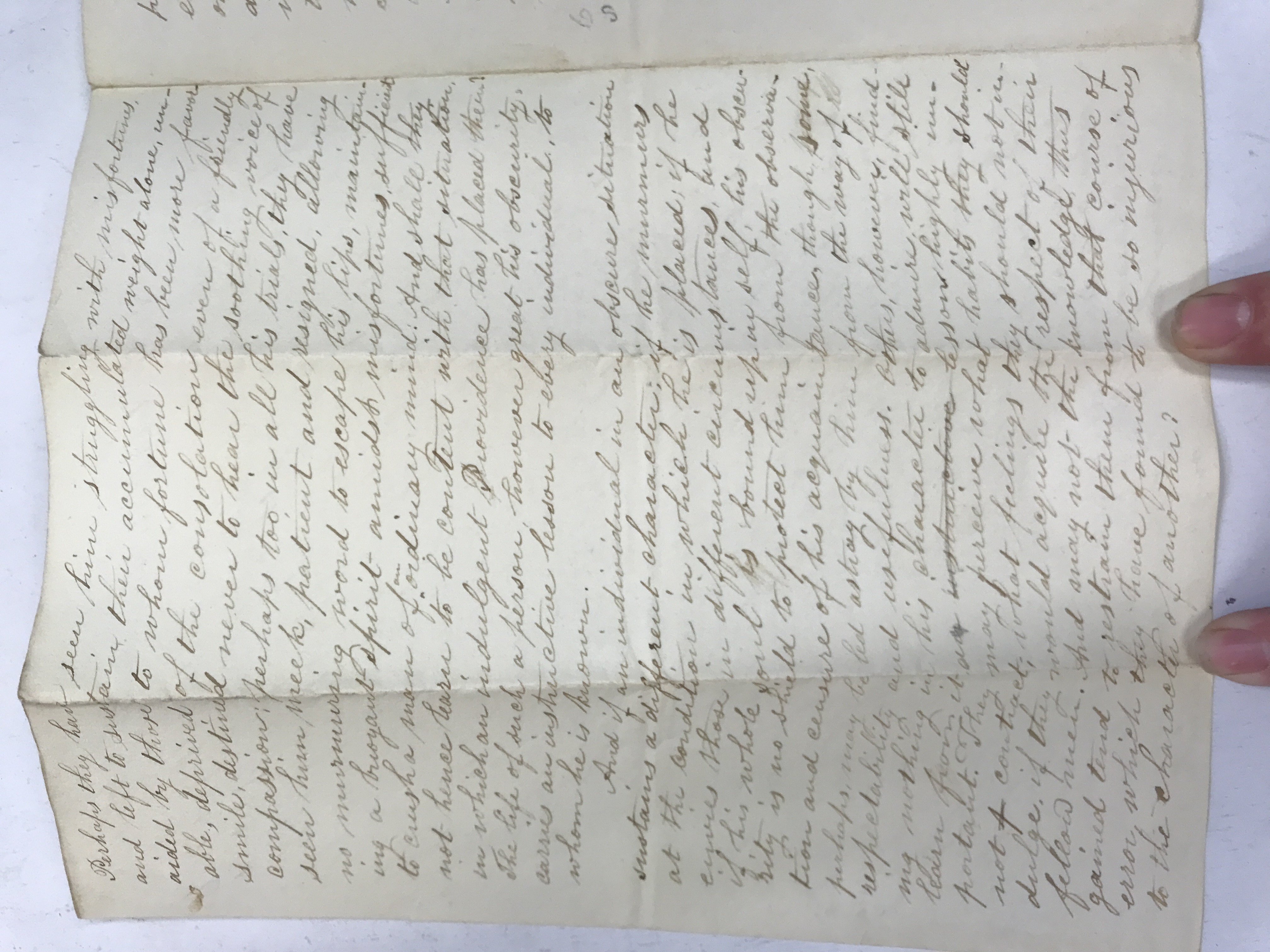
Individual influence
Open full-resolution photograph ↗
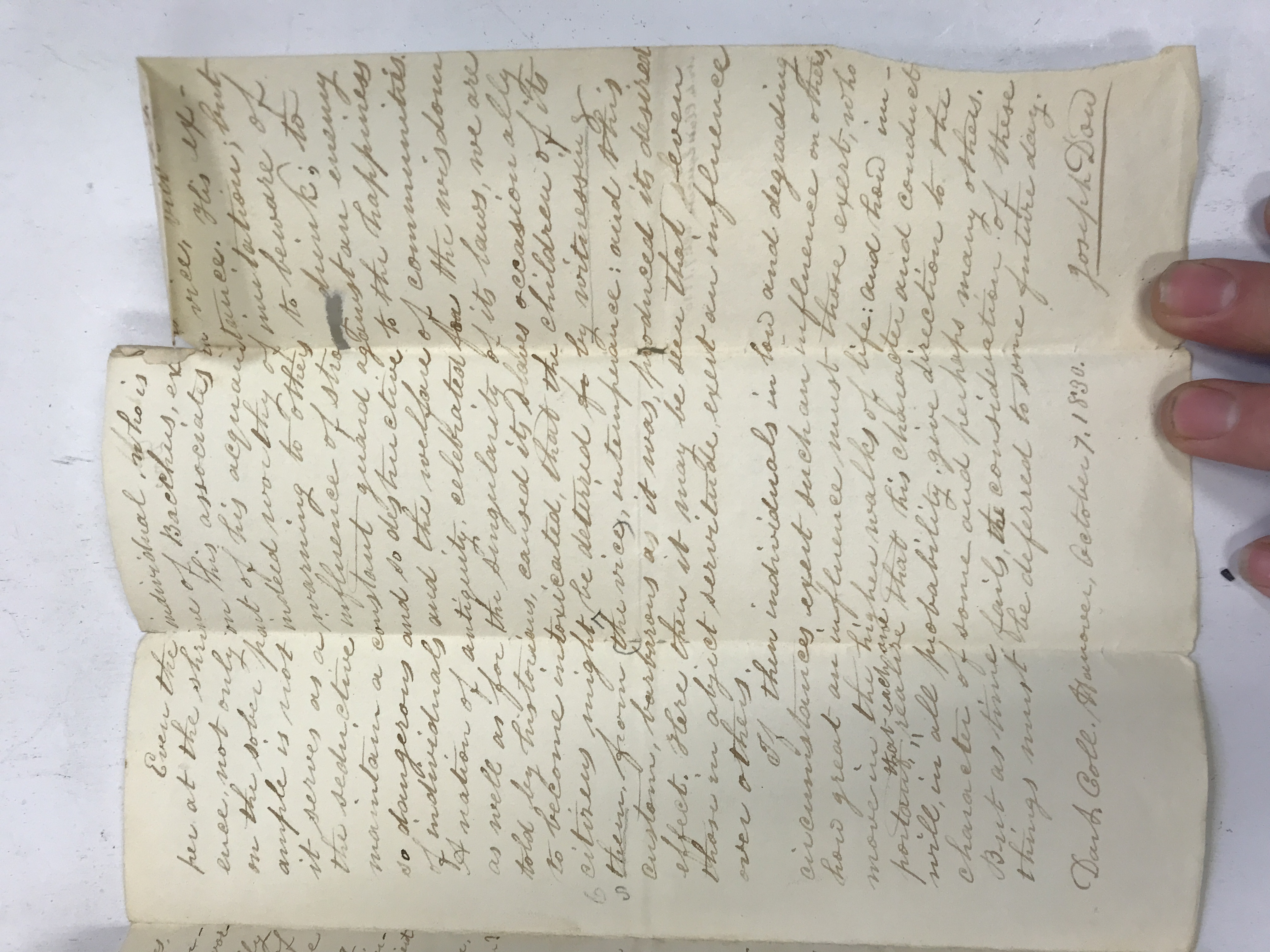
Individual influence
Open full-resolution photograph ↗
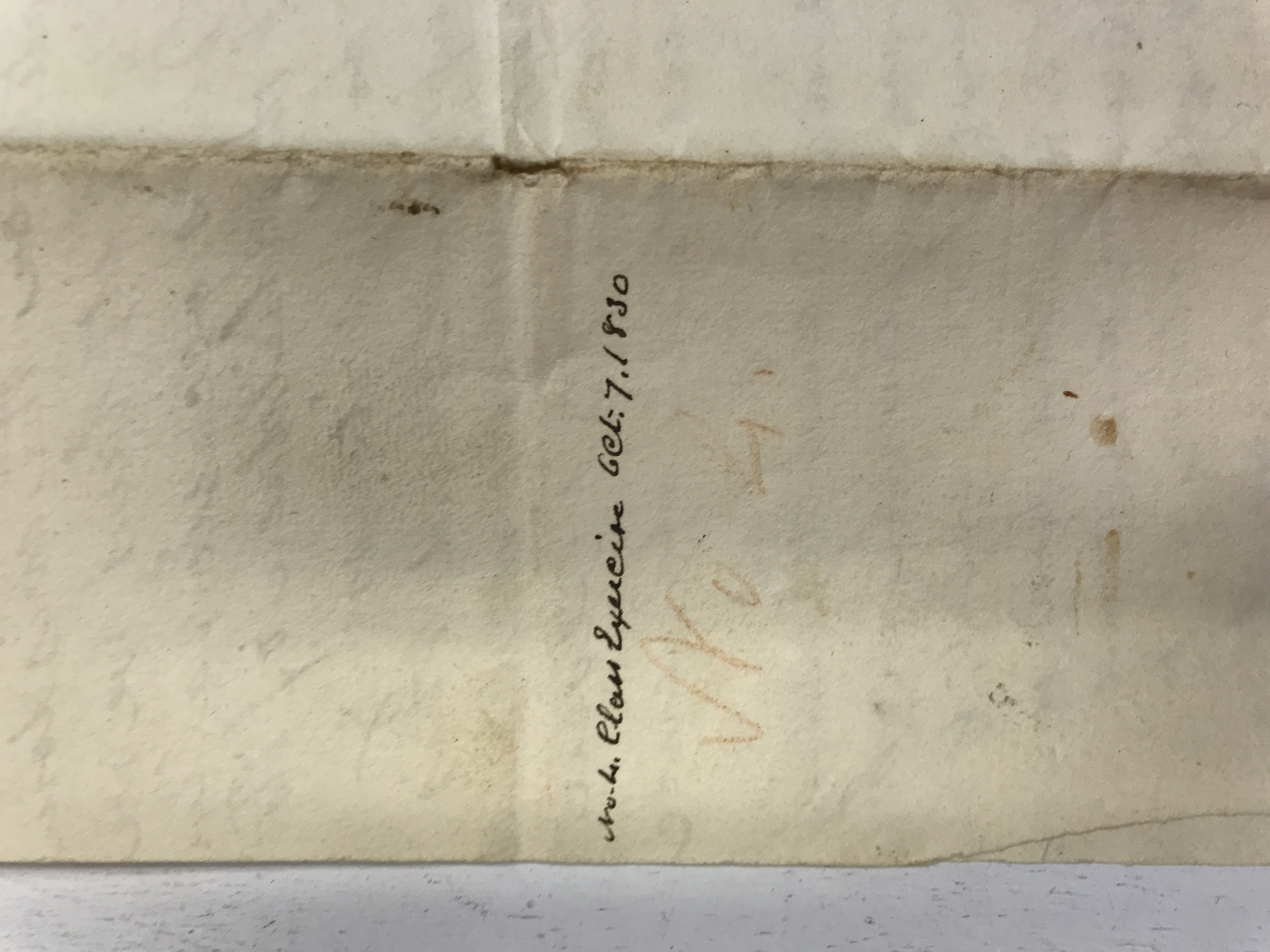
Individual influence
Open full-resolution photograph ↗
JDT-D111 · The limits of settled purposes
A composition on the limited extent to which people are influenced by settled purposes, and the abandonment or revision of plans.
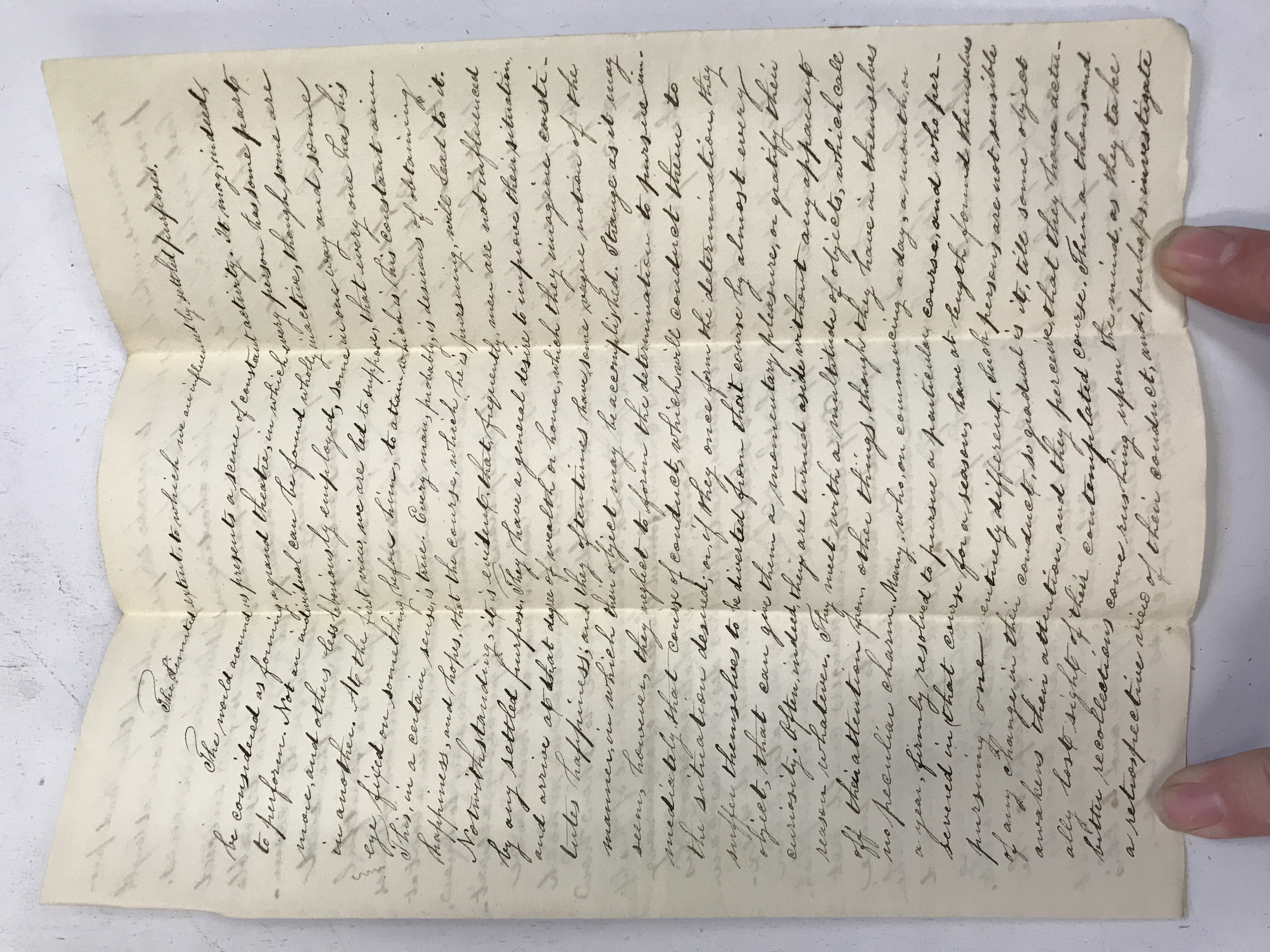
The limits of settled purposes
Open full-resolution photograph ↗
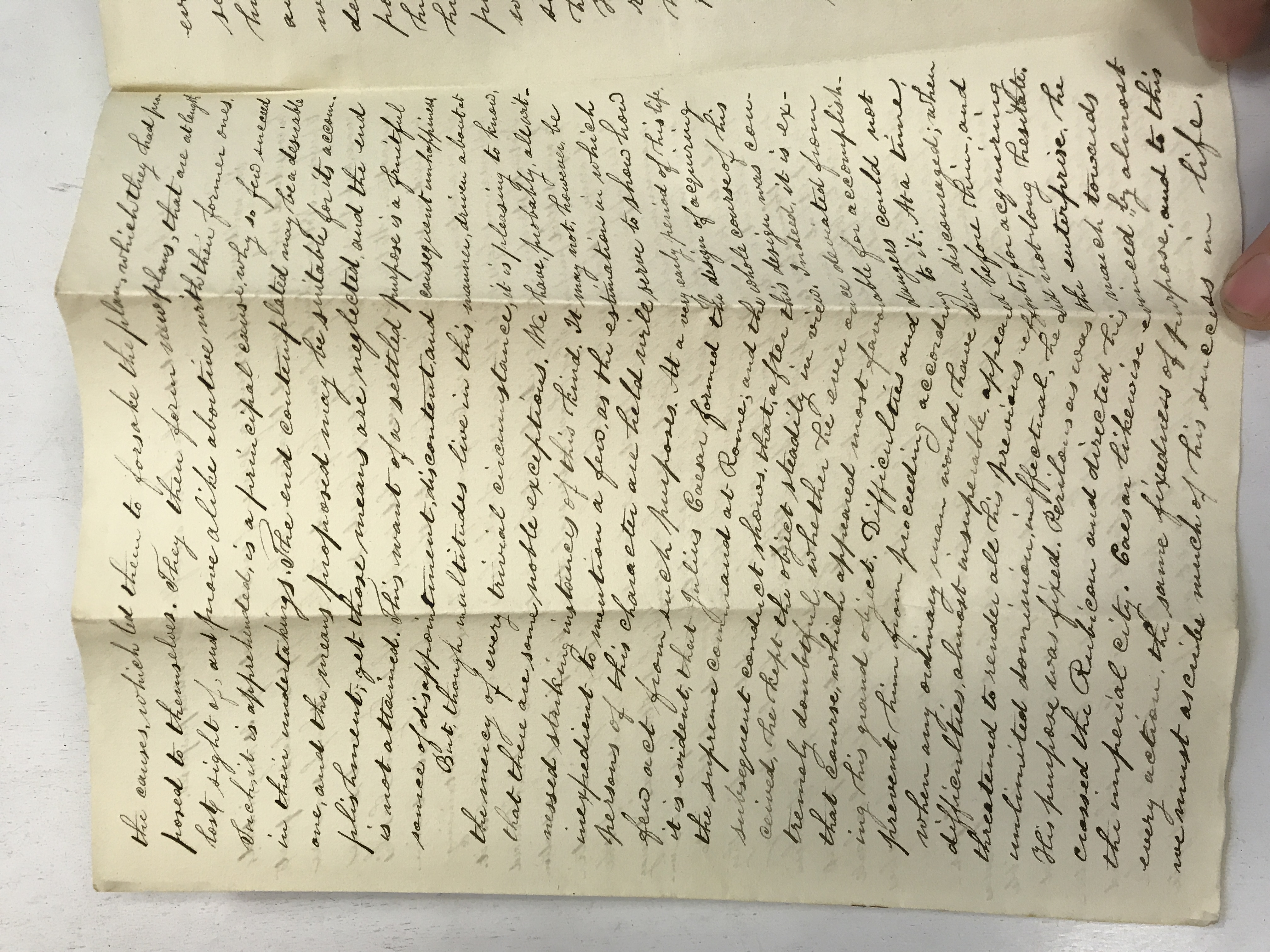
The limits of settled purposes
Open full-resolution photograph ↗
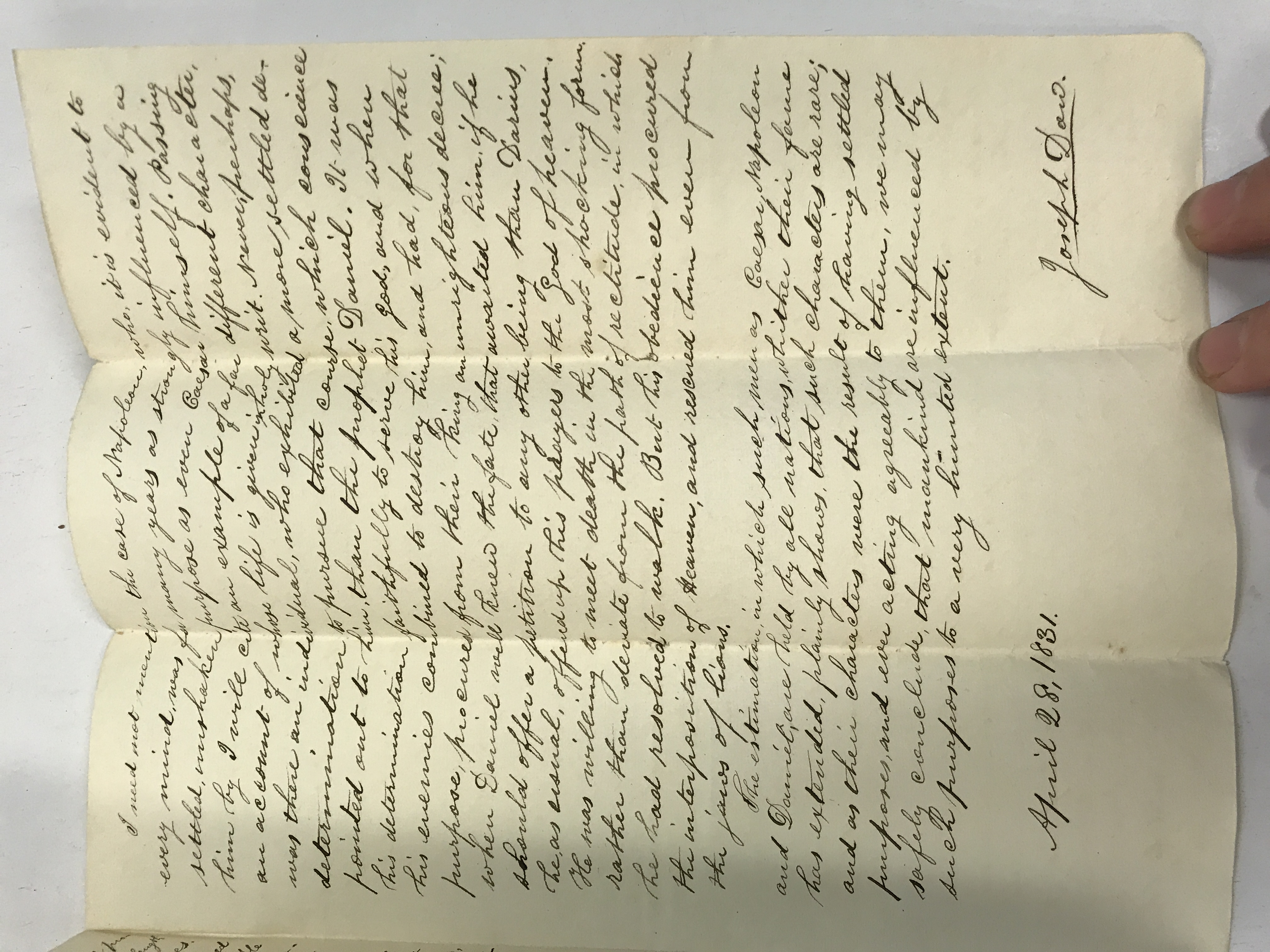
The limits of settled purposes
Open full-resolution photograph ↗
JDT-D112 · Obstacles to investigating truth
A comparison of obstacles within and outside ourselves to the successful investigation of truth. Text, conclusion and reverse are grouped together.
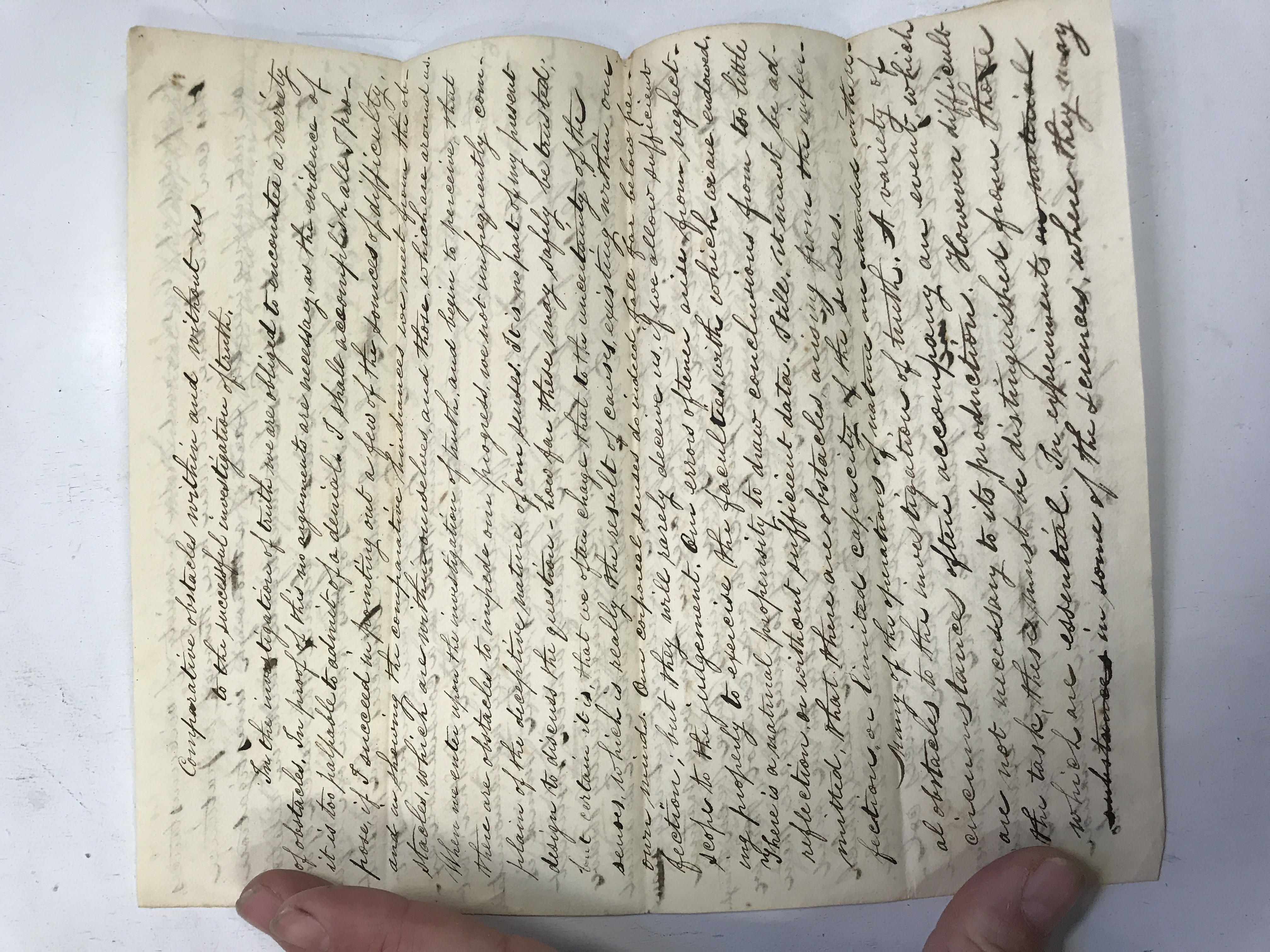
Obstacles to investigating truth
Open full-resolution photograph ↗
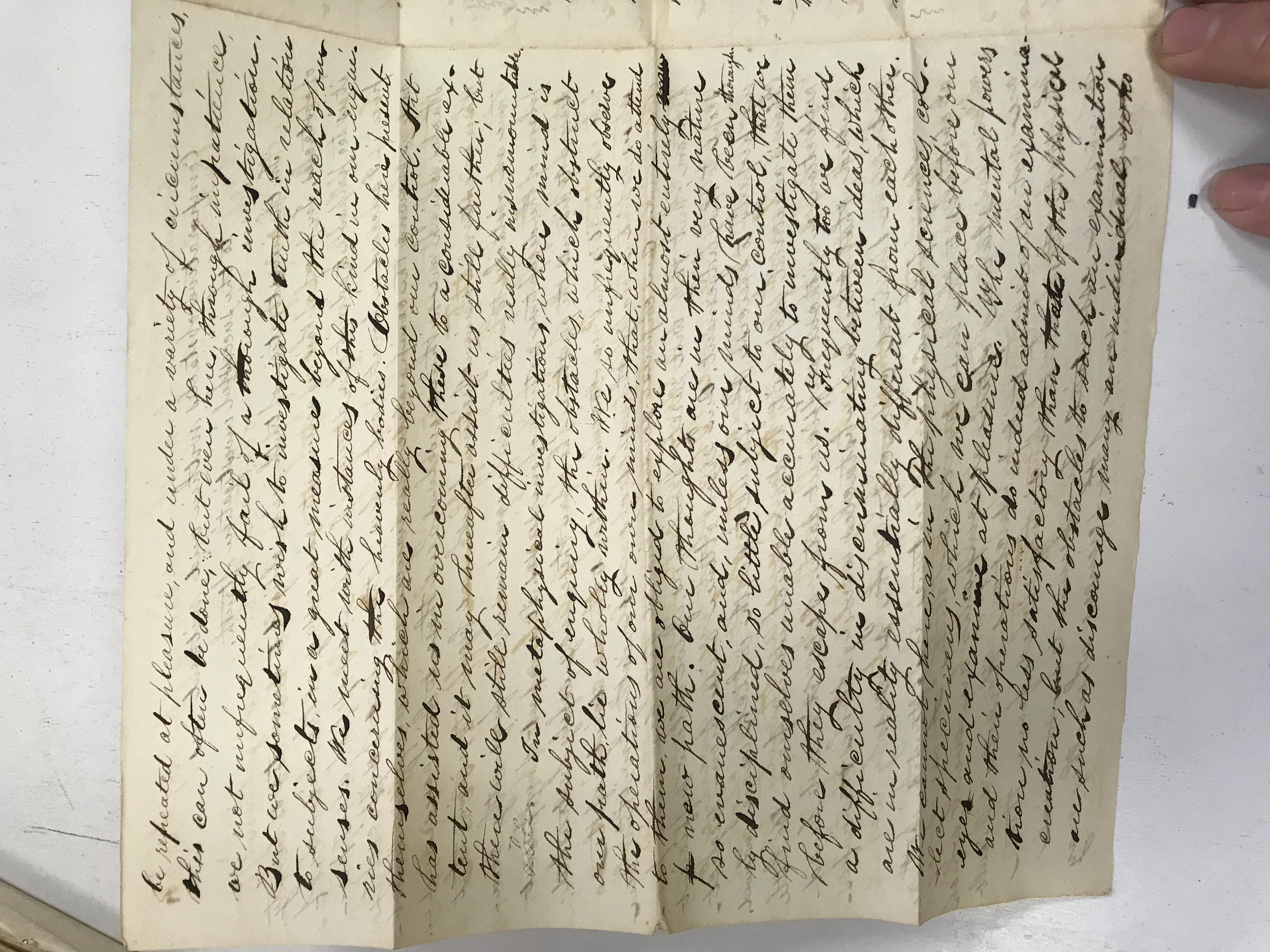
Obstacles to investigating truth
Open full-resolution photograph ↗
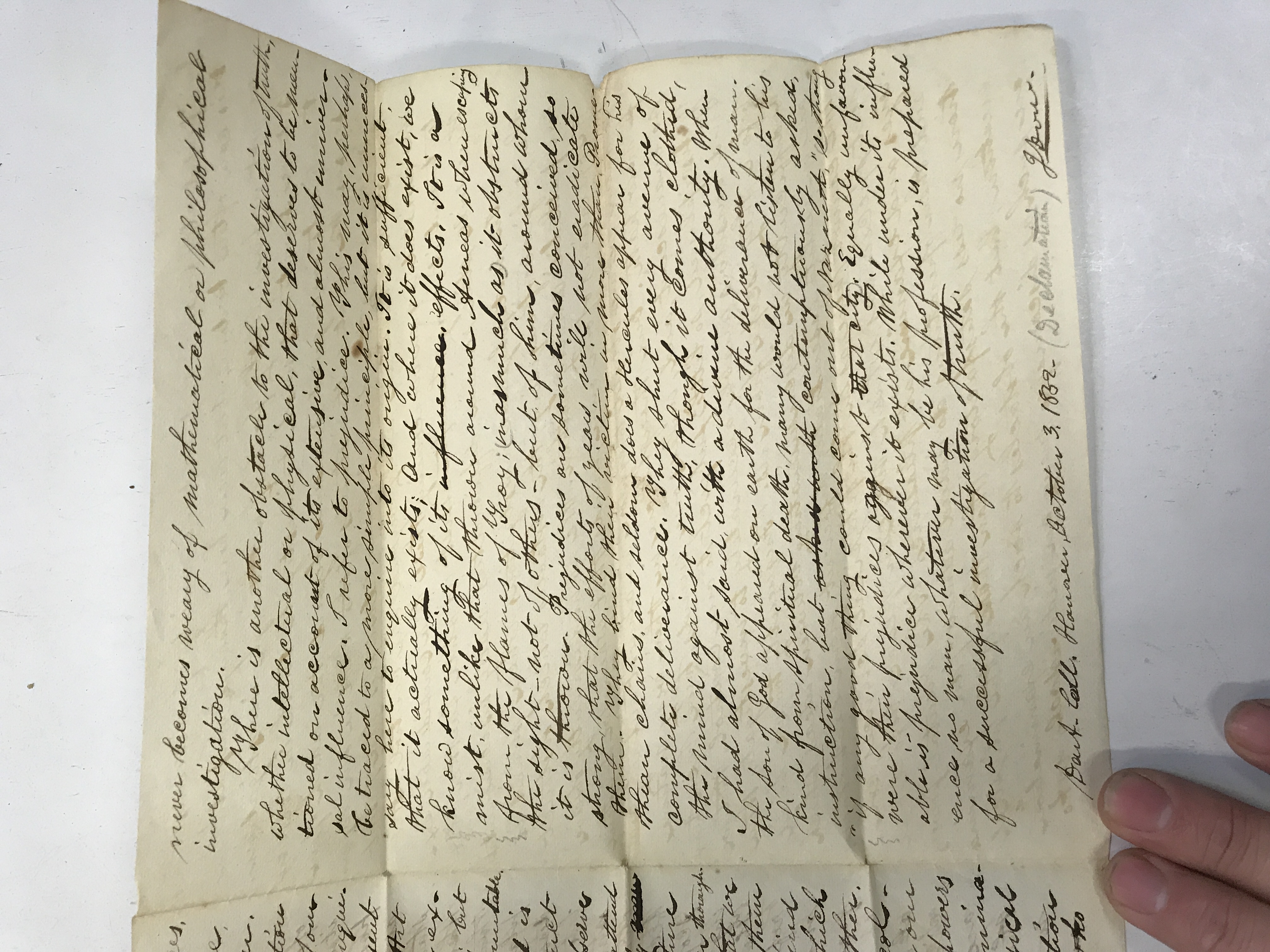
Obstacles to investigating truth
Open full-resolution photograph ↗
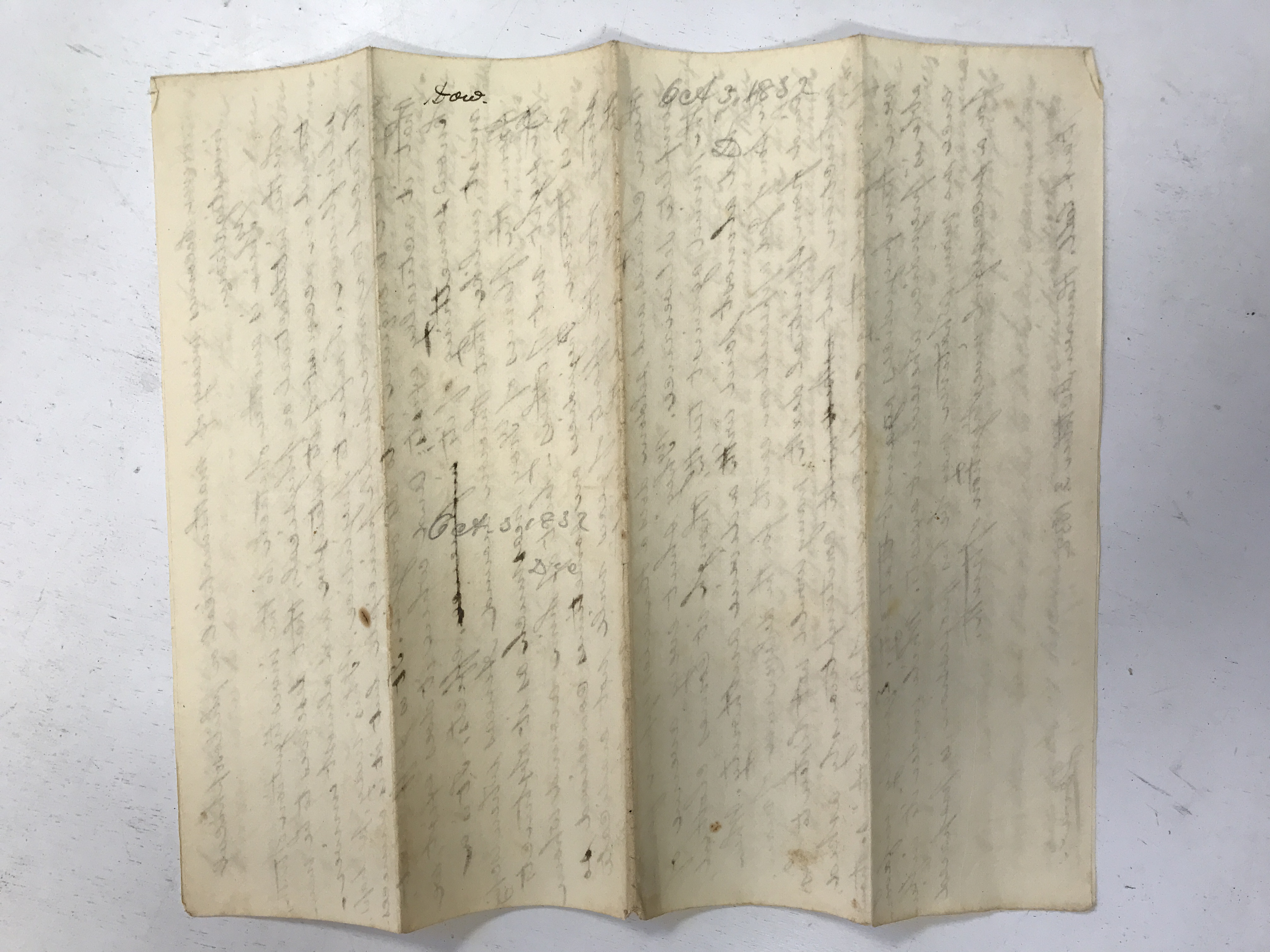
Obstacles to investigating truth
Open full-resolution photograph ↗
JDT-D113 · Seek first the kingdom of God
A religious composition reflecting on the scriptural instruction to seek first the kingdom of God and his righteousness. The conclusion and dated inscription are included.
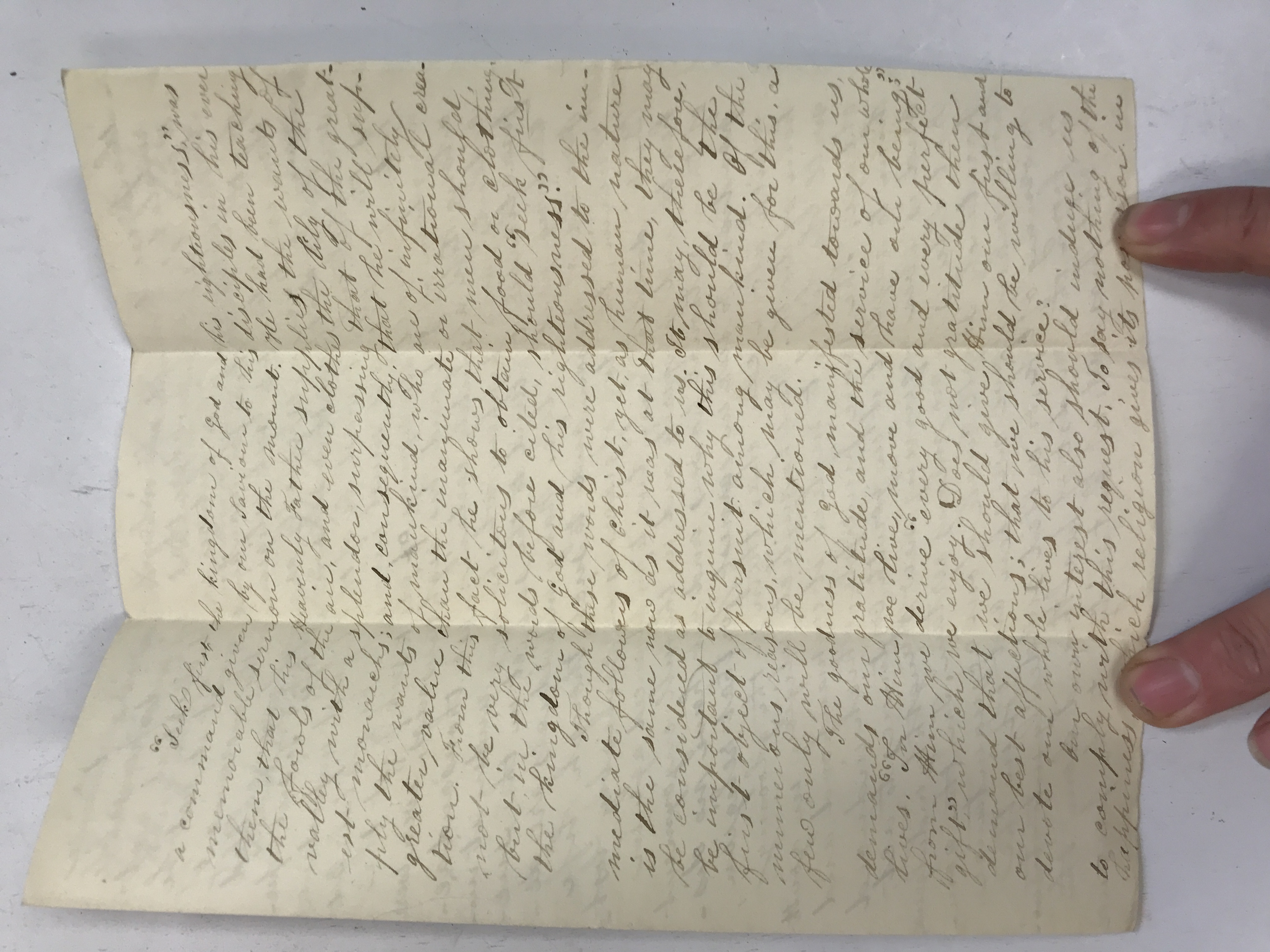
Seek first the kingdom of God
Open full-resolution photograph ↗
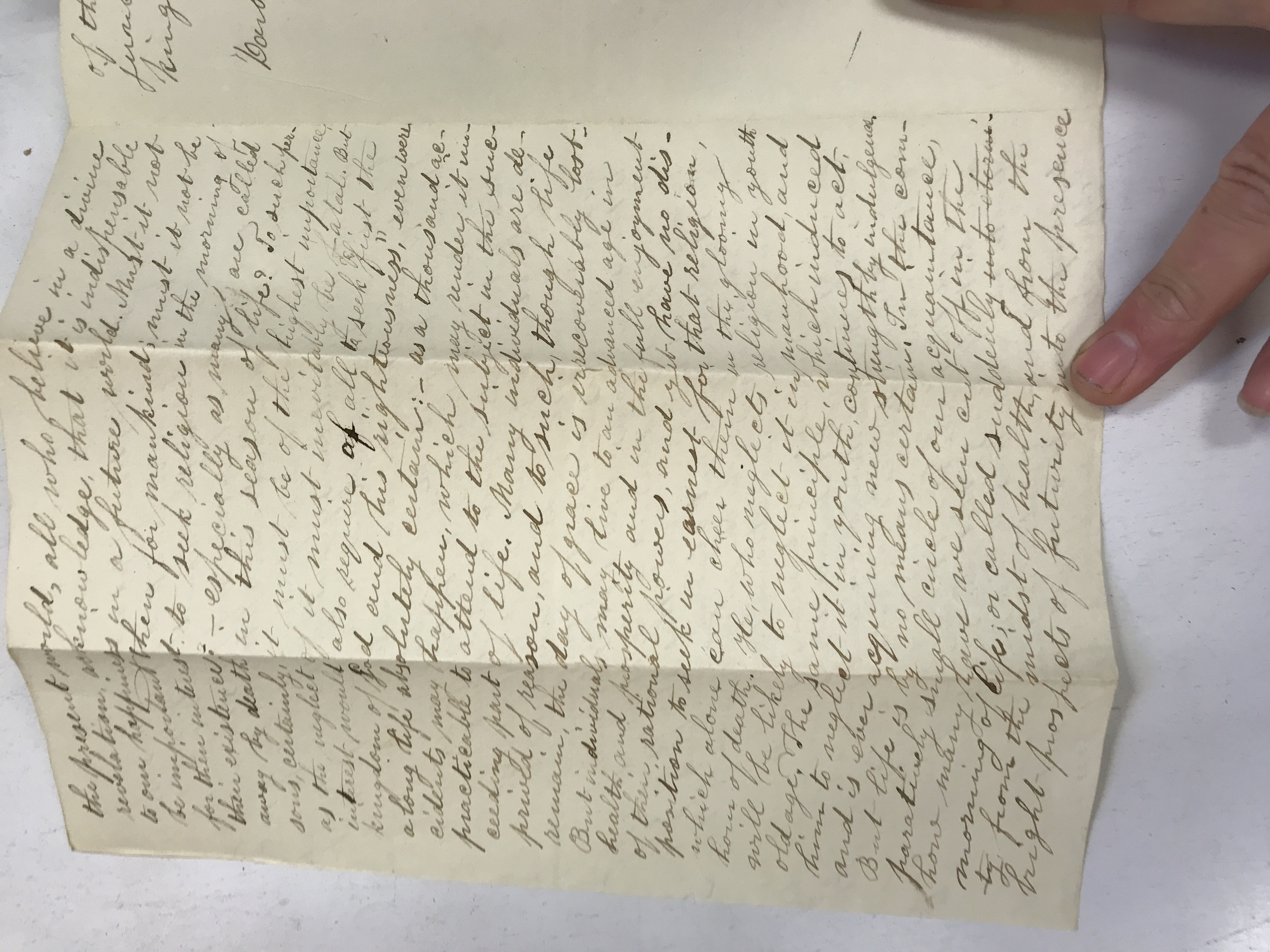
Seek first the kingdom of God
Open full-resolution photograph ↗
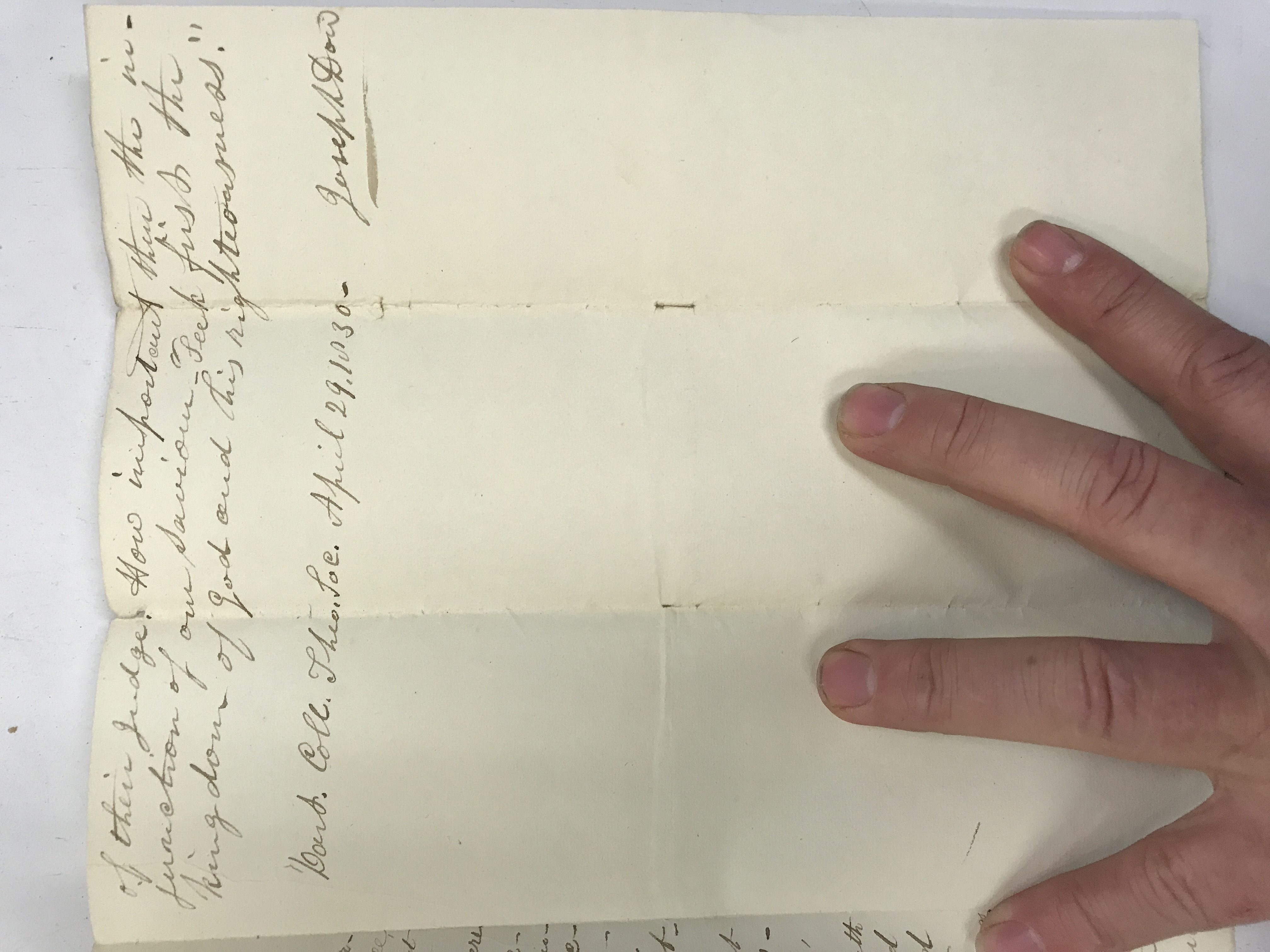
Seek first the kingdom of God
Open full-resolution photograph ↗
Photographs supplied by Whit from the recovered collection. Descriptions are finding aids rather than complete transcriptions. Historical views expressed in these manuscripts are those of their authors.