
The Joseph Dow trunk archive · Document gallery 67
Early ledger continued: accounts, community agreements and material condition
20 photographs · 7 document groups
Photographed by Whit from the recovered Joseph Dow collection. Descriptions draw on visible names, dates and subjects; uncertain readings remain provisional. Reading copies are turned upright, and each image links to the unchanged full-resolution original.
JDT-D509 · A name-and-amount table within the ledger
Dense rows of names and monetary columns contrast with the narrative transactions elsewhere. Hobbs family names are among the visible entries. The layout suggests a collective reckoning or assessment; its exact function should be established by transcription before assigning a narrower title.
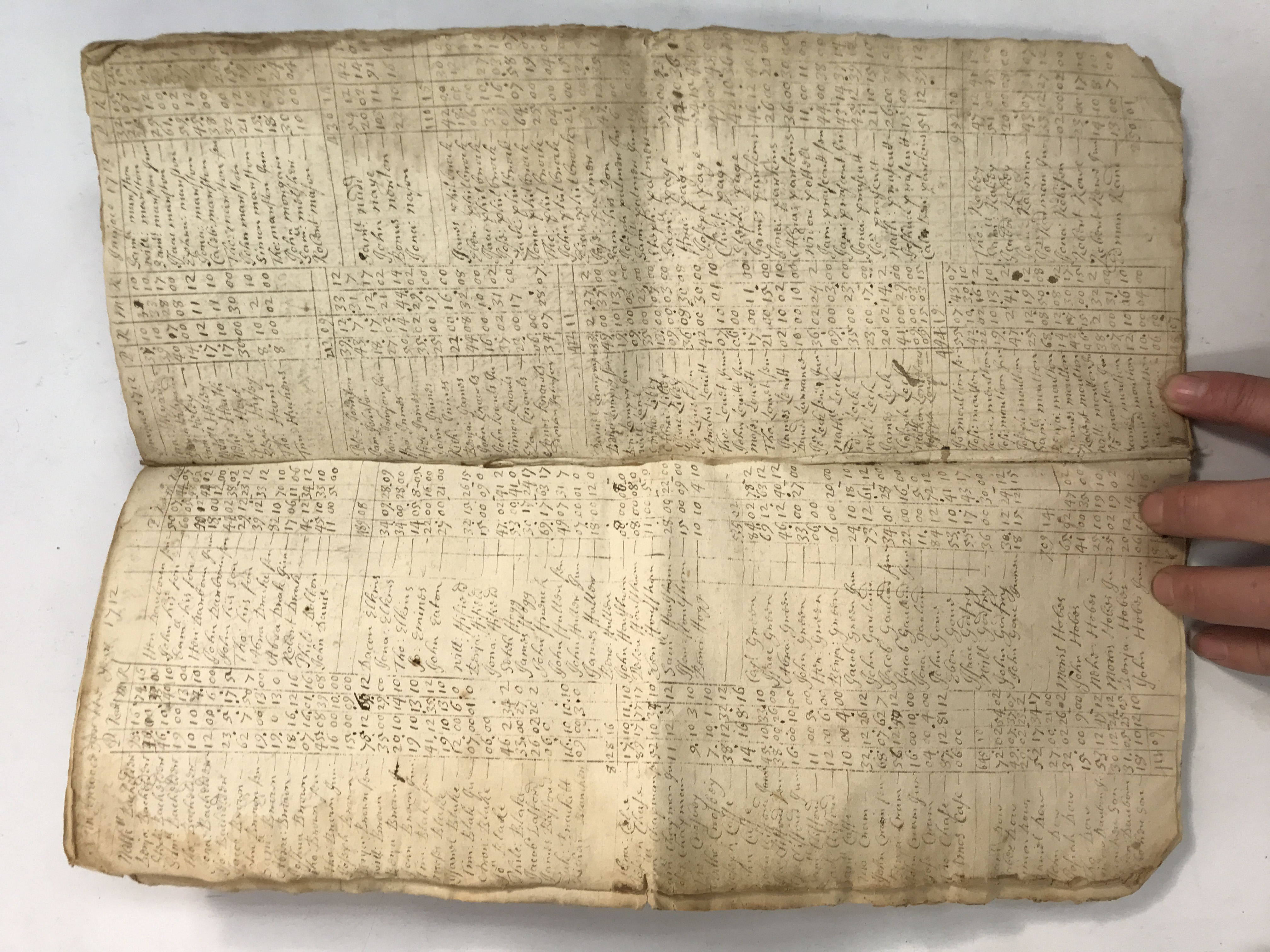
A name-and-amount table within the ledger · view 1 of 2
Open full-resolution photograph ↗
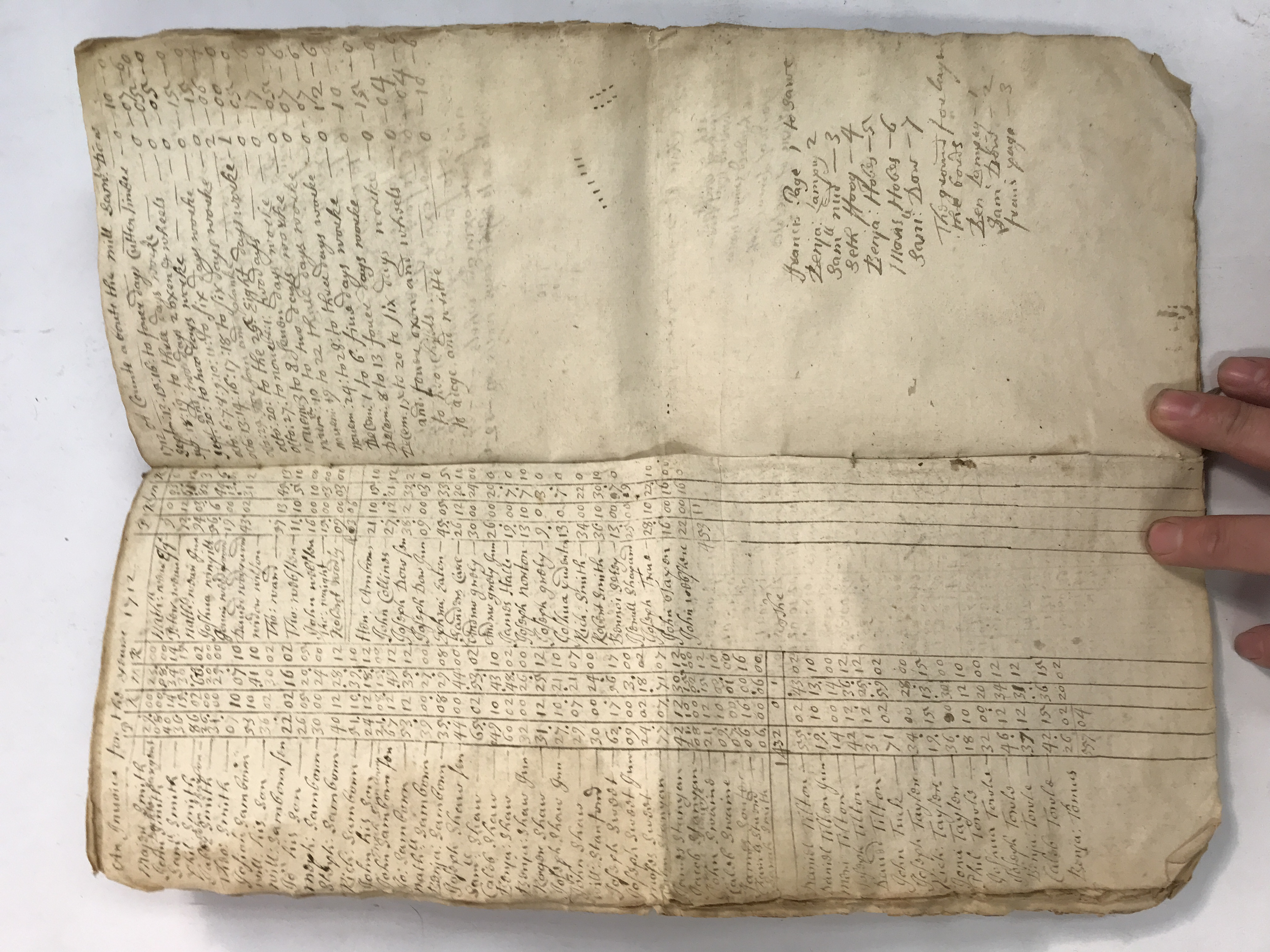
A name-and-amount table within the ledger · view 2 of 2
Open full-resolution photograph ↗
JDT-D510 · Working accounts and changes in use
Account headings and compact lists occupy selected parts of these openings, leaving other areas unused. The different hands, spacing and types of entry suggest a book used for more than one immediate purpose. The photographs preserve that layered use rather than presenting the volume as a single uniform register.
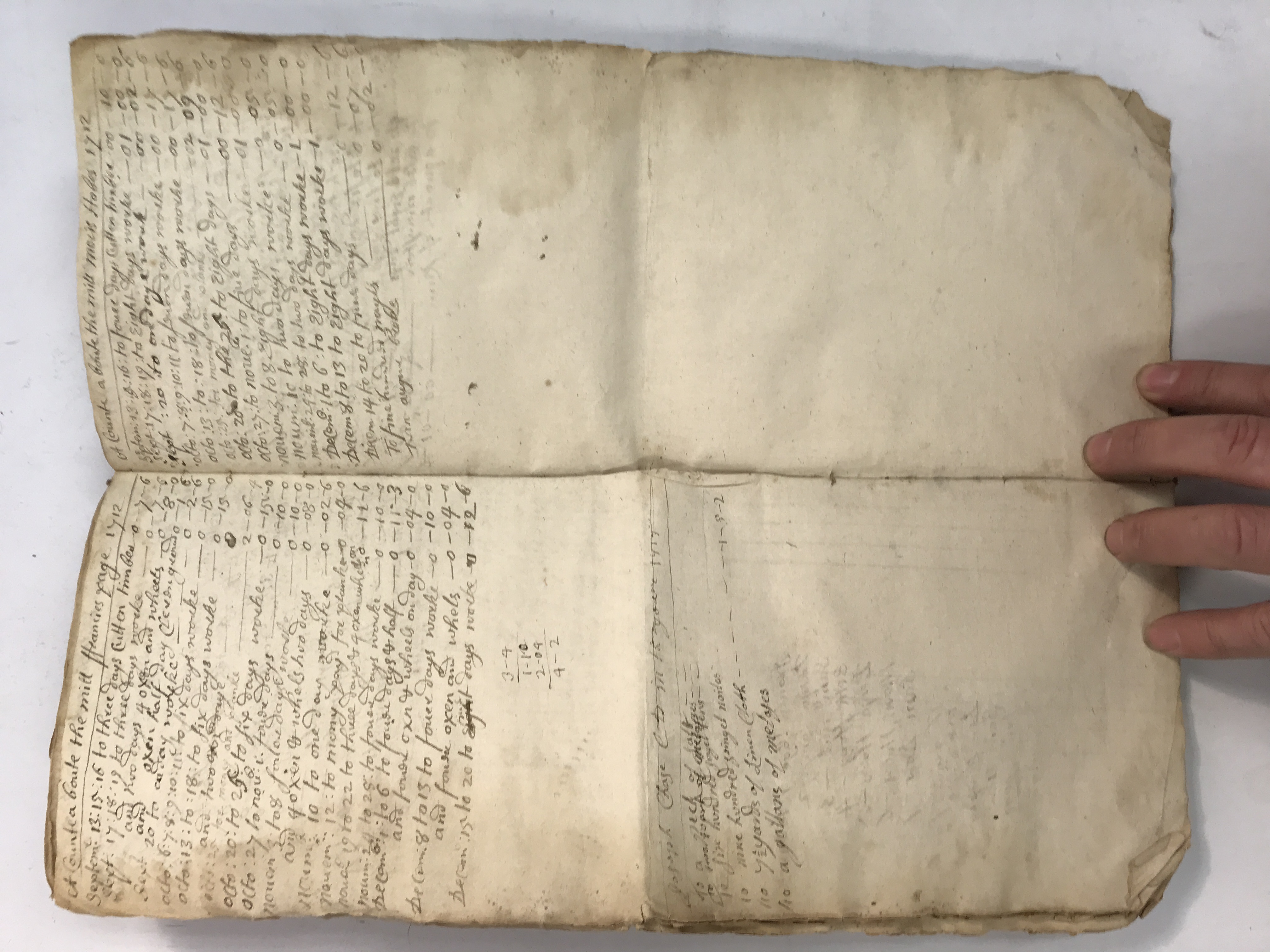
Working accounts and changes in use · view 1 of 4
Open full-resolution photograph ↗
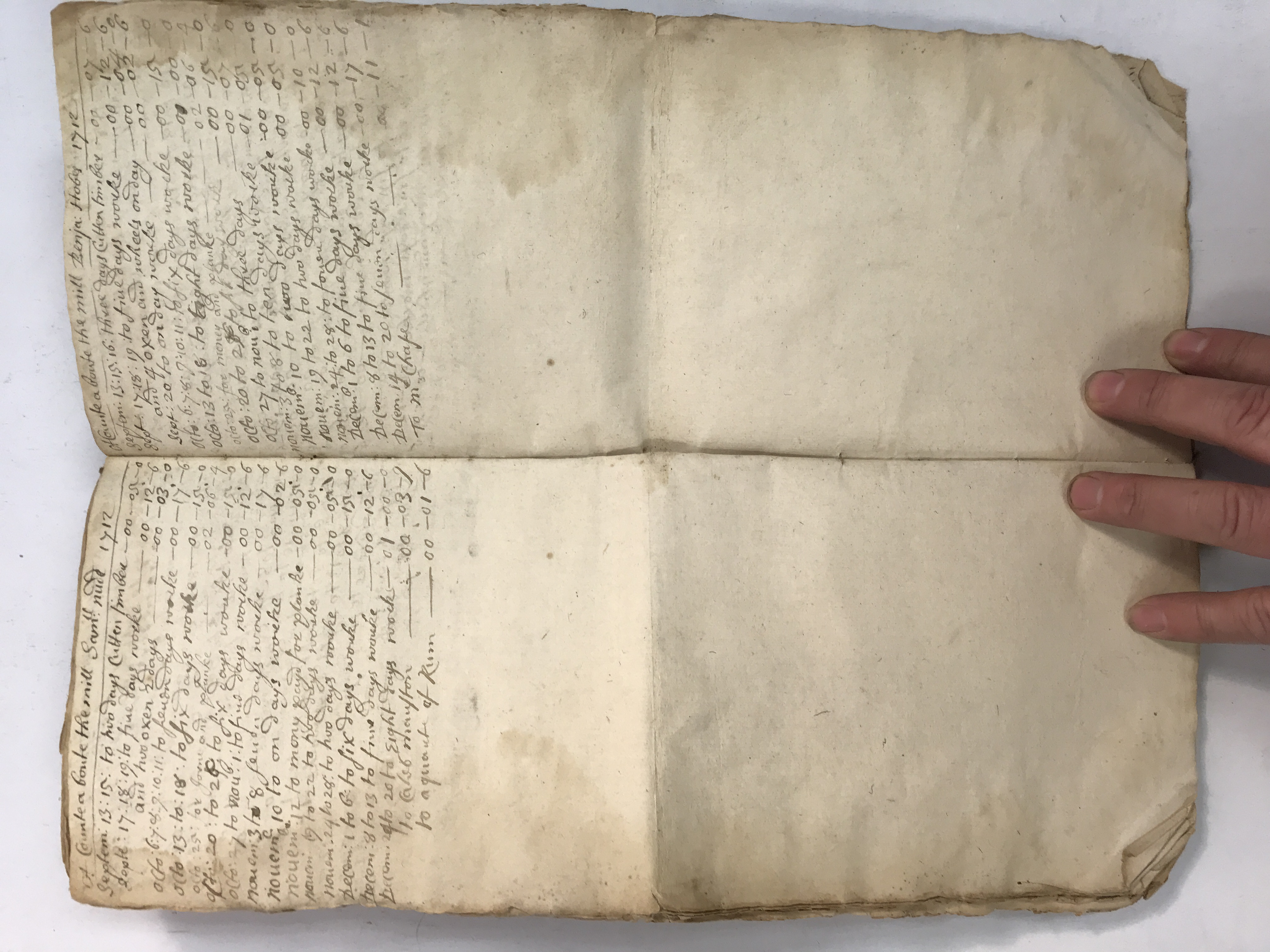
Working accounts and changes in use · view 2 of 4
Open full-resolution photograph ↗
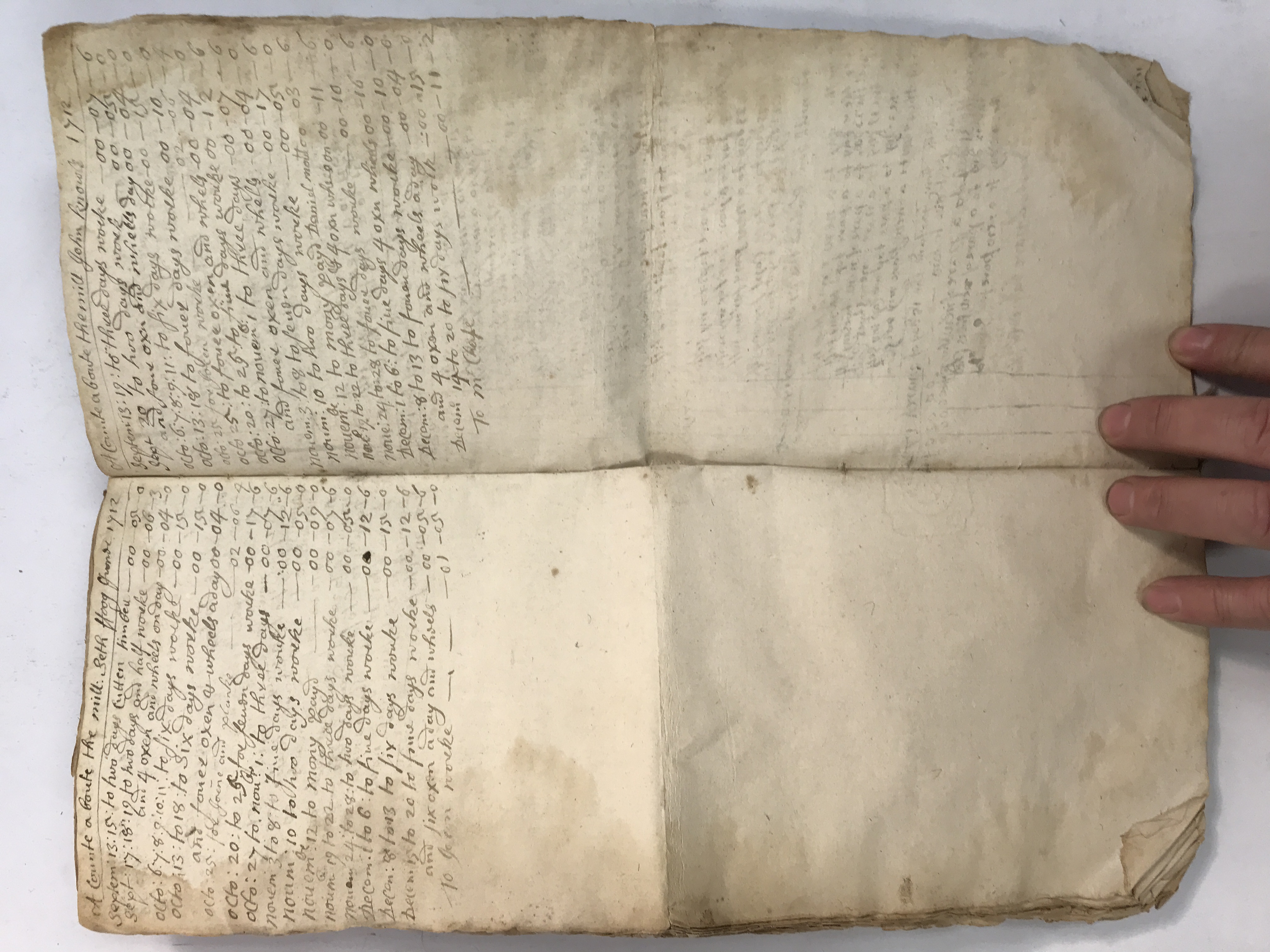
Working accounts and changes in use · view 3 of 4
Open full-resolution photograph ↗
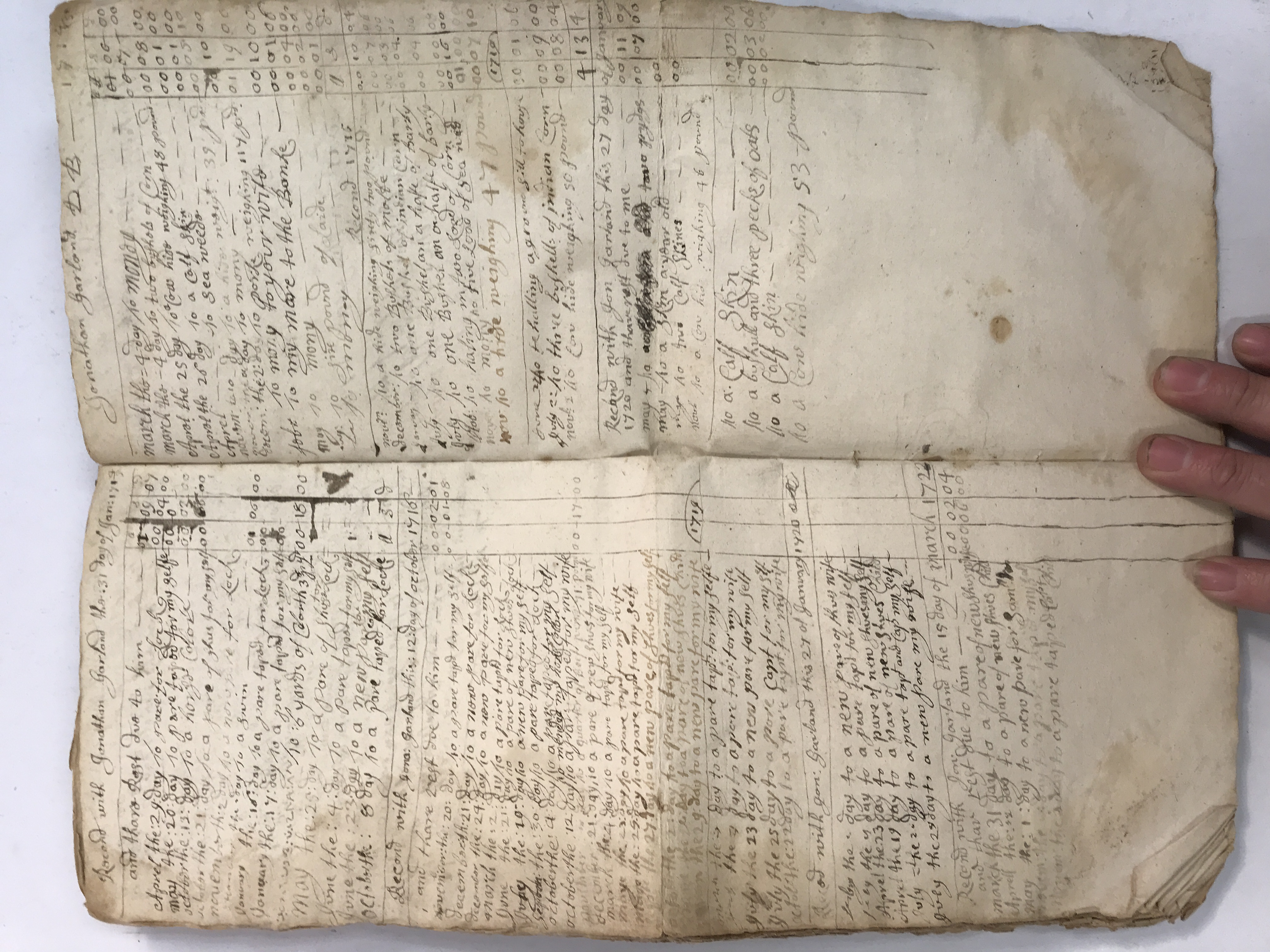
Working accounts and changes in use · view 4 of 4
Open full-resolution photograph ↗
JDT-D511 · A Hampton sheep-keeping agreement, 1712
A manuscript agreement dated 20 March 1712, in Queen Anne’s eleventh regnal year, names Morris Hobbs, Ephraim and Samuel Marston, and other Hampton men in an arrangement with the selectmen to keep a flock of sheep. Its survival among accounts links livestock management with the town’s contractual and communal responsibilities. Some names remain provisional.
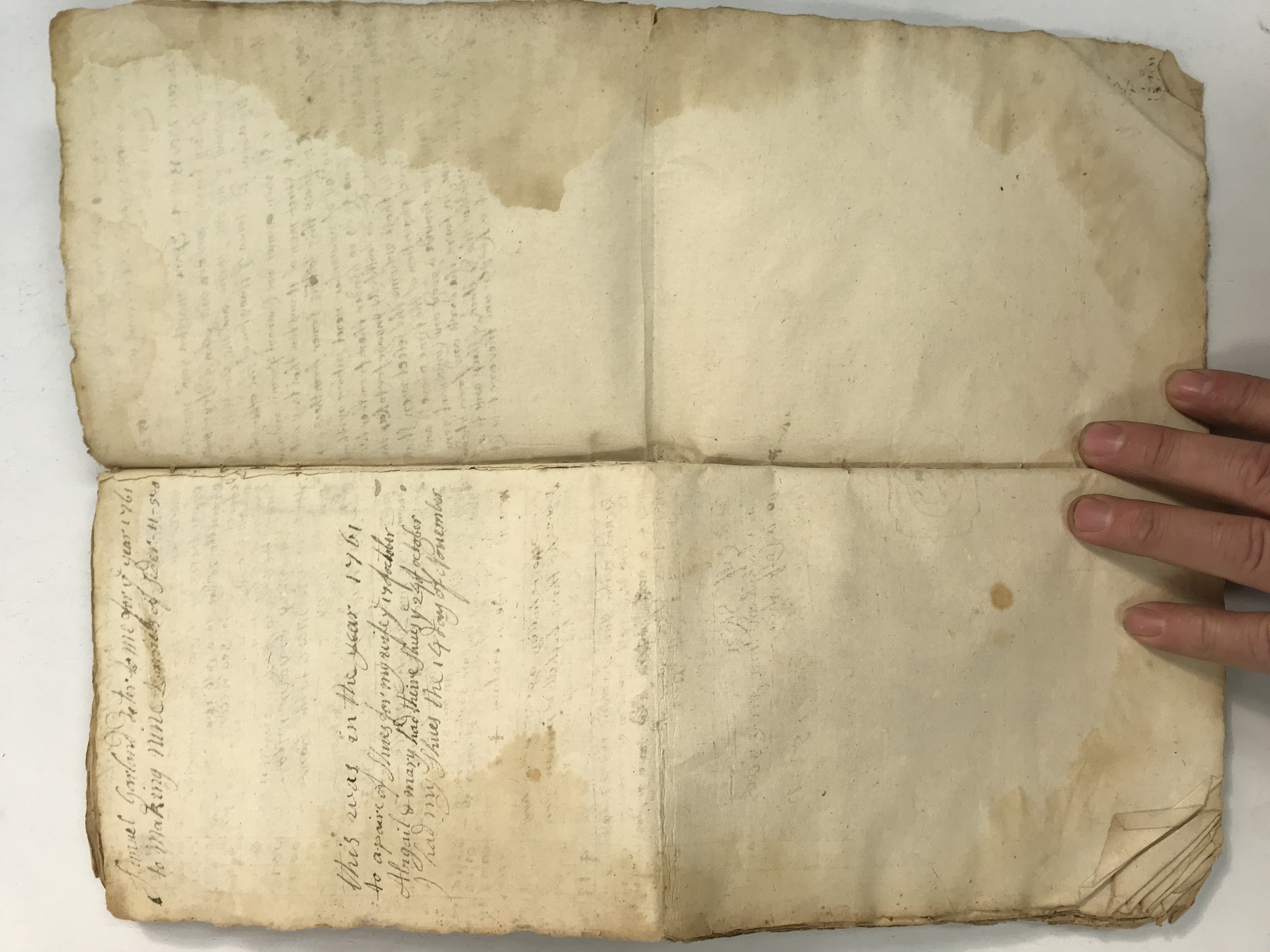
A Hampton sheep-keeping agreement, 1712 · view 1 of 2
Open full-resolution photograph ↗
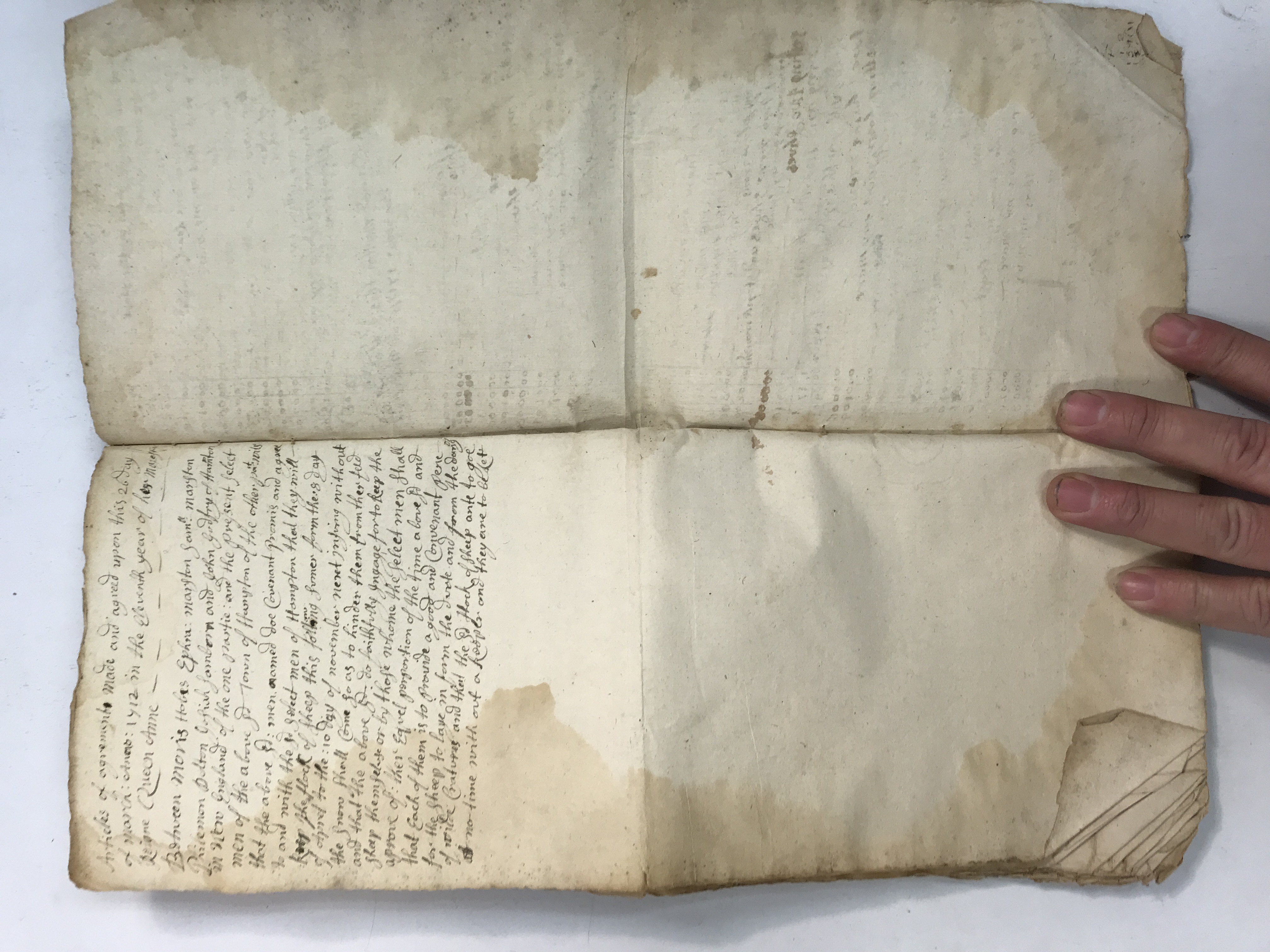
A Hampton sheep-keeping agreement, 1712 · view 2 of 2
Open full-resolution photograph ↗
JDT-D512 · Lists, balances and another tabular reckoning
The ledger returns to names, amounts and compact account summaries. A ruled opening sets several columns beside one another, making it possible to compare obligations or payments. Careful enlargement is needed to distinguish figures from the vertical ruling and stains.
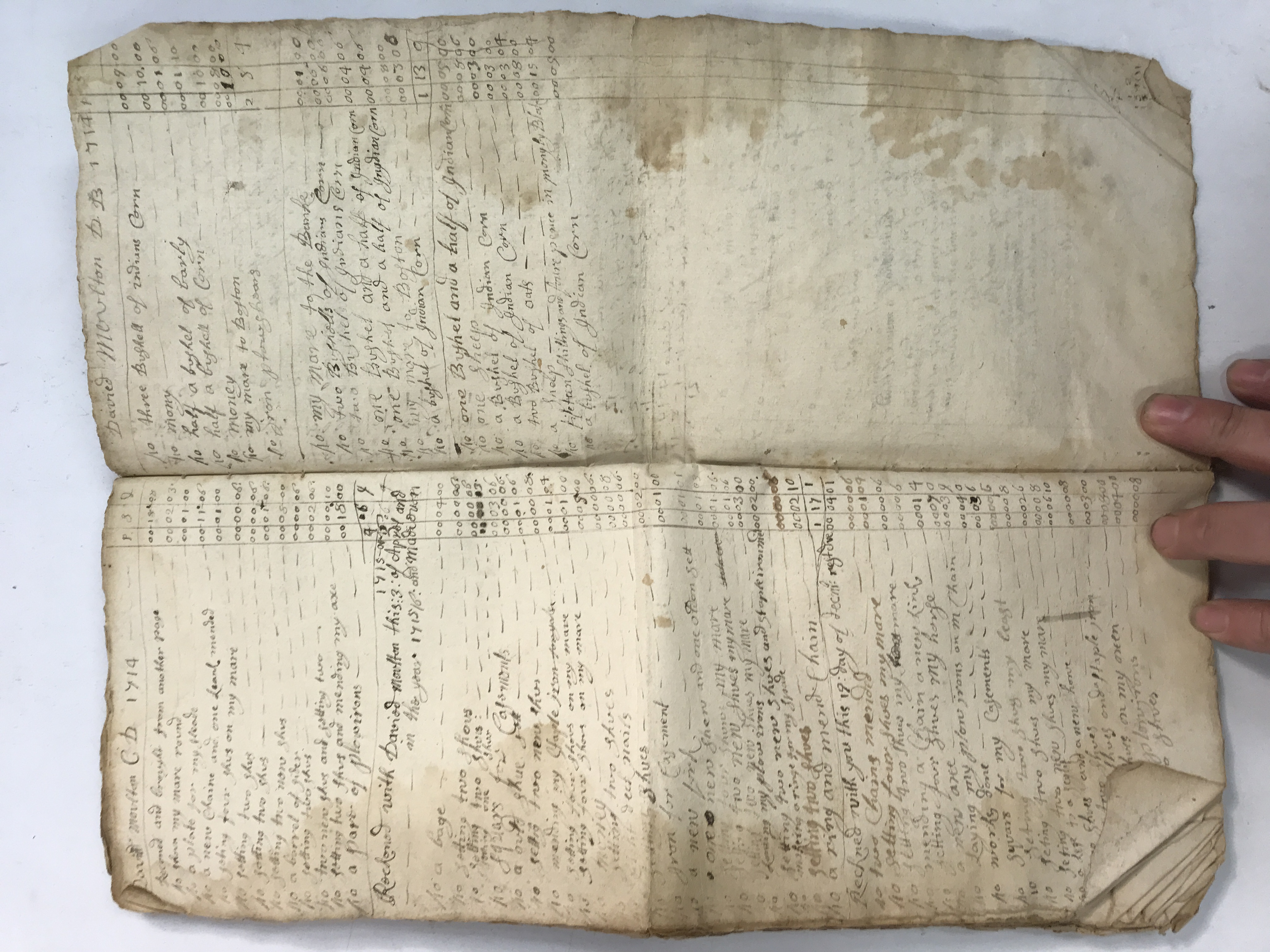
Lists, balances and another tabular reckoning · view 1 of 4
Open full-resolution photograph ↗
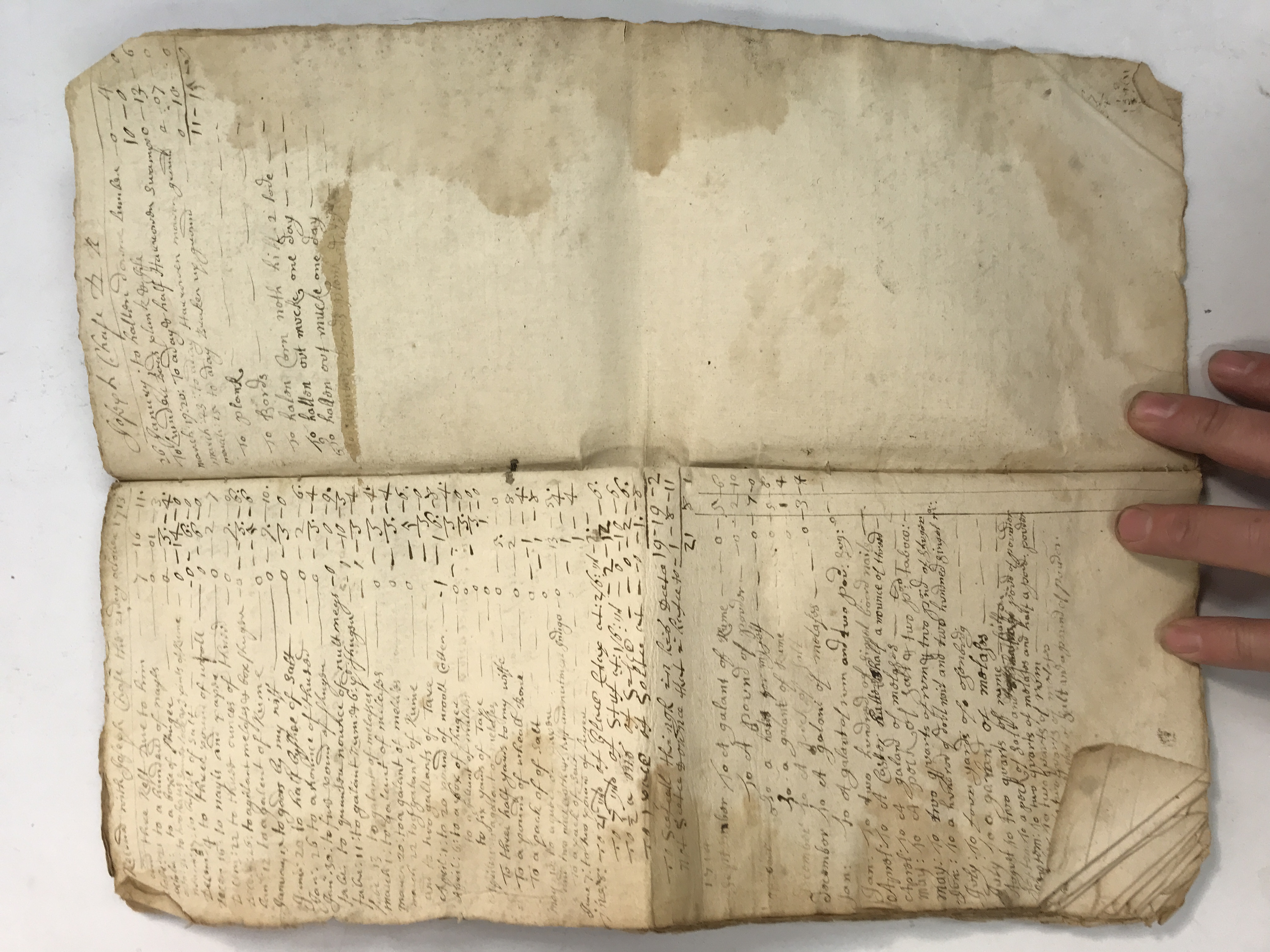
Lists, balances and another tabular reckoning · view 2 of 4
Open full-resolution photograph ↗
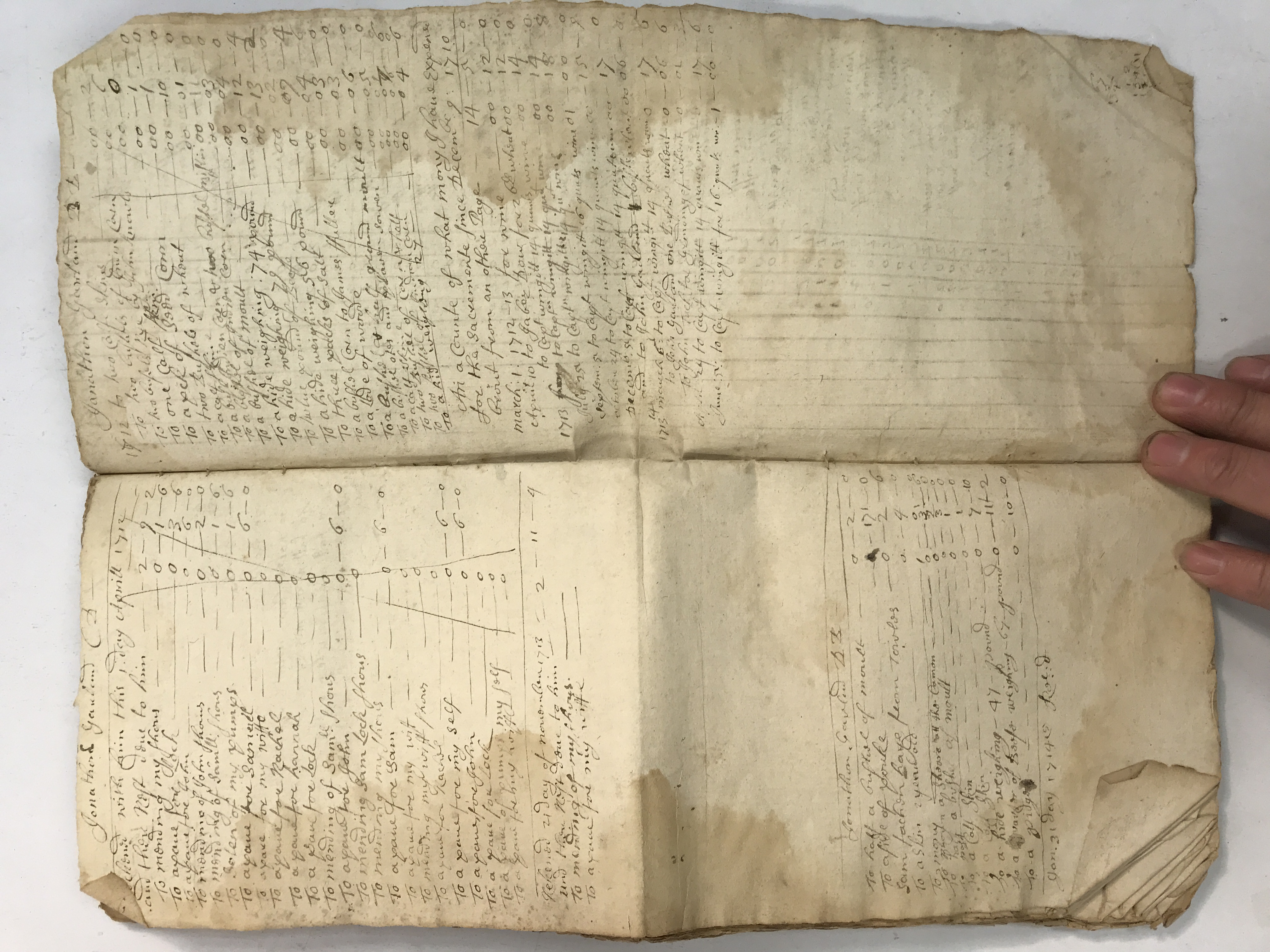
Lists, balances and another tabular reckoning · view 3 of 4
Open full-resolution photograph ↗
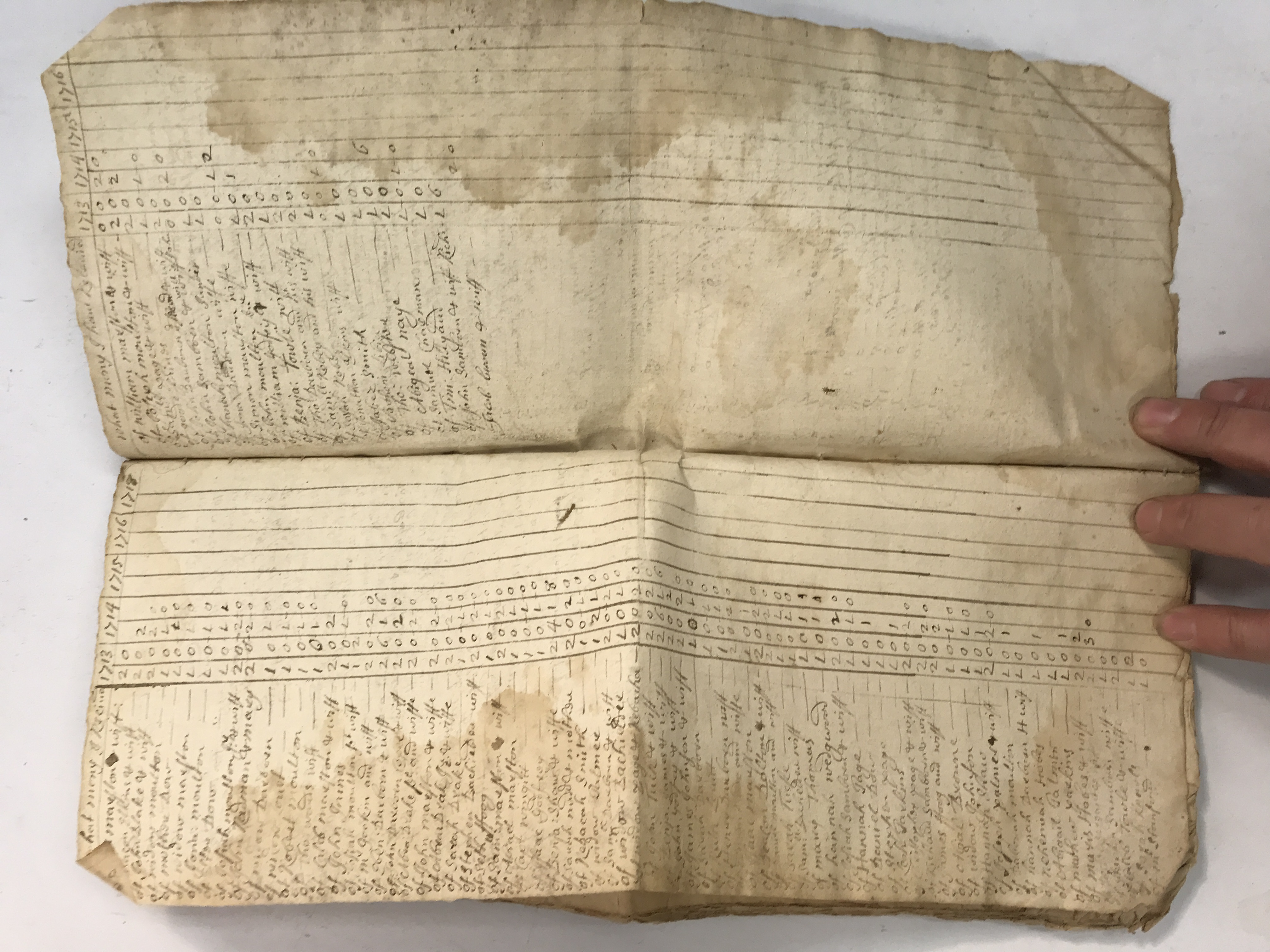
Lists, balances and another tabular reckoning · view 4 of 4
Open full-resolution photograph ↗
JDT-D513 · Labor and craft work recorded in money
Among the entries are charges for work on tools and animals, including shoeing, sharpening and repairs. These practical services show the ledger extending beyond store goods into skilled labor. A list of people and family references on the facing areas may reflect later reuse and should not automatically be read as part of the same account.
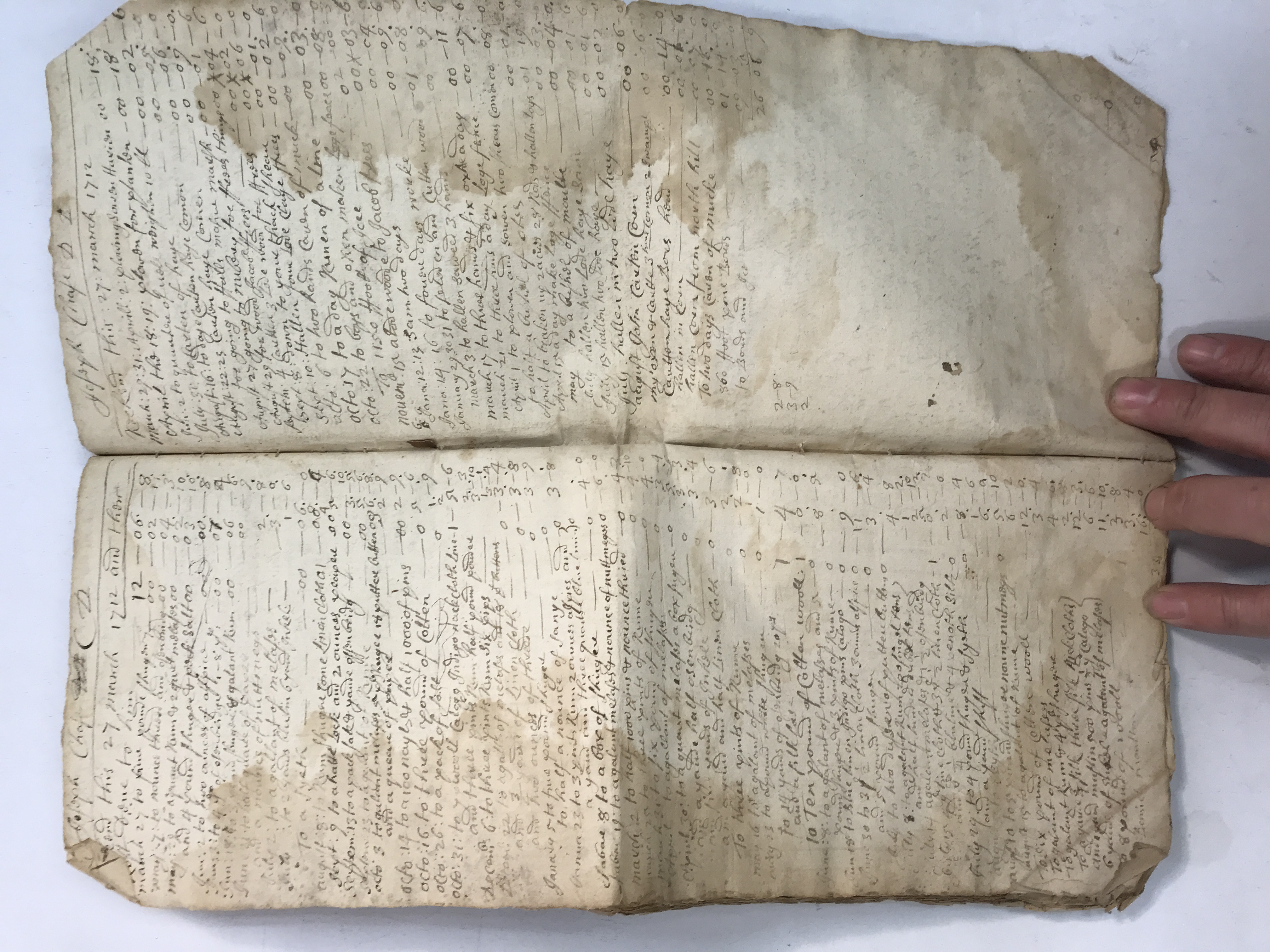
Labor and craft work recorded in money · view 1 of 3
Open full-resolution photograph ↗
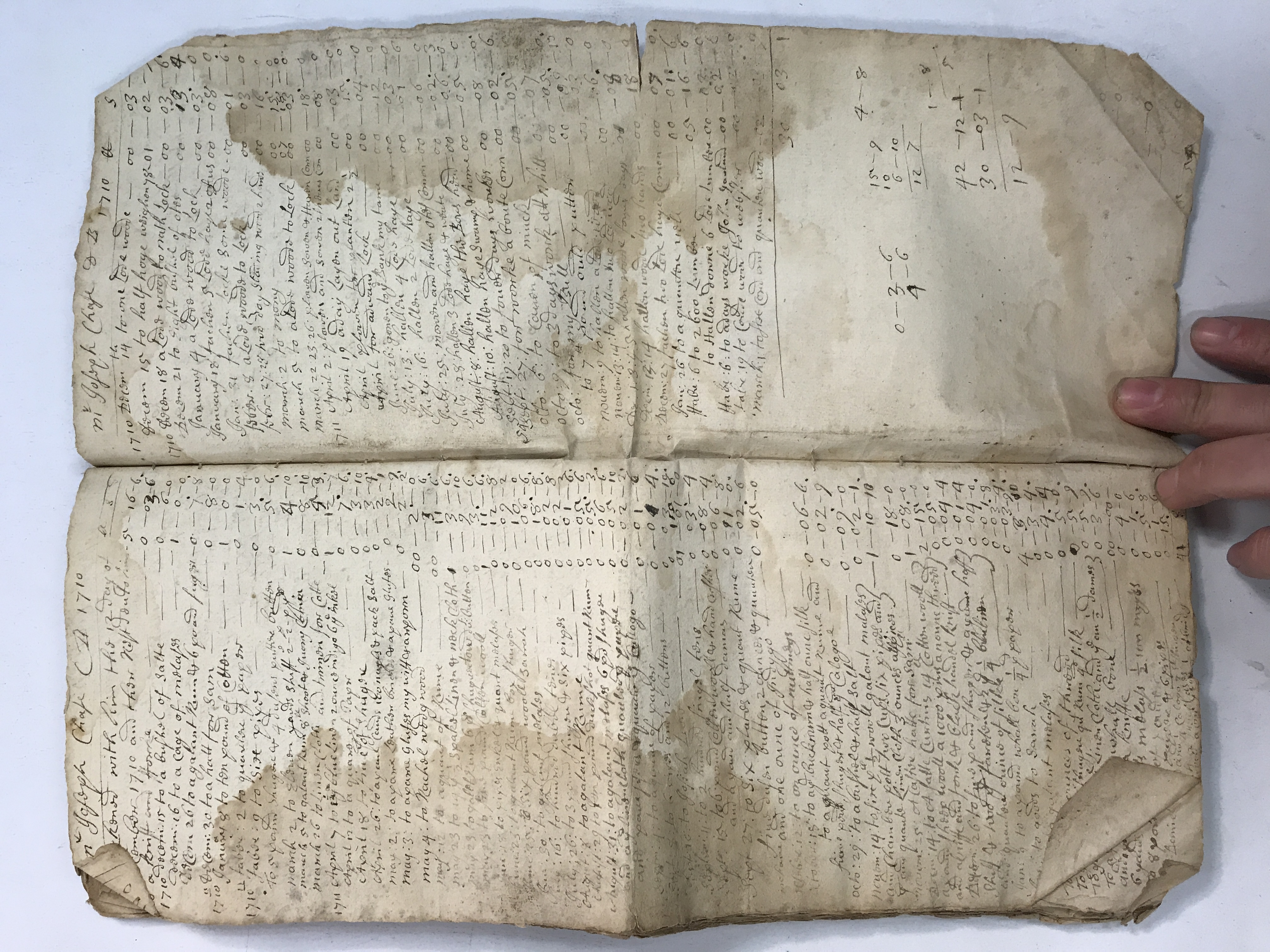
Labor and craft work recorded in money · view 2 of 3
Open full-resolution photograph ↗
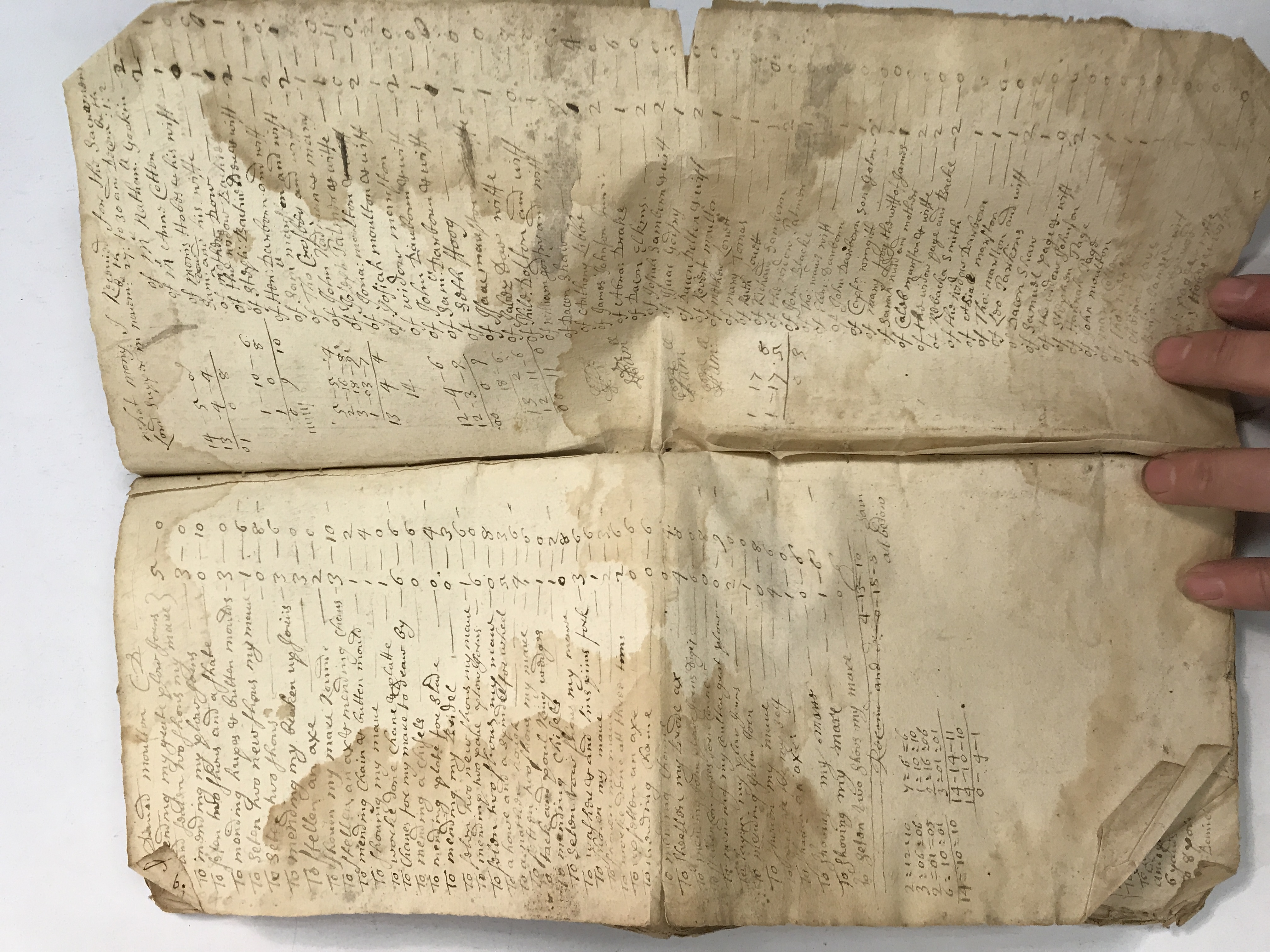
Labor and craft work recorded in money · view 3 of 3
Open full-resolution photograph ↗
JDT-D514 · Final openings and a folded view
Pages are shown partly lifted and then folded, revealing how the narrow book was handled. Account columns continue beneath damage and discoloration. The overlapping views are useful for recovering obscured text and for understanding the relationship of the surviving leaves.
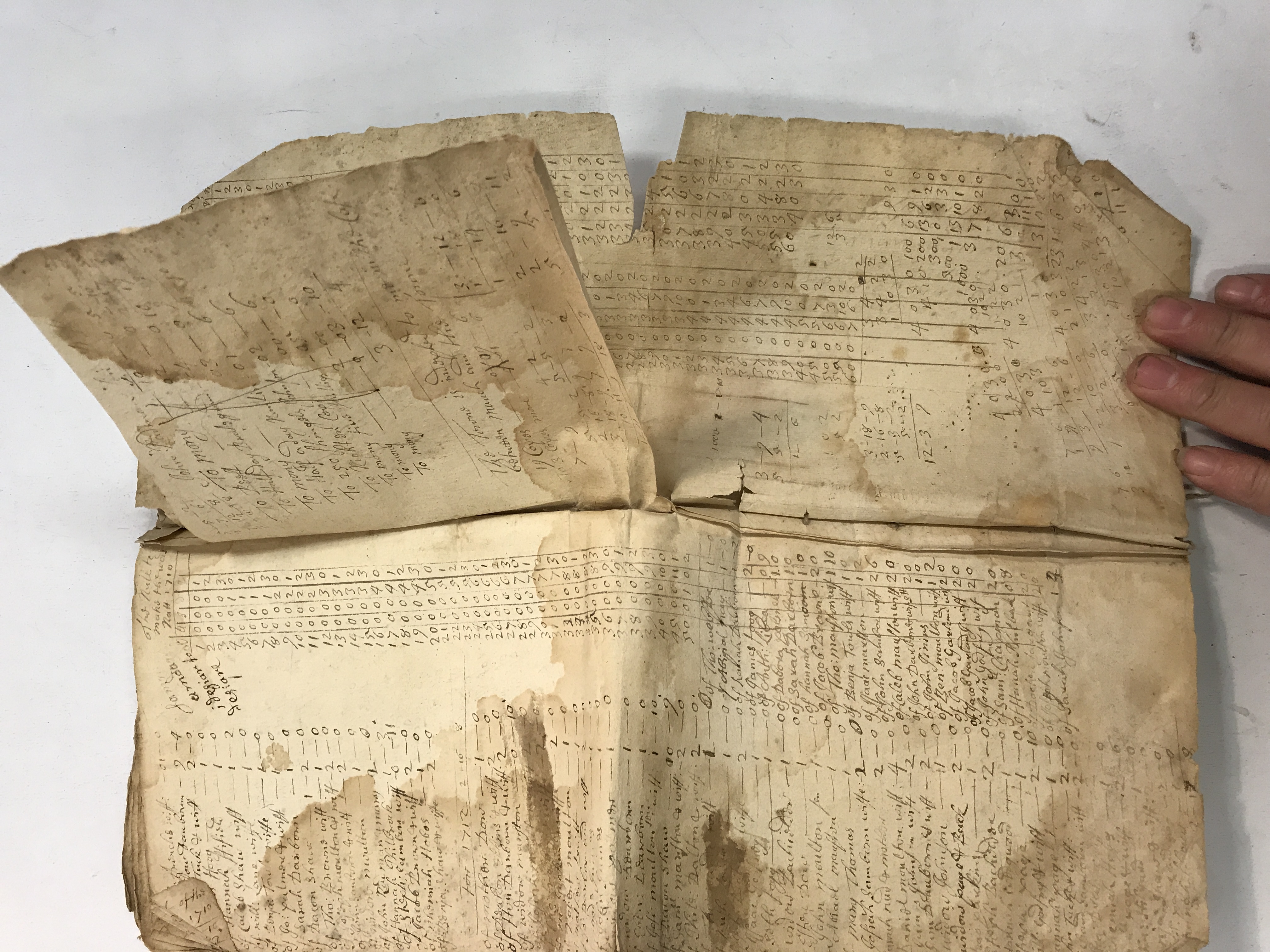
Final openings and a folded view · view 1 of 3
Open full-resolution photograph ↗
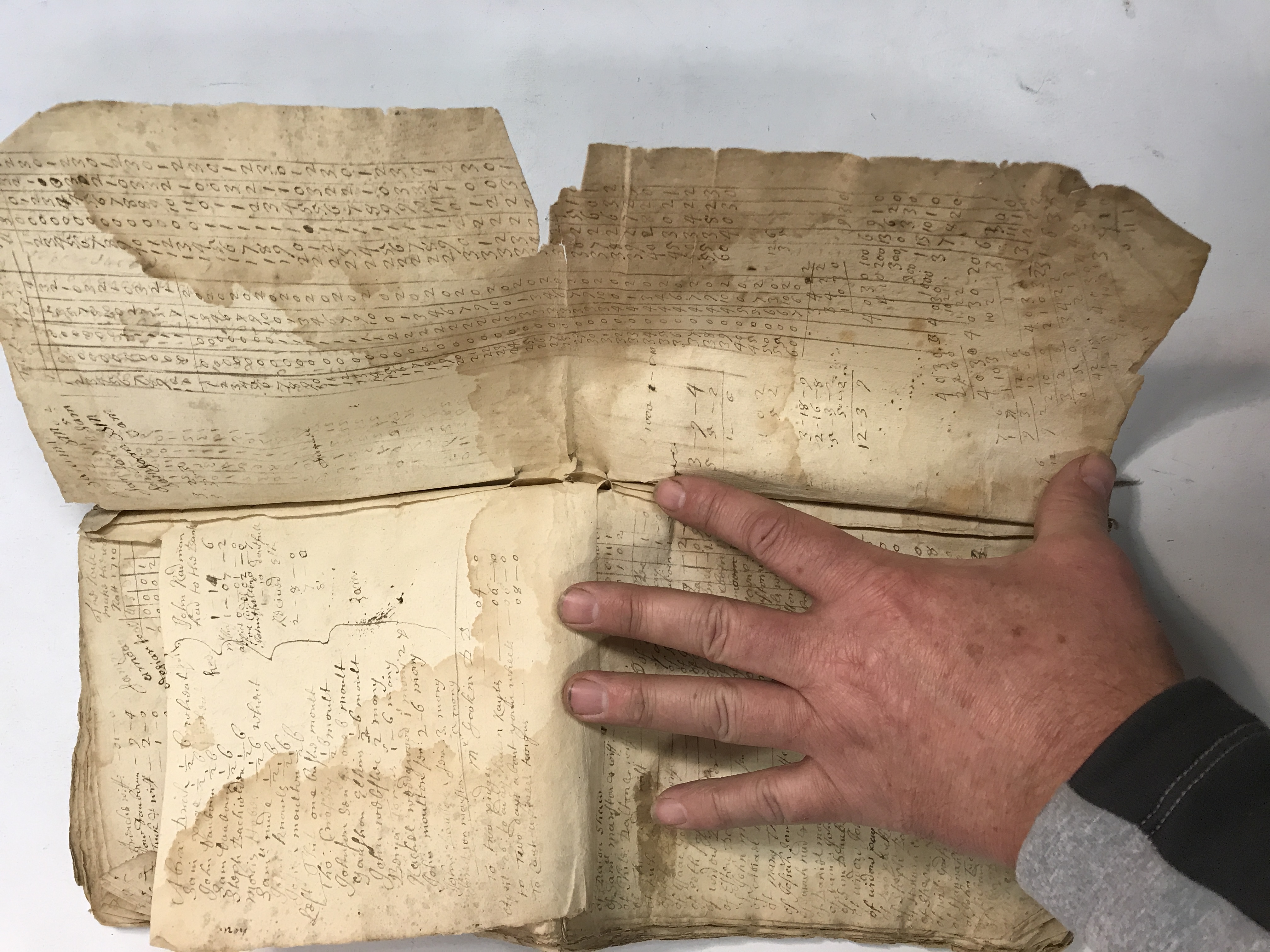
Final openings and a folded view · view 2 of 3
Open full-resolution photograph ↗
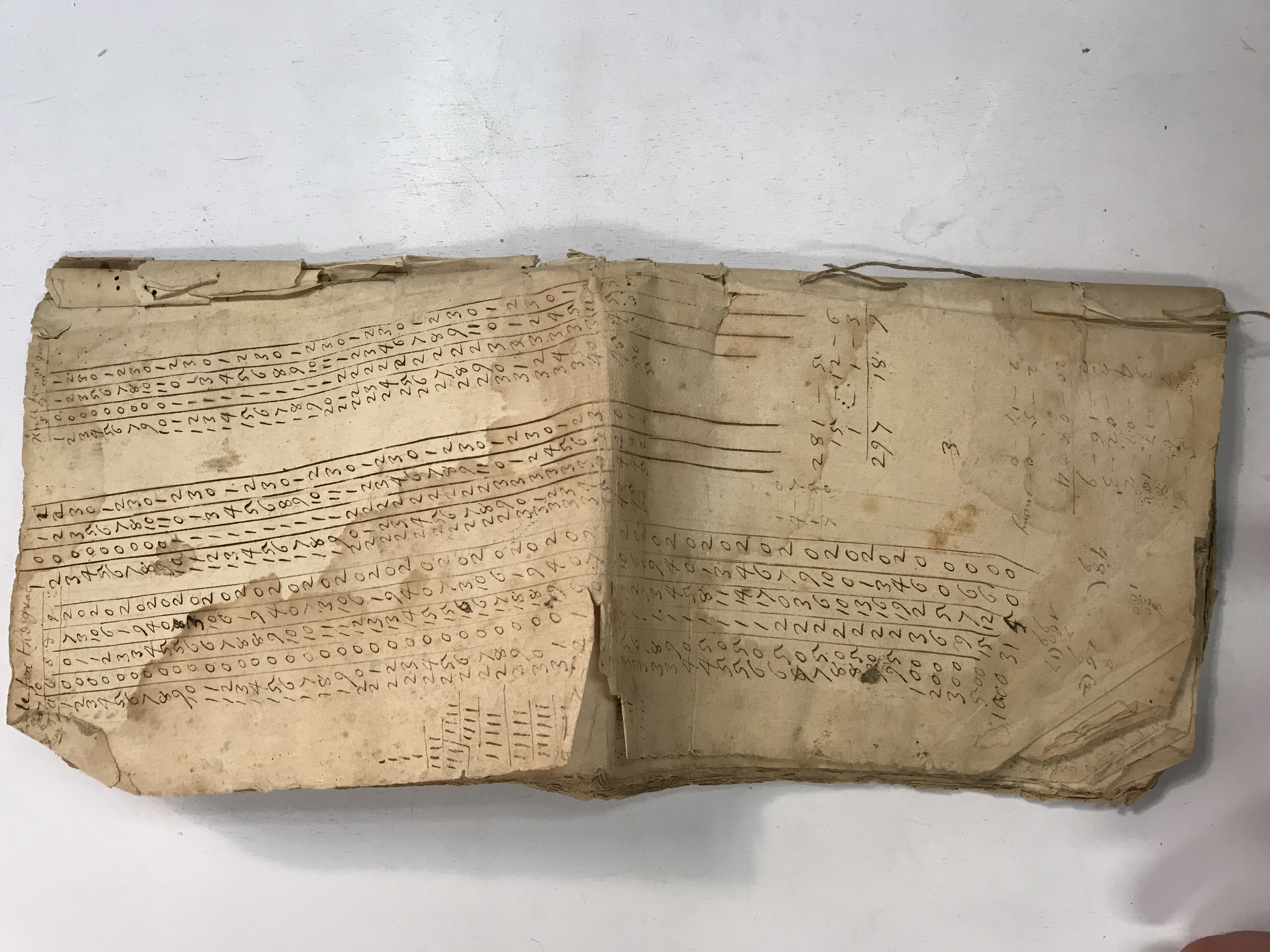
Final openings and a folded view · view 3 of 3
Open full-resolution photograph ↗
JDT-D515 · The closed book and its layered edge
The final views record the compact closed ledger and the irregular edges of its folded leaves. They show the book as a physical object: creased, incomplete and assembled from fragile paper. The edge view closes the sequence without implying that the surviving text is complete.
The closed book and its layered edge · view 1 of 2
Open full-resolution photograph ↗
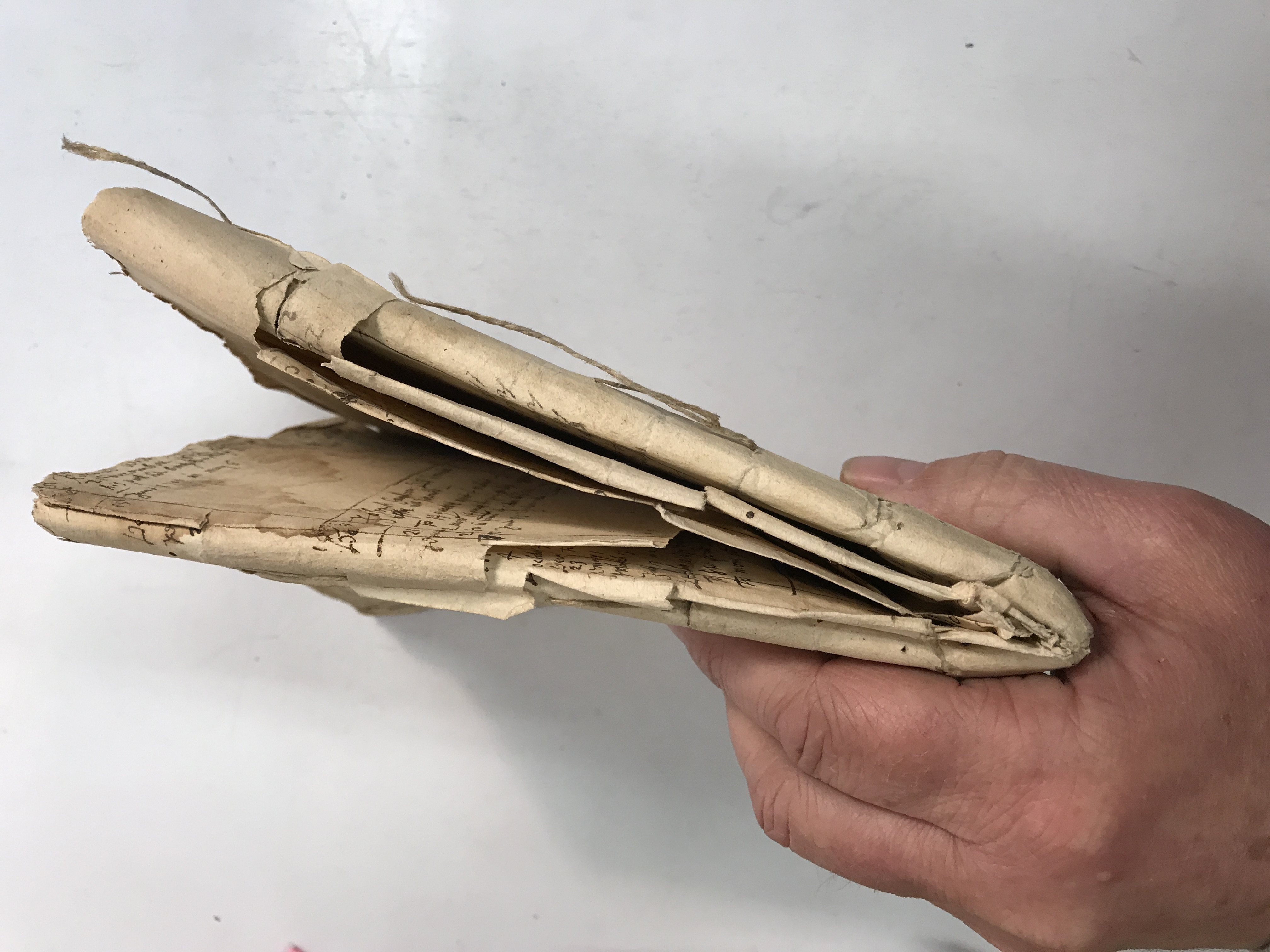
The closed book and its layered edge · view 2 of 2
Open full-resolution photograph ↗
Collection photographs supplied by Whit. Descriptions are finding aids, not full transcriptions. Names, dates and associations remain provisional where the handwriting is uncertain.