
The Joseph Dow trunk archive · Document gallery 75
Joseph Dow’s notes continued: land rights, public office and ministry
17 photographs · 9 document groups
Photographed by Whit from the recovered Joseph Dow collection. Descriptions draw on visible names, dates and subjects; uncertain readings remain provisional. Reading copies are turned upright, and each image links to the unchanged full-resolution original.
JDT-D567 · Family relationships tested against property records
These pages connect Fuller, Marston, Sherburne, Philbrick, Perkins, Dearborn and other families through land, inheritance and town-office references. Questions and tentative identifications remain in the manuscript. The notes preserve an investigative process rather than a finished pedigree in which every relationship is equally certain.
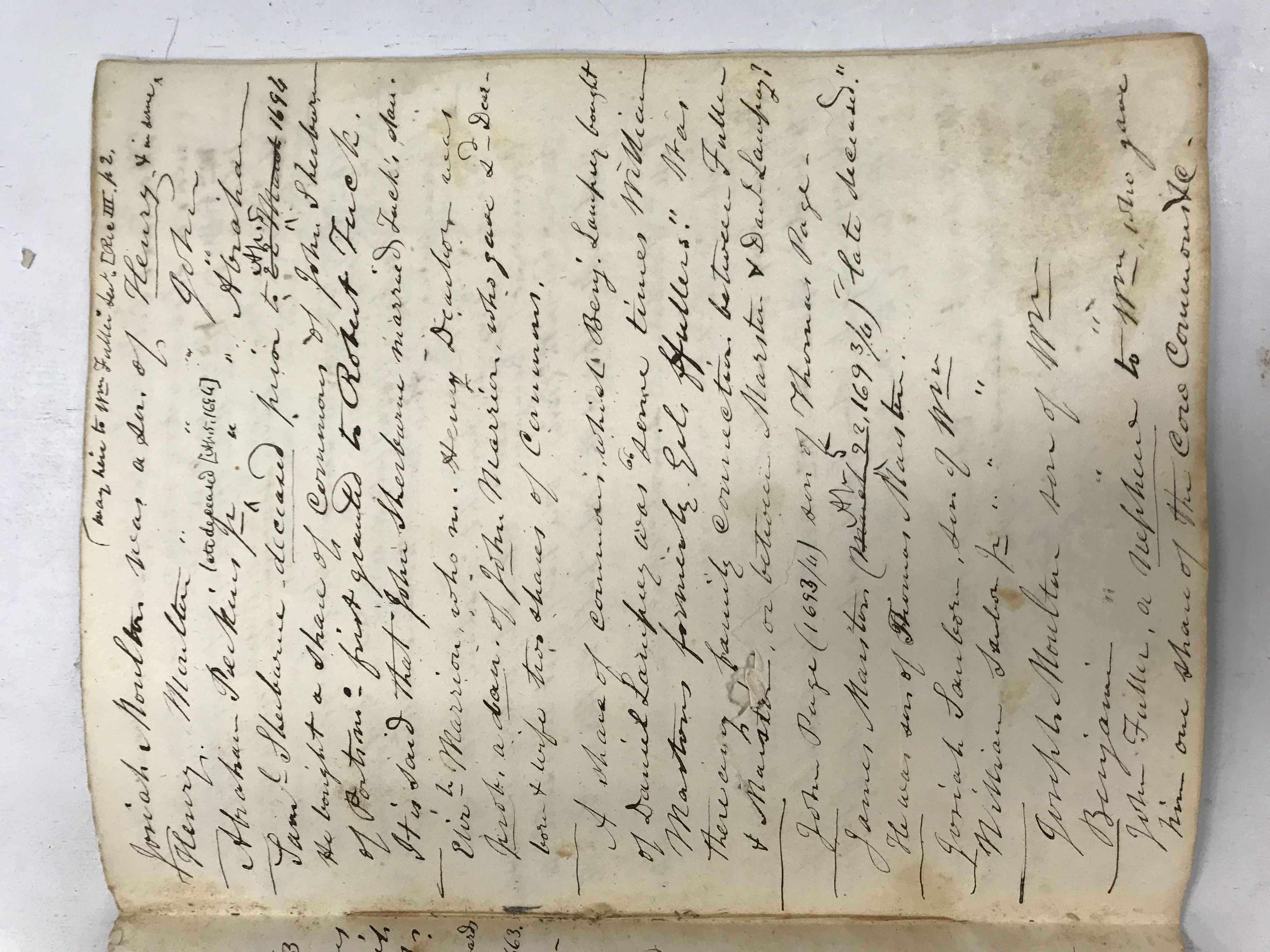
Family relationships tested against property records · view 1 of 3
Open full-resolution photograph ↗
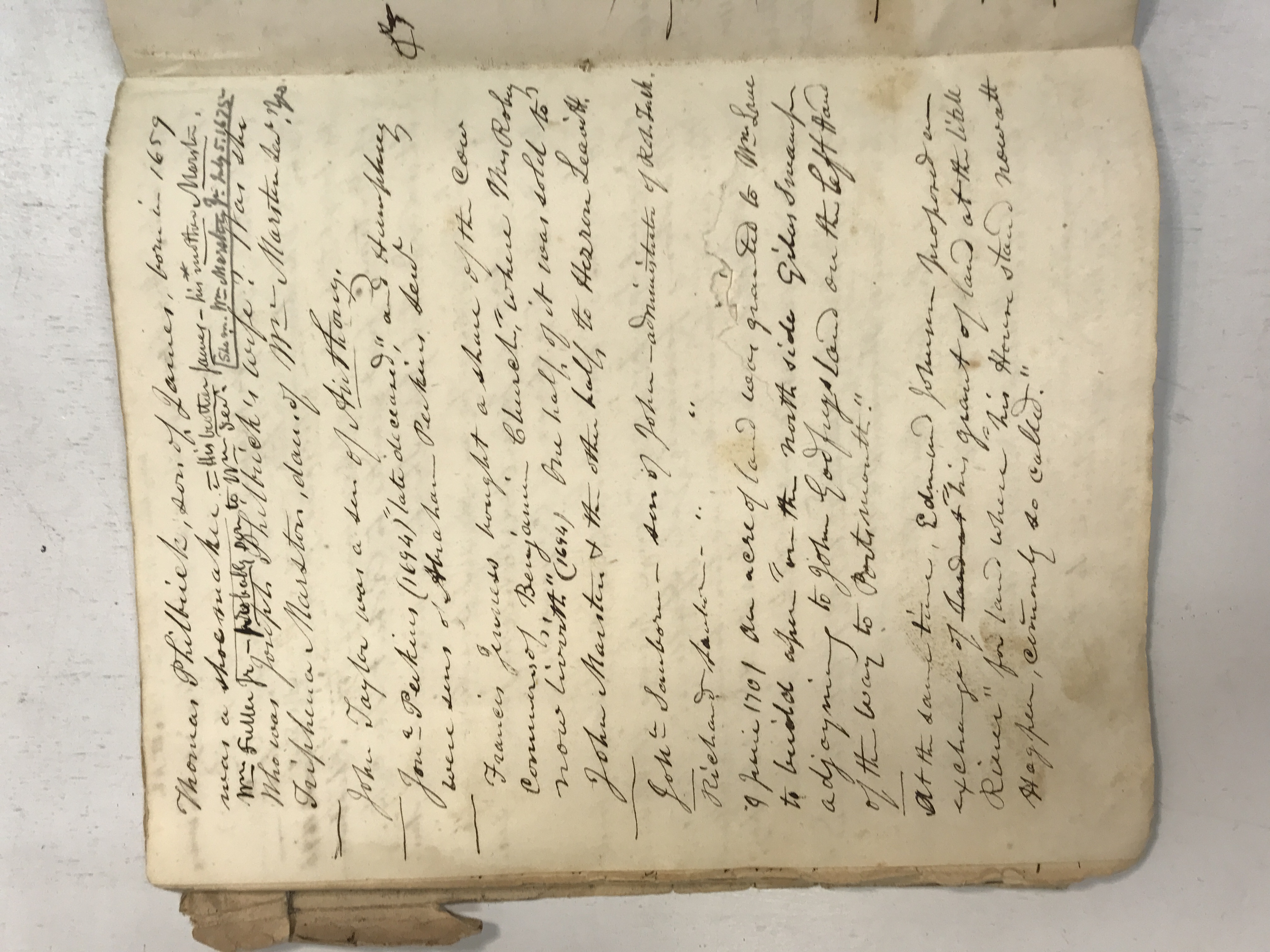
Family relationships tested against property records · view 2 of 3
Open full-resolution photograph ↗
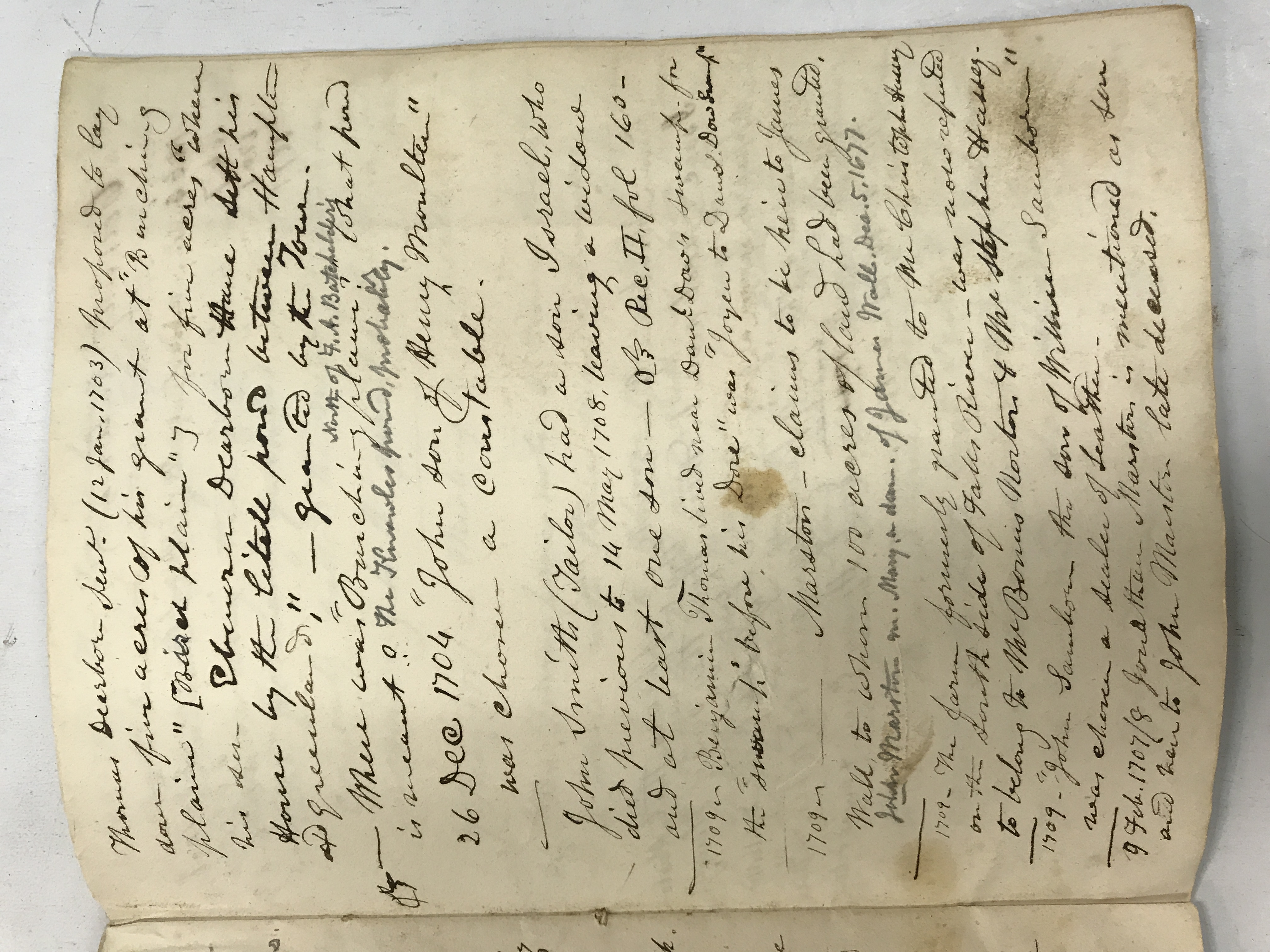
Family relationships tested against property records · view 3 of 3
Open full-resolution photograph ↗
JDT-D568 · County rates and a Green family inference
A short table records Hampton’s county rates in selected seventeenth-century years. Below it, a will and a mill privilege are used to reason about the relationship of Abraham and Jacob Green. Financial and property records thus serve as indirect evidence for kinship.
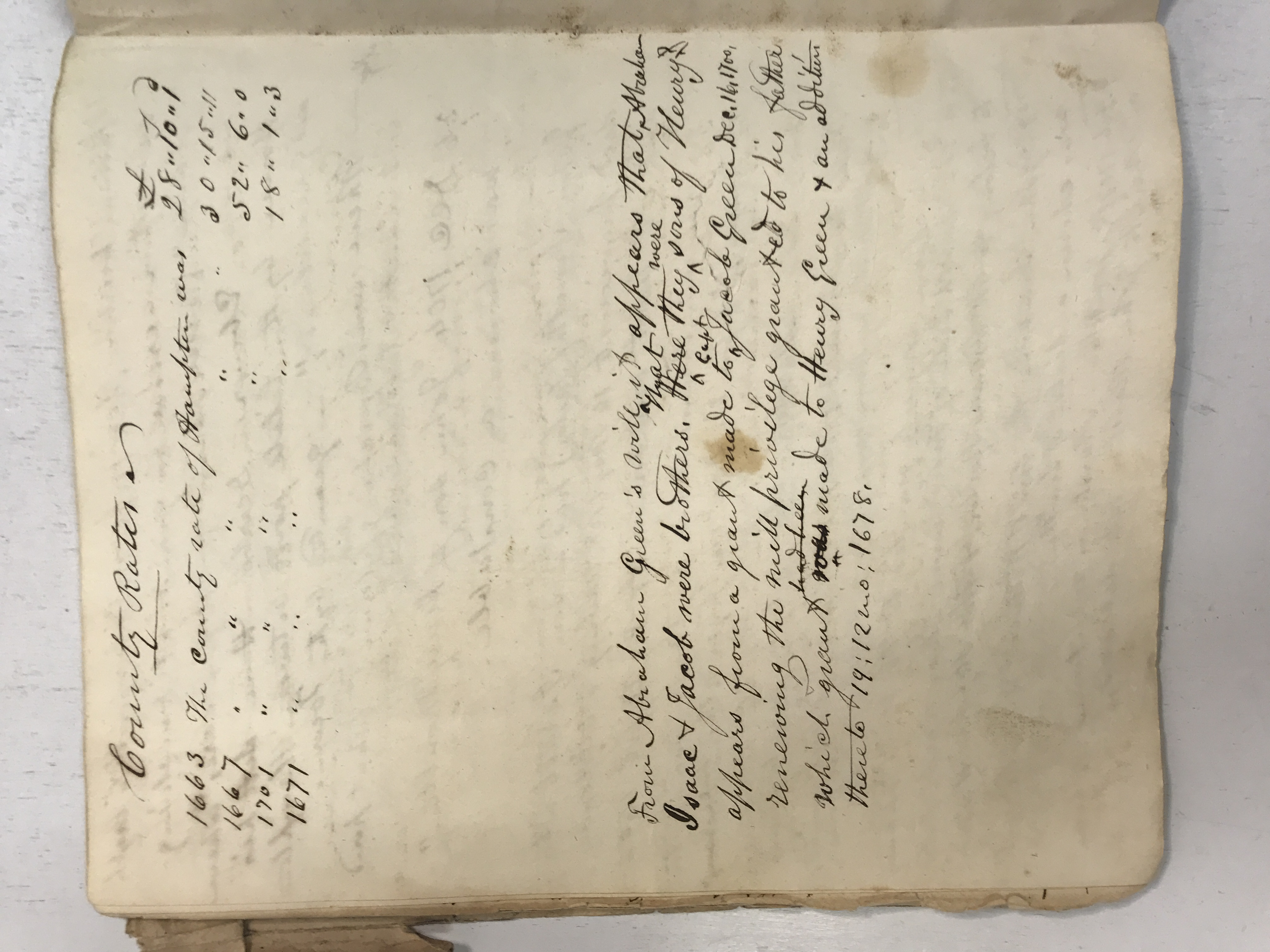
County rates and a Green family inference · view 1 of 1
Open full-resolution photograph ↗
JDT-D569 · The new plantation, old boundaries and common shares
Extracts concern laying out grants, retracing the Salisbury–Hampton line, interpreting common-land shares and preventing unauthorized enclosure. A note about procuring glass for the meetinghouse sits within the same sequence. The varying subjects reflect a town record used as a broad source for civic history.
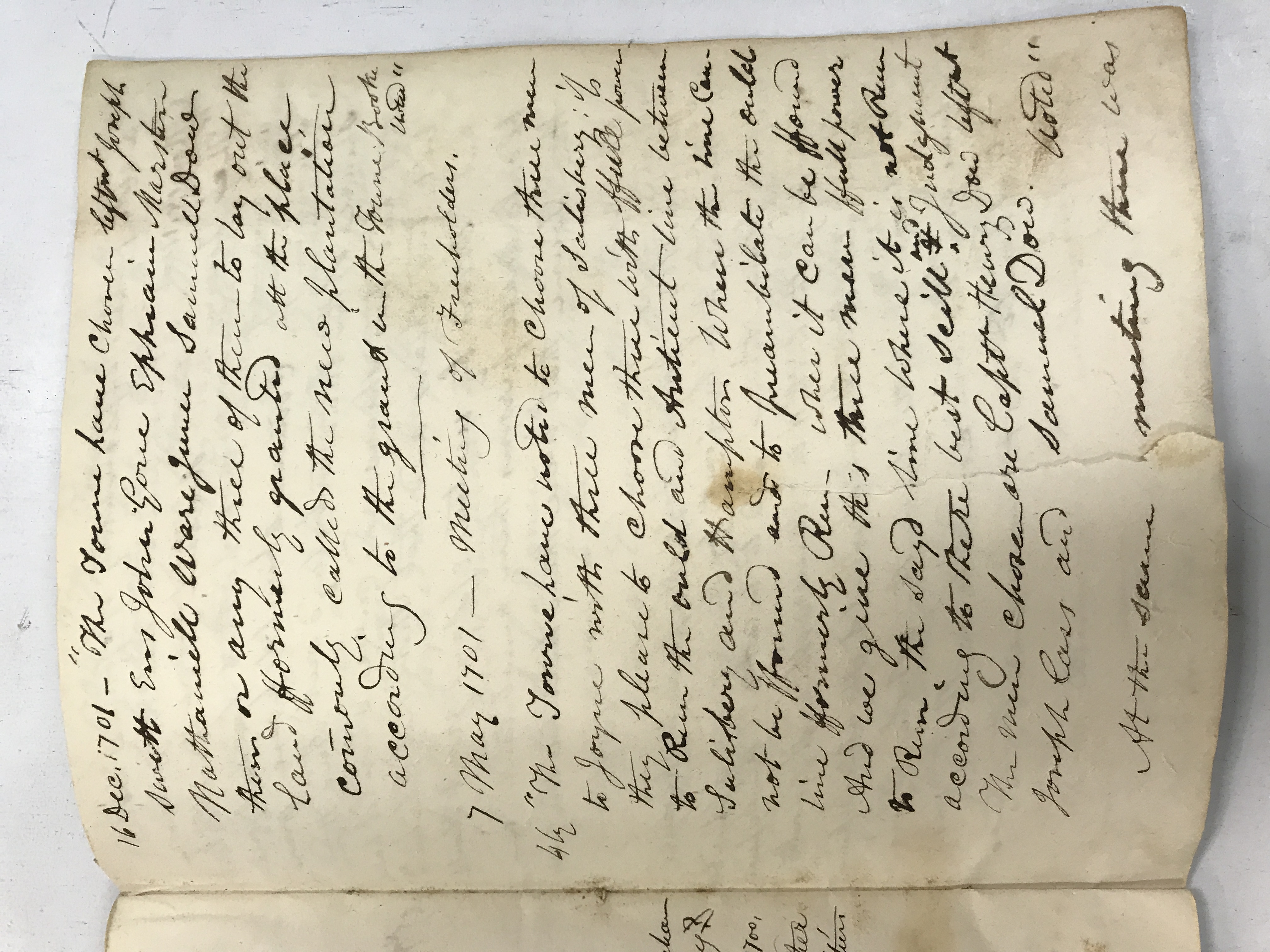
The new plantation, old boundaries and common shares · view 1 of 3
Open full-resolution photograph ↗
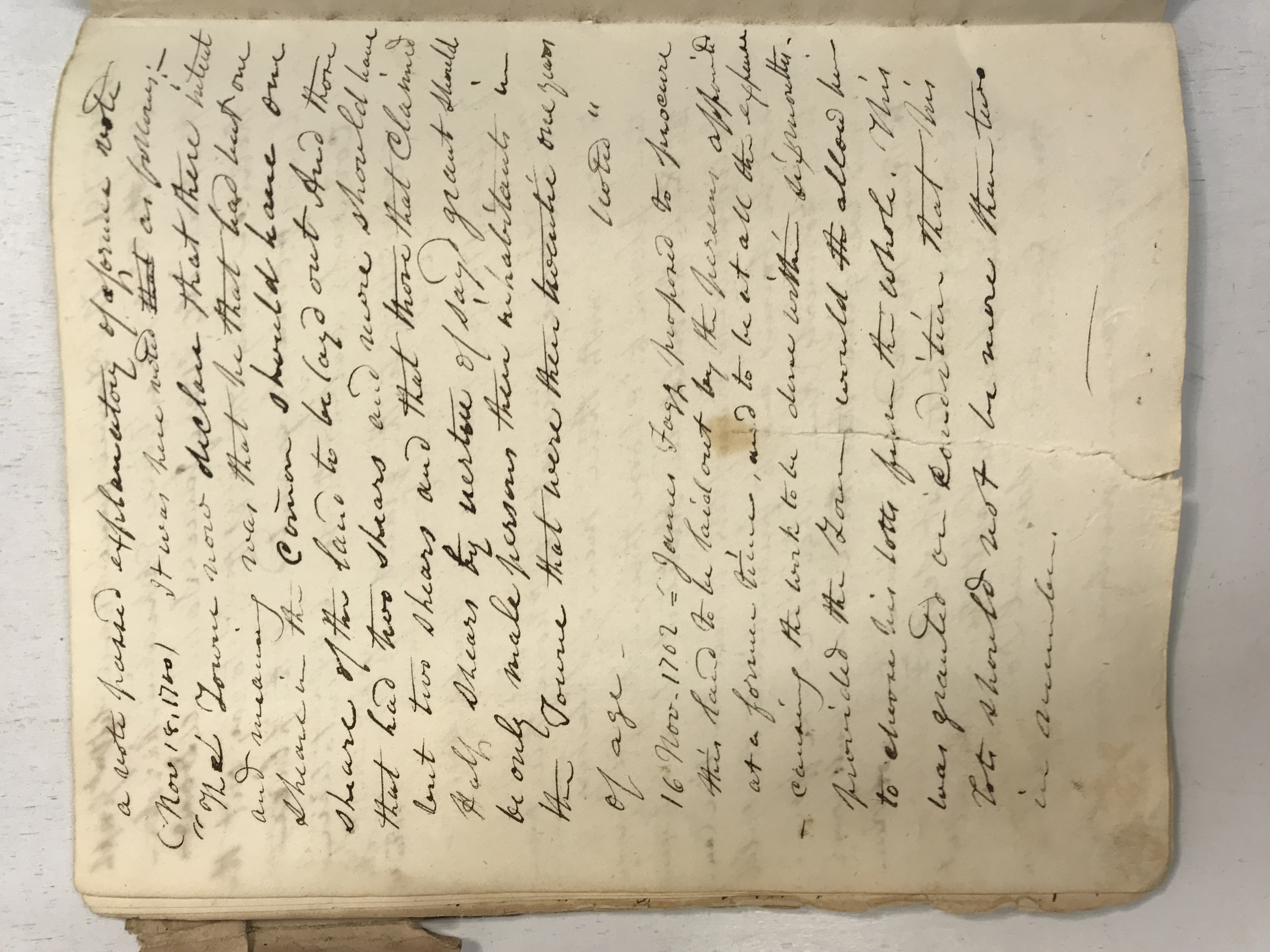
The new plantation, old boundaries and common shares · view 2 of 3
Open full-resolution photograph ↗
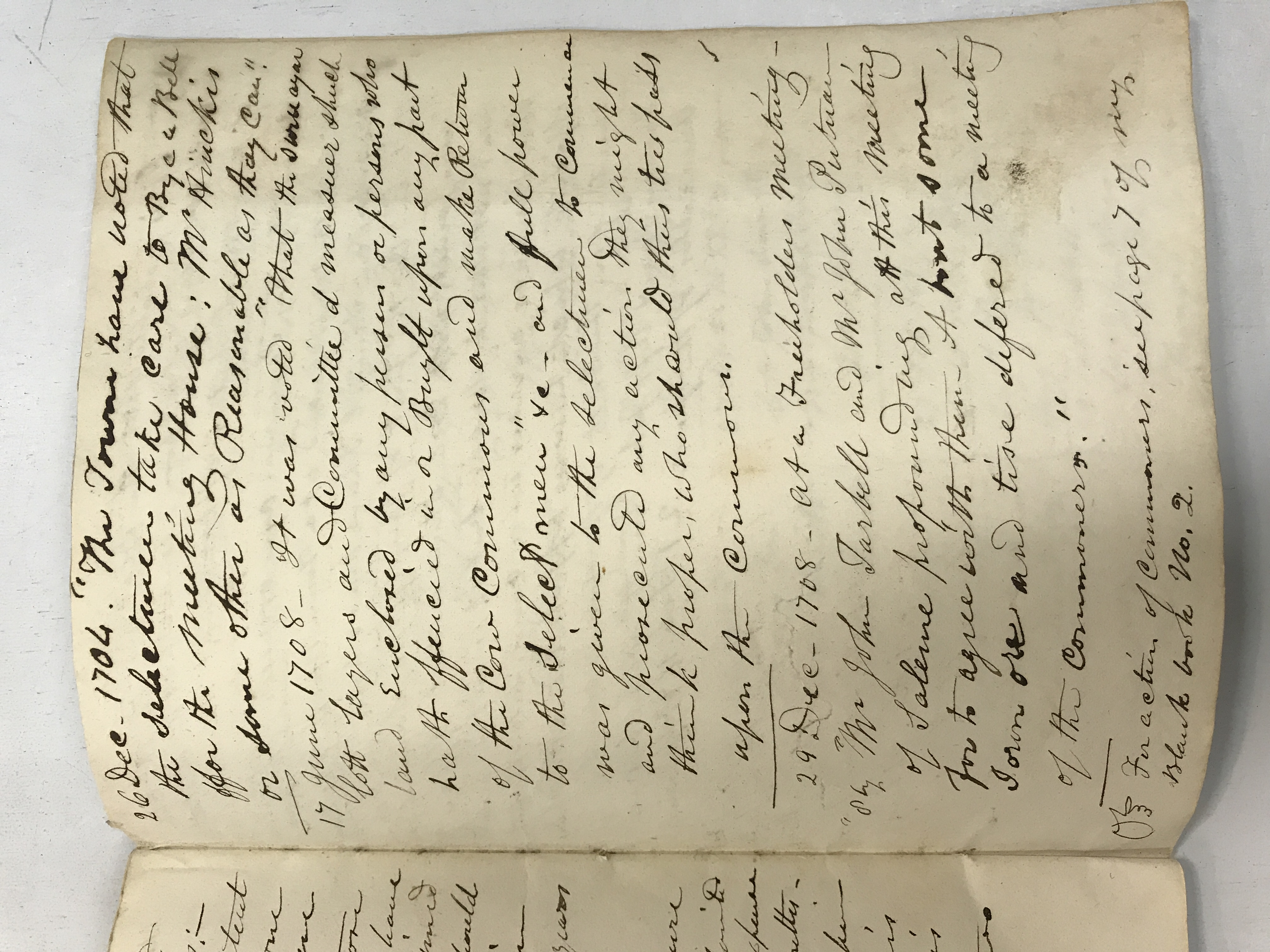
The new plantation, old boundaries and common shares · view 3 of 3
Open full-resolution photograph ↗
JDT-D570 · Were deacons also overseers of the poor?
The writer explicitly proposes that early deacons may have acted as overseers of the poor, then compares named officeholders and dates. The tentative wording matters: this is an interpretation being tested against appointments, not a settled statement that the offices were always identical.
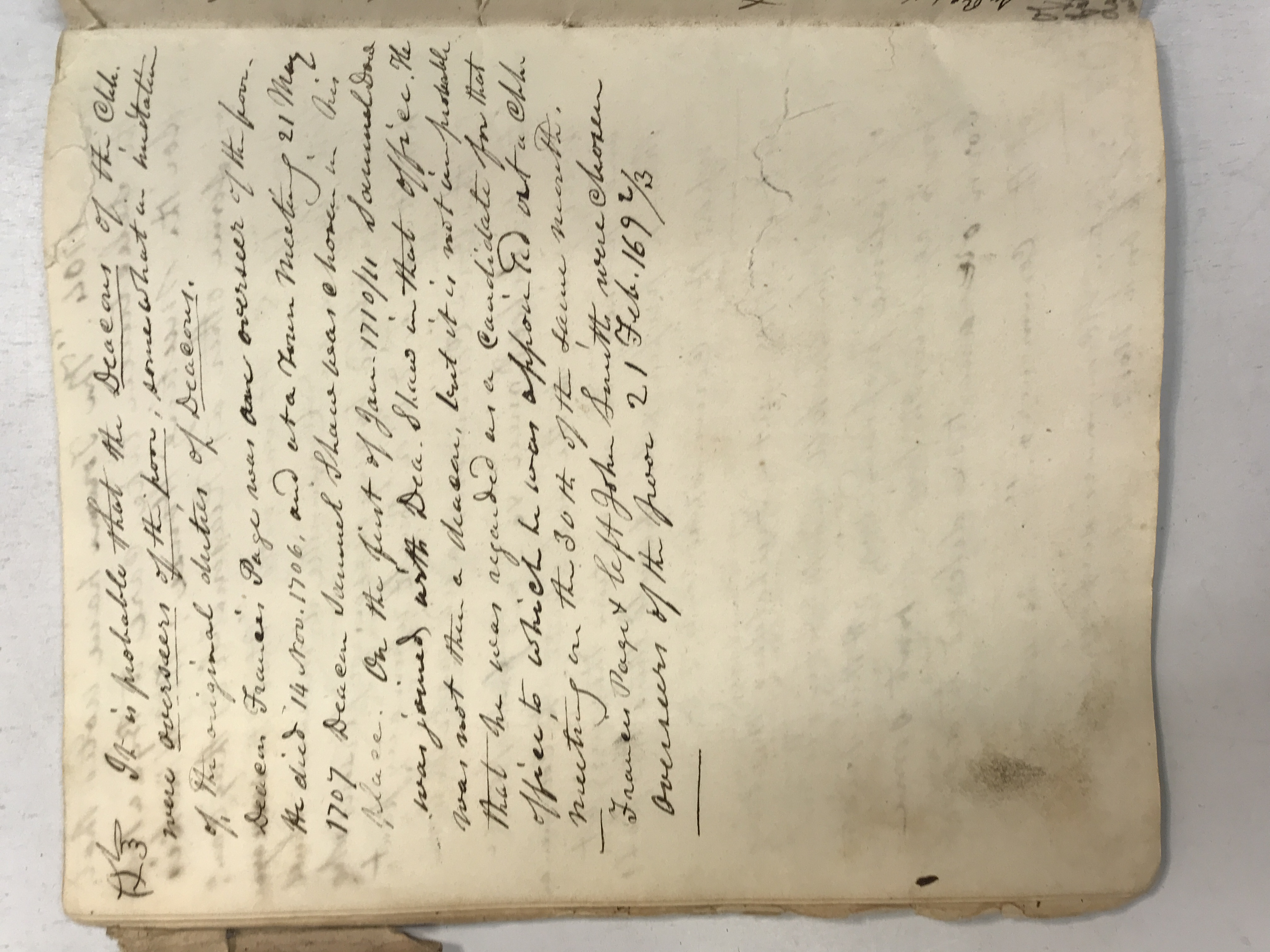
Were deacons also overseers of the poor? · view 1 of 1
Open full-resolution photograph ↗
JDT-D571 · Representatives and other public appointments
Dated lists record selected men for public service across the late seventeenth and eighteenth centuries. Dow, Smith, Weare, Marston, Tuck, Sanborn and Philbrick names recur. The continuation makes visible the succession of officeholding families without reducing each entry to a genealogical relationship.
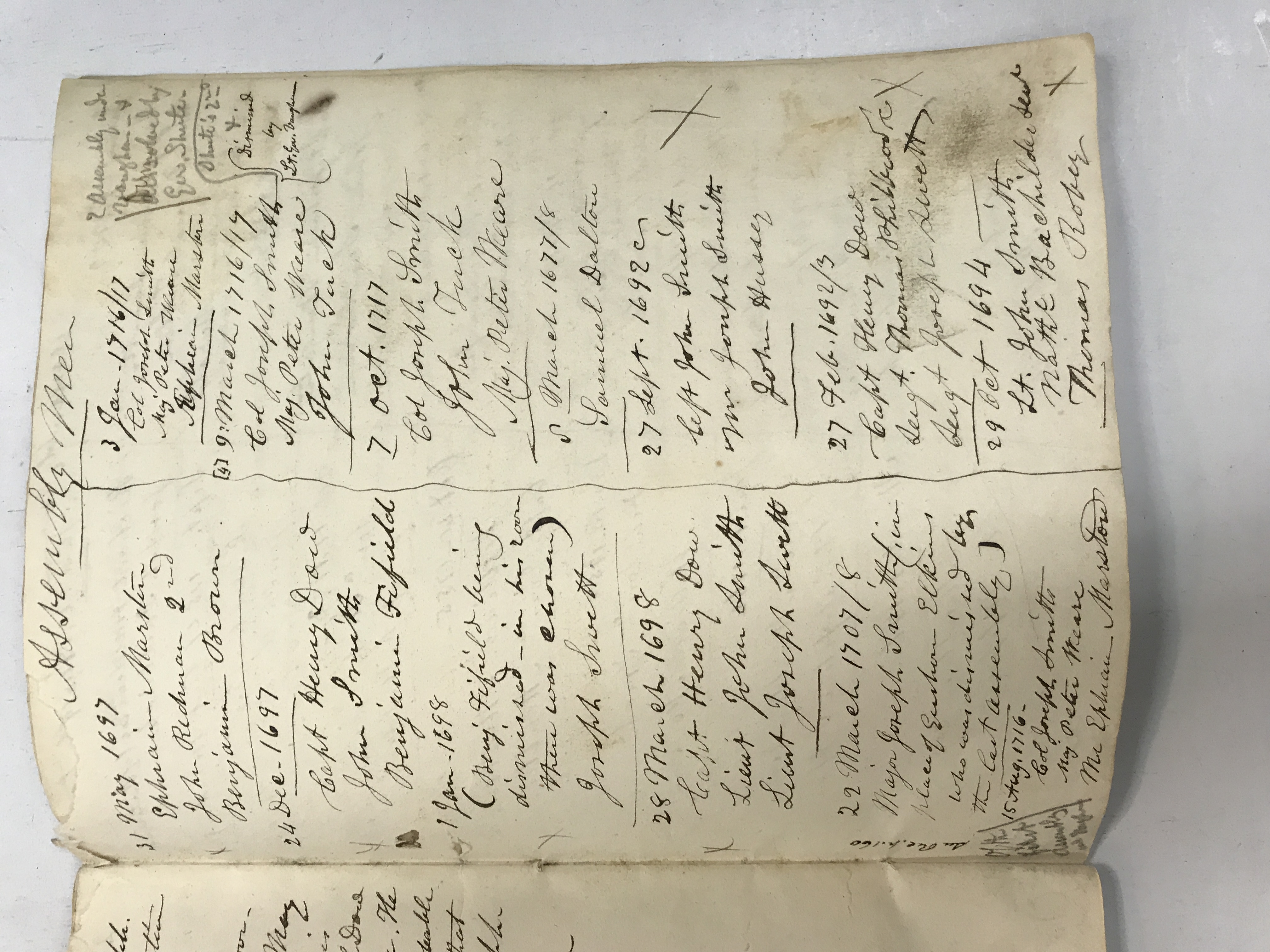
Representatives and other public appointments · view 1 of 2
Open full-resolution photograph ↗
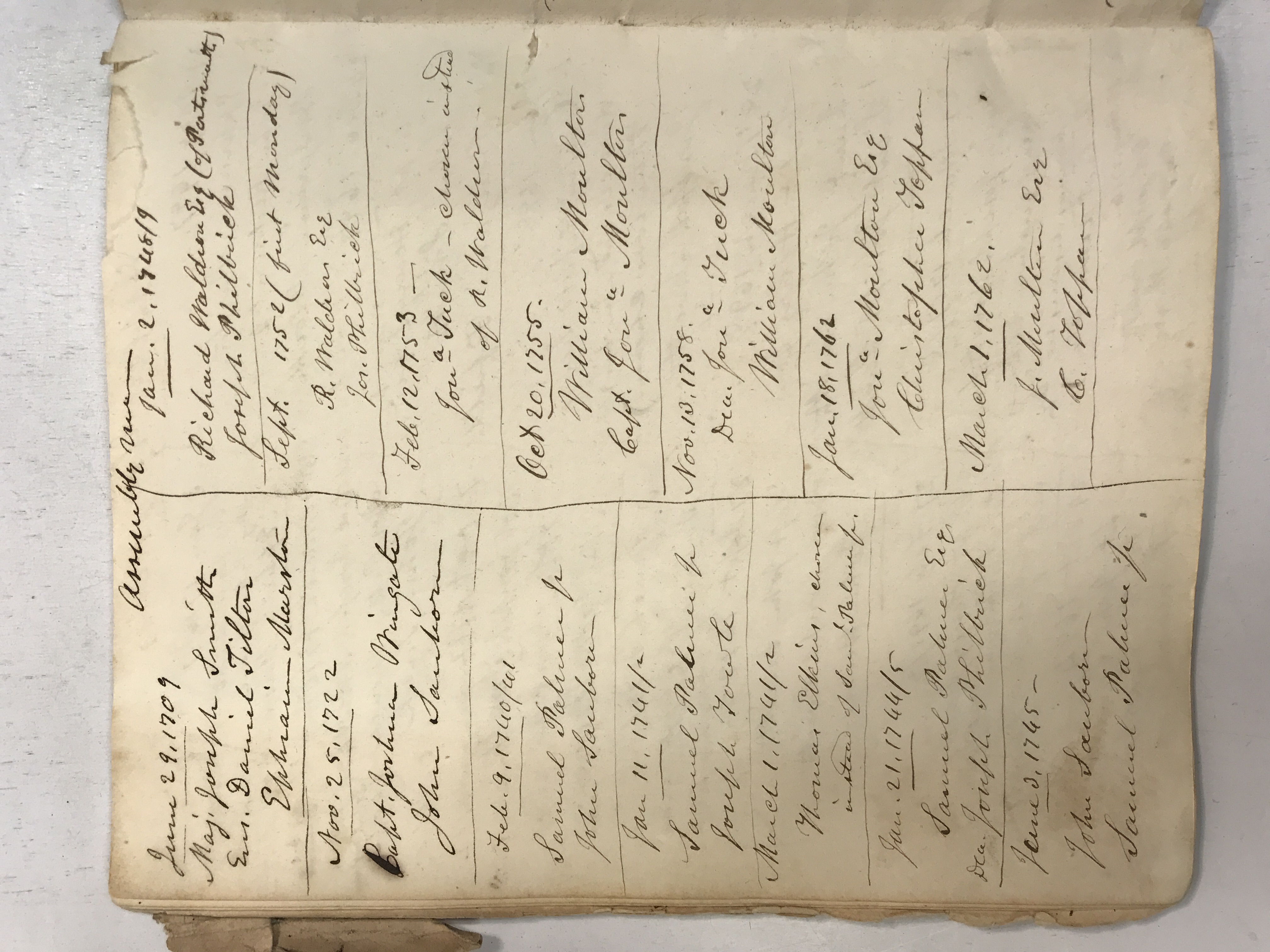
Representatives and other public appointments · view 2 of 2
Open full-resolution photograph ↗
JDT-D572 · John Cotton’s ministry and meetinghouse seating
Under ministerial affairs, extracts concern John Cotton’s ordination, the minister’s house and barn, moving his goods and contributions toward entertaining visitors. Later notes describe meetinghouse seating and gallery arrangements. The records show the material and financial organization supporting worship as well as its religious purpose.
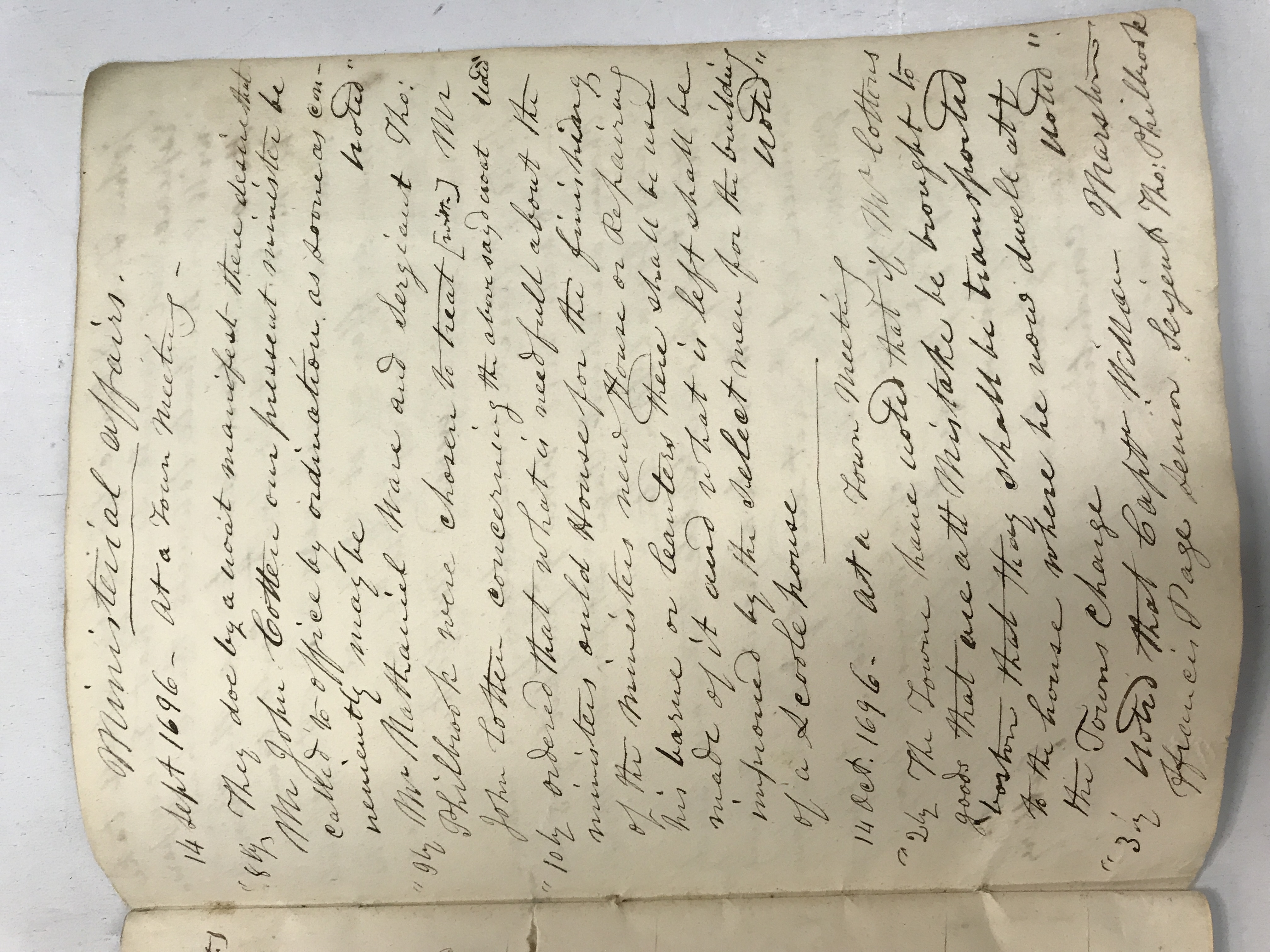
John Cotton’s ministry and meetinghouse seating · view 1 of 2
Open full-resolution photograph ↗
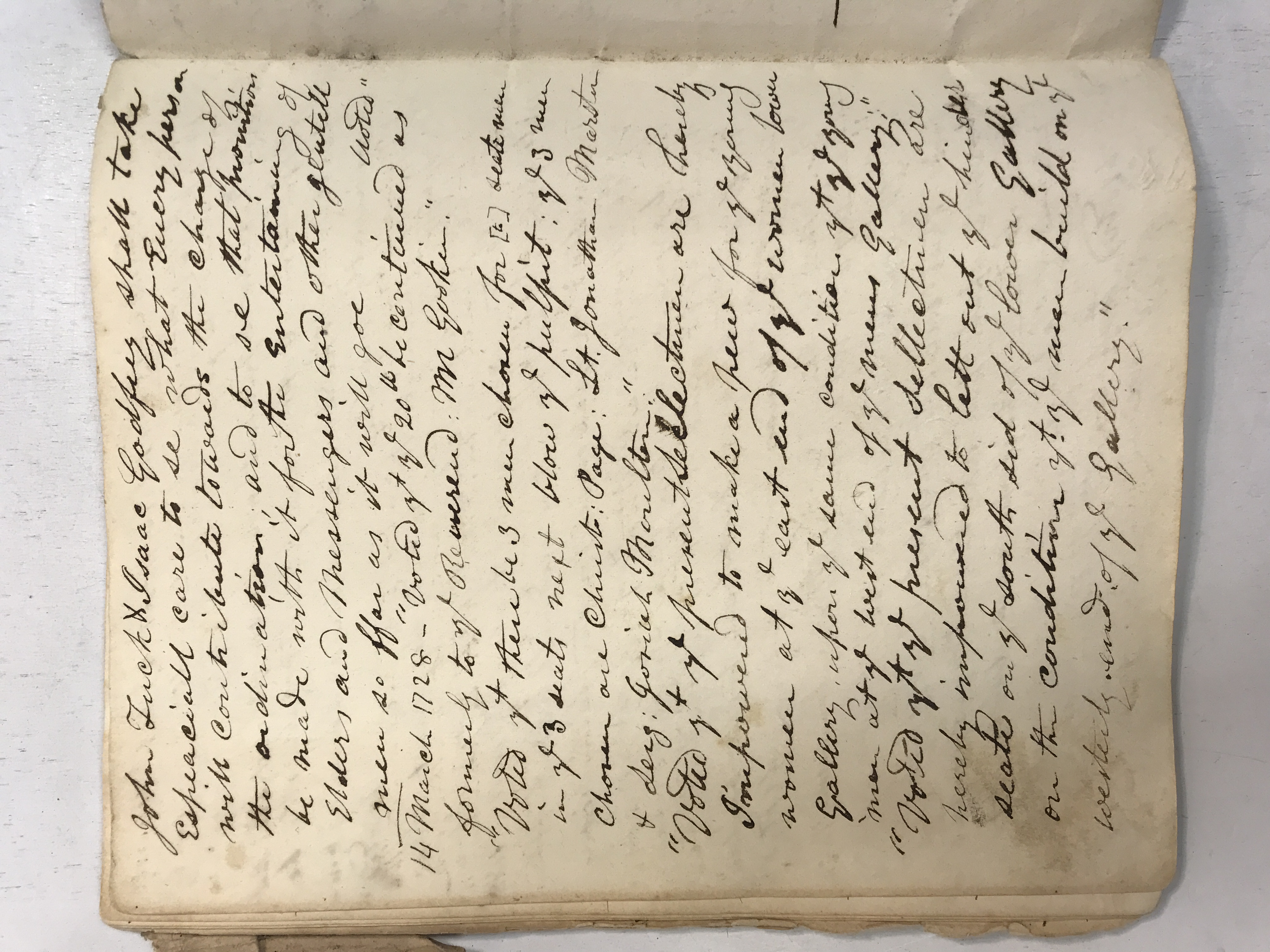
John Cotton’s ministry and meetinghouse seating · view 2 of 2
Open full-resolution photograph ↗
JDT-D573 · Ministerial negotiations: Gookin and John Pike
Town votes record support for the minister and negotiations over calling John Pike. Conditions about church approval, compensation and subscriptions reveal a process involving both town and congregation. The copied votes retain the steps of discussion rather than only the final appointment.
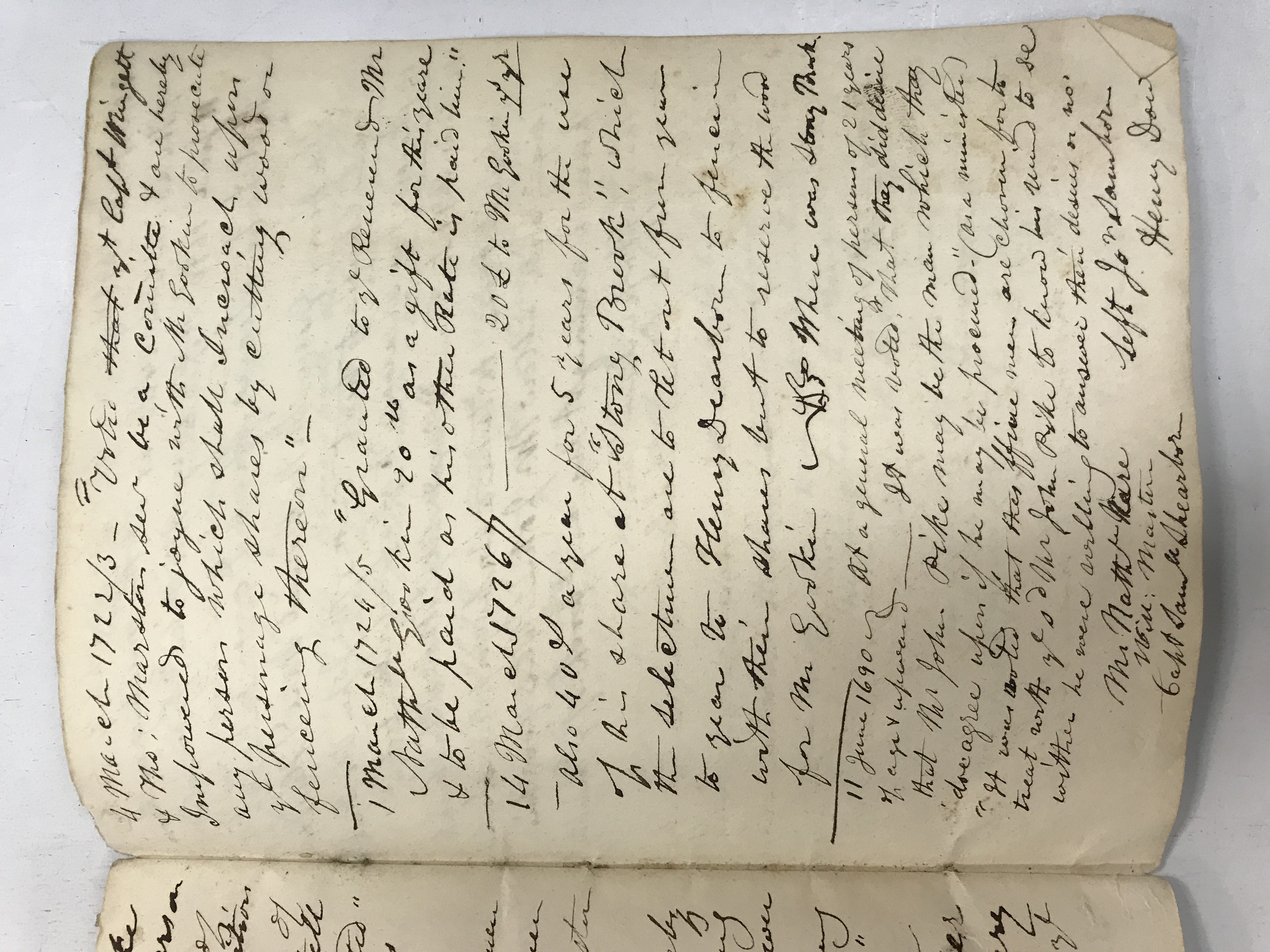
Ministerial negotiations: Gookin and John Pike · view 1 of 2
Open full-resolution photograph ↗
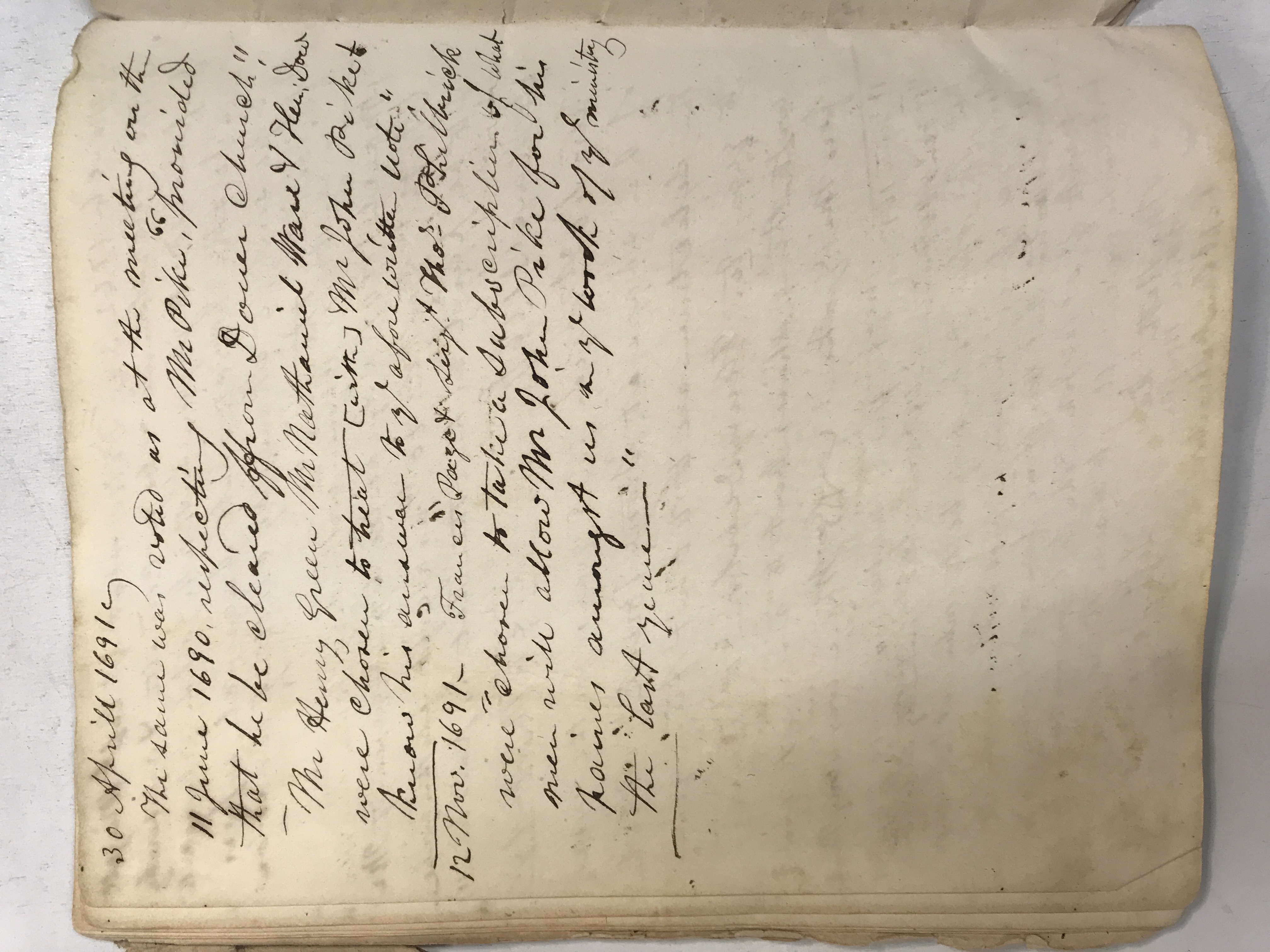
Ministerial negotiations: Gookin and John Pike · view 2 of 2
Open full-resolution photograph ↗
JDT-D574 · Henry Dow’s public roles, timber protection and local physicians
A biographical note gathers Henry Dow’s work in assessments, roads and boundary disputes. The next page discusses waste of pine, poplar and oak on the commons and measures to protect the timber supply, followed by a tide reference and a list of Hampton physicians. These juxtapositions show the range of topics being assembled for a town history.
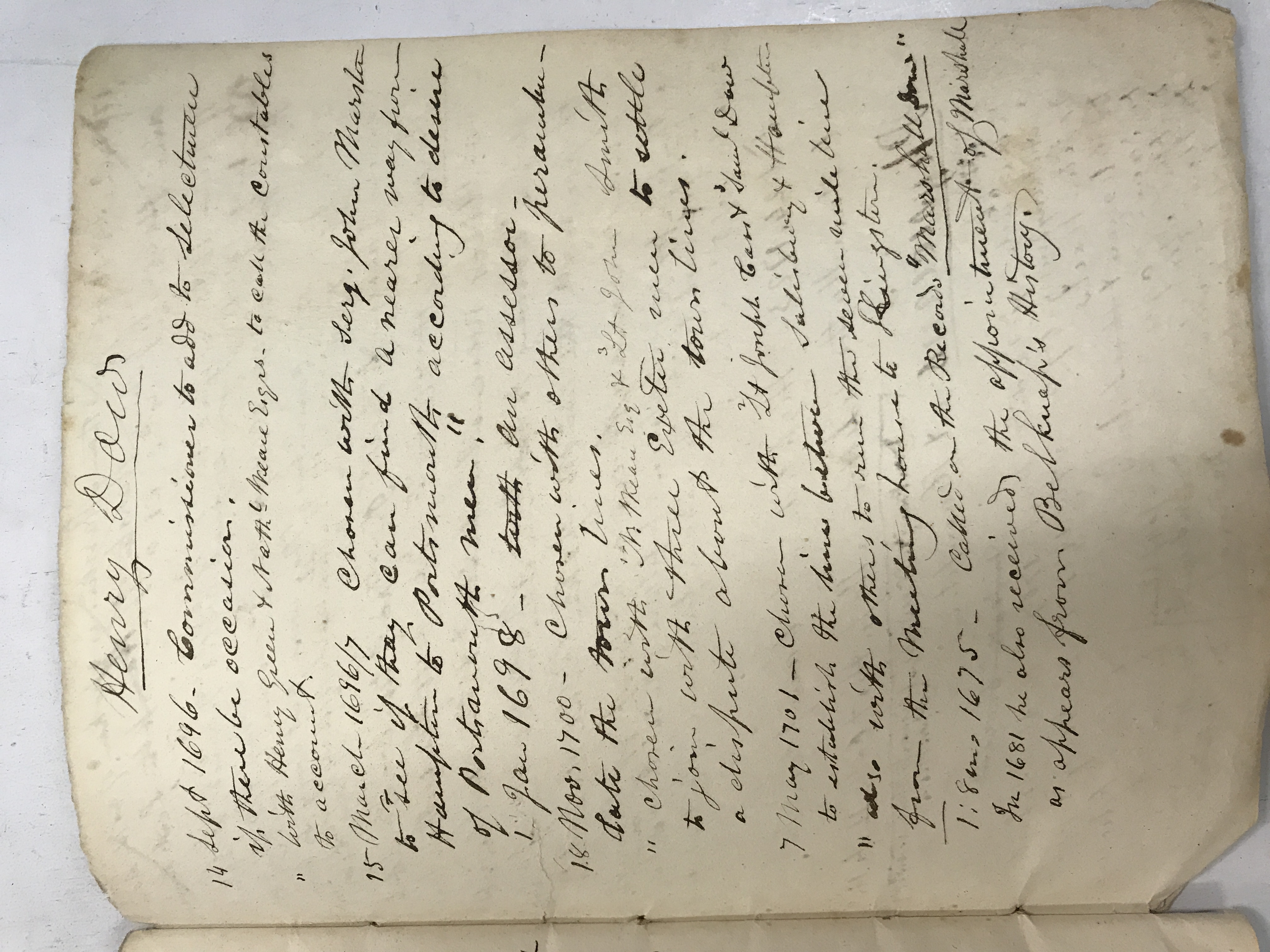
Henry Dow’s public roles, timber protection and local physicians · view 1 of 2
Open full-resolution photograph ↗
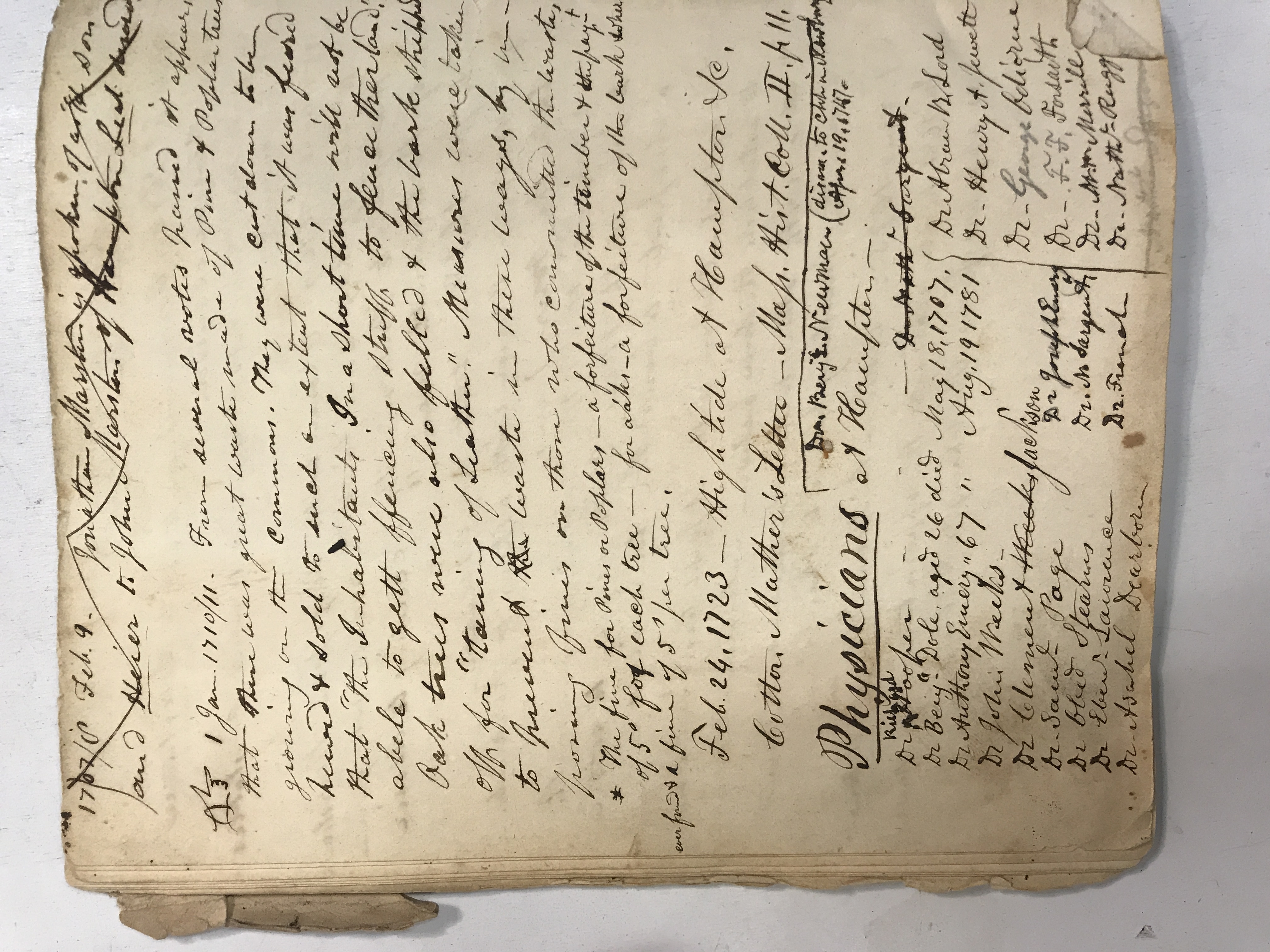
Henry Dow’s public roles, timber protection and local physicians · view 2 of 2
Open full-resolution photograph ↗
JDT-D575 · Arithmetic on the notebook’s outer leaf
Calculations occupy a worn closing leaf. Its stains, edge losses and casual figures record the notebook’s use beyond its organized historical extracts. The view closes the research volume before the next tied bundle begins.
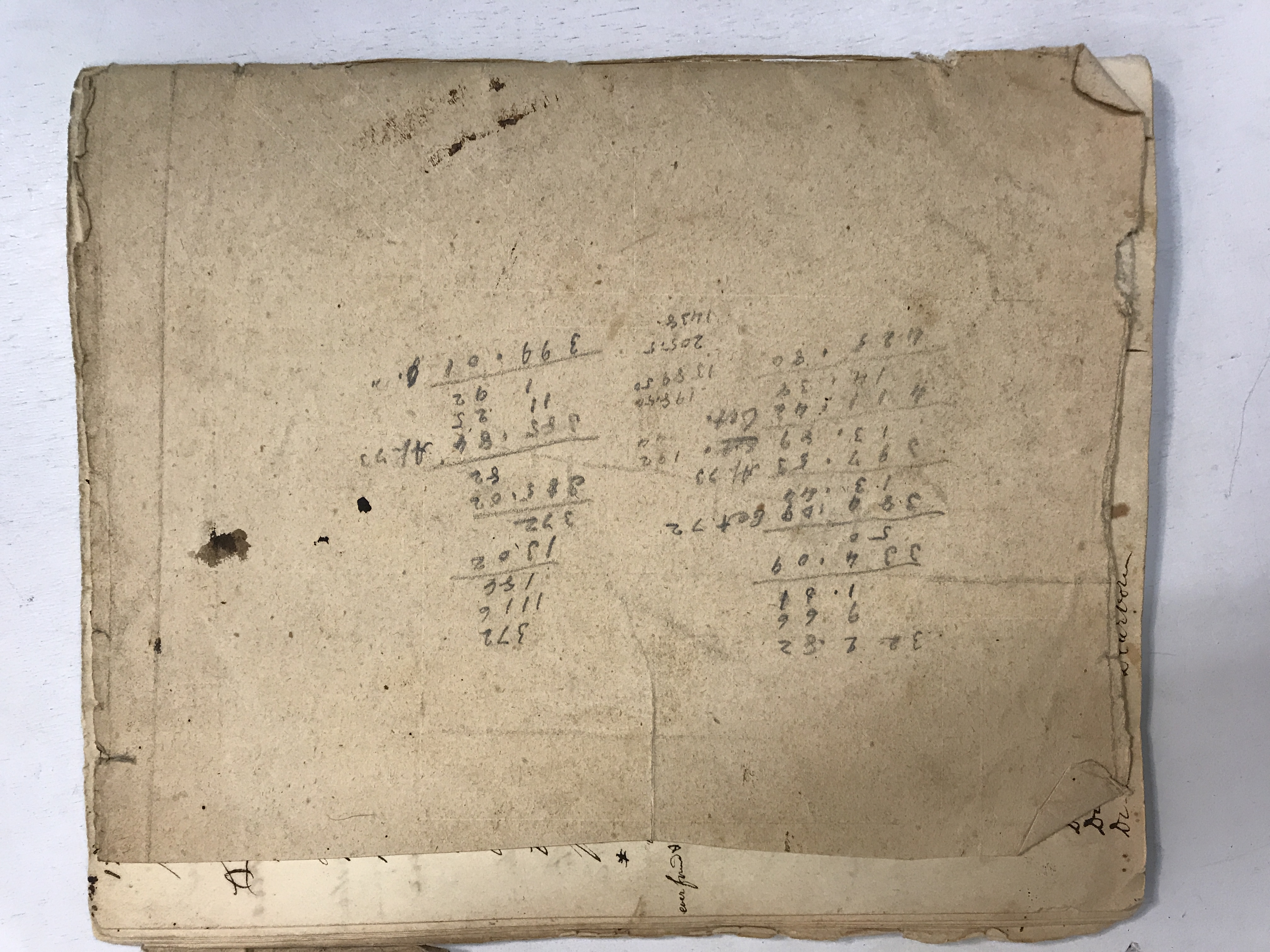
Arithmetic on the notebook’s outer leaf · view 1 of 1
Open full-resolution photograph ↗
Collection photographs supplied by Whit. Descriptions are finding aids, not full transcriptions. Names, dates and associations remain provisional where the handwriting is uncertain.